Introduction
Language development is a natural and joyful process in Montessori education. Montessori language materials are designed to support children during sensitive periods for speech, reading, and writing. These materials allow children to experience language through movement, touch, and sound.
Rather than forcing formal instruction, Montessori language activities follow the child’s natural readiness and interest.
Foundations of Montessori Language Development
Language development begins with spoken language. Rich conversations, storytelling, and vocabulary enrichment are essential components of the Montessori environment.
Children are encouraged to express themselves freely and confidently.
Sandpaper Letters and Phonetic Awareness
Sandpaper letters are a cornerstone of Montessori language materials. By tracing letters while hearing their sounds, children engage multiple senses, strengthening memory and understanding.
This multisensory approach supports phonetic awareness and prepares children for writing and reading.
Moveable Alphabet Activities
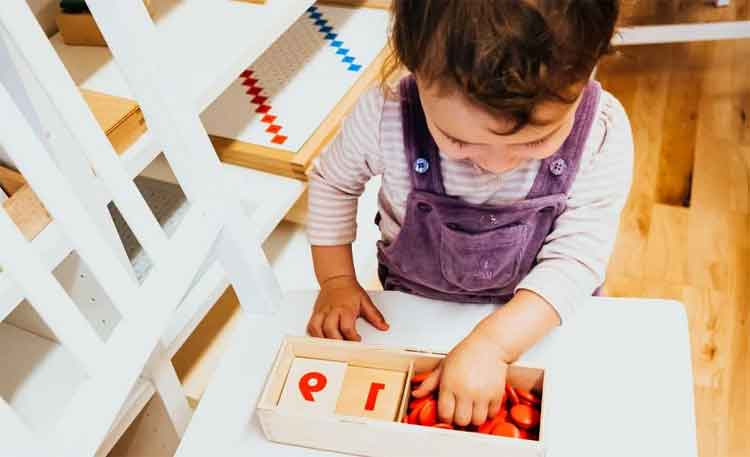
The movable alphabet allows children to form words before they are physically able to write. This activity builds confidence and encourages creative expression.
Preparation for Reading
Montessori reading activities progress naturally from phonics to word recognition and comprehension. Children learn to read with understanding rather than memorization.
Role of the Teacher in Language Activities
The Montessori teacher models clear speech, listens attentively, and introduces materials at the right time. Observation guides every presentation.
Conclusion
Montessori language materials enhance daily learning activities by nurturing communication skills, confidence, and a lifelong love for language.