
Introduction
Mathematics is often viewed as an abstract and challenging subject, but Montessori education transforms math into an enjoyable and meaningful experience. Montessori math materials are designed to make abstract concepts concrete, allowing children to understand numbers through hands-on exploration. These materials help children build a strong mathematical foundation rooted in understanding rather than memorization.
Dr. Maria Montessori believed that children should first experience mathematical concepts physically before moving to symbols. Montessori math activities follow a clear progression from concrete to abstract, supporting confidence and deep comprehension.
Philosophy Behind Montessori Math Materials
Montessori math materials are carefully structured to isolate one concept at a time. Each material introduces a specific mathematical idea, such as quantity, place value, or operations. Children work with these materials independently, allowing them to discover relationships and patterns naturally.
Another essential feature is the control of error. Montessori math materials allow children to recognize mistakes without adult correction, encouraging problem-solving and self-correction.
Number Sense and Quantity
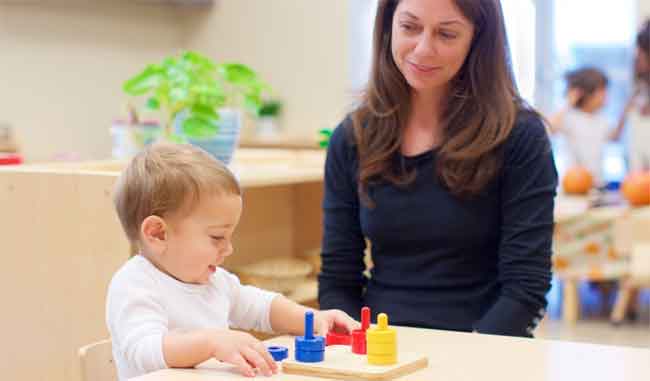
Early Montessori math activities focus on developing number sense. Materials like number rods, spindle boxes, and counters help children associate numbers with quantities. Children physically count, touch, and move objects, creating a strong mental image of numbers.
This tactile experience builds confidence and reduces anxiety around mathematics.
Introduction to Place Value
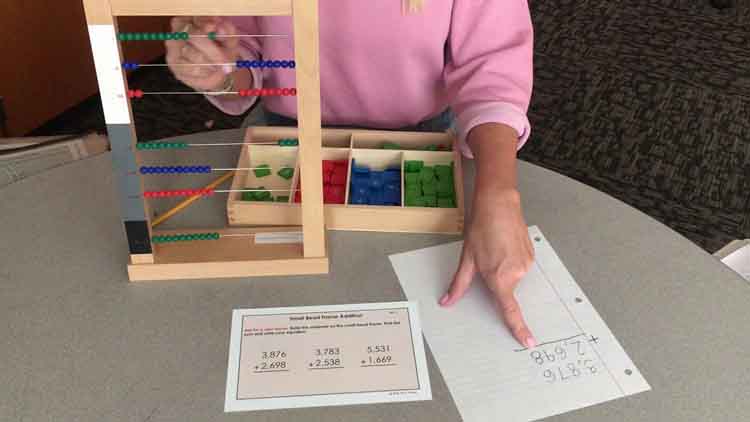
Place value is introduced using golden bead materials. Units, tens, hundreds, and thousands are represented physically, helping children understand the hierarchy of numbers. Through repeated activities, children internalize complex concepts such as carrying and borrowing.
Operations Through Hands-On Activities
Addition, subtraction, multiplication, and division are taught using concrete materials before introducing symbols. Children combine, separate, and share quantities, gaining a clear understanding of operations.
These activities make math logical and meaningful rather than mechanical.
Transition from Concrete to Abstract
Once children demonstrate mastery with materials, they gradually transition to abstract representations such as numbers on paper. This progression ensures true understanding and long-term retention.
Role of Repetition and Mastery
Repetition is encouraged in Montessori math activities. Children repeat exercises until they feel satisfied, reinforcing concentration and mastery.
Role of the Montessori Teacher
The teacher observes carefully and presents math materials at the appropriate developmental stage. Guidance is minimal, allowing the child to take ownership of learning.
Emotional and Cognitive Benefits
Montessori math materials help children develop confidence, logical thinking, and perseverance. Children learn that mistakes are part of the learning process.
Conclusion
Montessori math materials transform learning activities by making mathematics accessible, enjoyable, and meaningful. Through hands-on experiences, children develop a deep understanding of numbers and a positive relationship with math that lasts a lifetime.