The Concept of Spiritual Preparation
In the Montessori Method, the preparation of the teacher is considered just as important as the preparation of the classroom environment. Unlike traditional educational models where the teacher is a lecturer and the primary source of all knowledge, the Montessori guide undergoes a profound internal transformation. Dr. Maria Montessori spoke extensively about the “spiritual preparation” of the teacher, which involves a deep sense of humility and the removal of the teacher’s ego. This internal shift allows the adult to observe the child scientifically and with an open mind, rather than trying to mold the child into a preconceived image.
Observational Skills as a Core Competency
One of the most technical aspects of Montessori teacher training is the development of observation skills. A prepared teacher must learn to sit in the background and watch the classroom dynamics without immediate intervention. This scientific observation is what allows a guide to know exactly when a child is ready for a new lesson or when a child is entering a “Sensitive Period” for a particular skill, such as order, language, or movement. Through training, teachers learn to take objective notes, stripping away personal bias to see the true development of the child’s soul and intellect. This data then informs the teacher on how to rearrange the environment to meet the changing needs of the students.
Mastery of the Didactic Materials
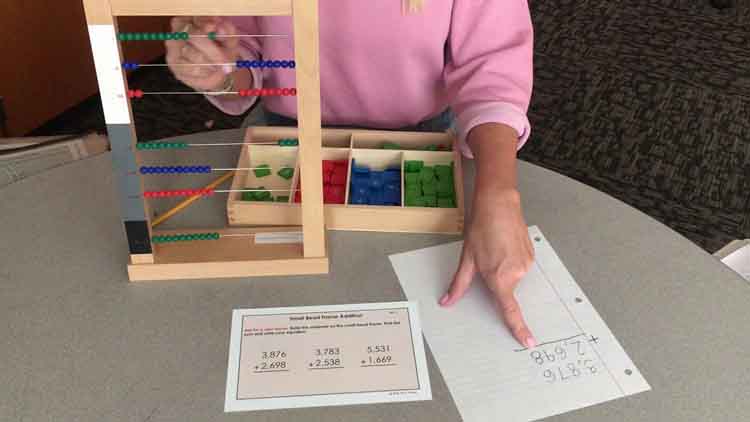
Beyond the internal work, a prepared Montessori teacher must have an absolute technical mastery of the didactic materials. Each piece of equipment in a Montessori classroom—from the Cylinder Blocks to the Binomial Cube—has a specific purpose and a precise “Control of Error.” During training, teachers spend hundreds of hours practicing “presentations.” These are carefully choreographed movements designed to show the child how to use the materials with grace and precision. The teacher must know the sequence of every lesson, the primary aim of the material, and the secondary or indirect aims that prepare the child for later academic success. Without this technical mastery, the teacher cannot effectively guide the child toward independence.
Creating the Link Between Child and Environment
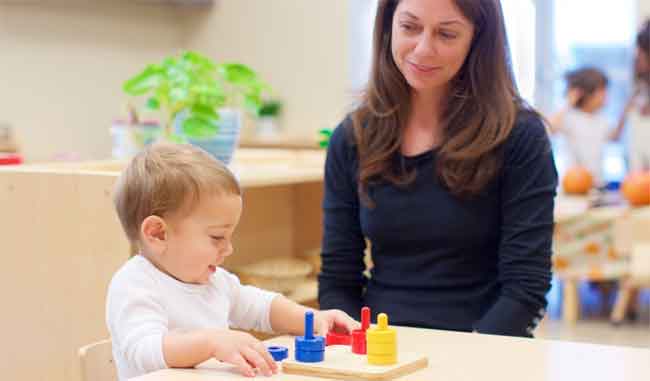
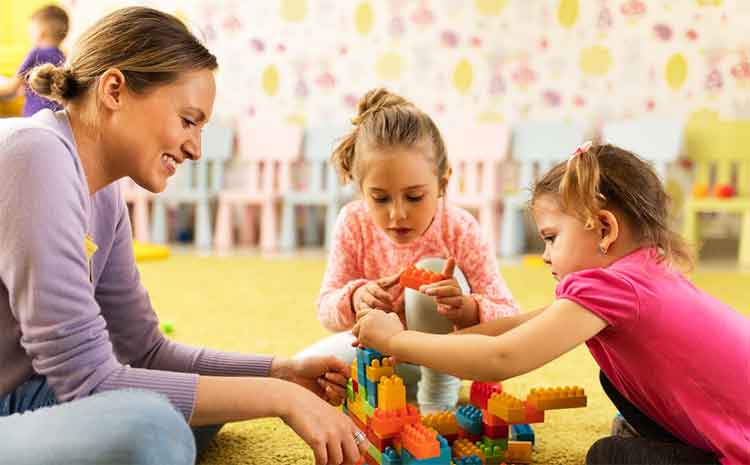
The ultimate role of the prepared teacher is to act as a bridge or a link. The teacher does not teach the child in the traditional sense; instead, the teacher connects the child to the prepared environment. Once that connection is made, the teacher steps back and allows the child’s natural drive for self-development to take over. This requires the teacher to be a master of “Grace and Courtesy,” modeling the social behaviors and respect that they wish to see in the children. By maintaining a beautiful, orderly, and peaceful environment, the teacher provides the safety the child needs to explore and grow. This complex balance of being a scientist, a servant, and a saint is what truly defines the prepared Montessori guide.