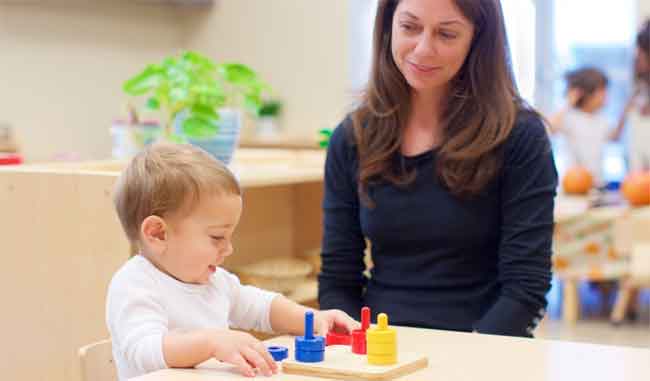

Dr. Maria Montessori’s concept of the “absorbent mind” is a cornerstone of her educational philosophy, and it’s a concept that every Montessori teacher training program explores in depth. It refers to the unique mental capacity of a child from birth to age six to effortlessly absorb knowledge from their environment. Unlike an adult, who learns consciously and through effort, a young child’s mind is like a sponge, taking in every detail of their world without conscious effort. This process is not just about memorizing facts; it’s about constructing their personality, language, and cultural identity. The absorbent mind is truly a powerful, unconscious mechanism for self-creation. The first three years of life are characterized by the “unconscious absorbent mind,” where a child takes in everything without deliberate thought or intention. It’s during this period that a child naturally acquires their native language simply by being immersed in it. They don’t need grammar lessons; they simply absorb the rules of language and the sounds of their native tongue. From ages three to six, the “conscious absorbent mind” emerges. The child is still absorbing, but they now have a developing sense of will and can intentionally choose to focus on certain aspects of their environment. This is why the Montessori classroom, or “prepared environment,” is so crucial. It is designed to be a rich, stimulating, and ordered space that provides the very best stimuli for the child’s mind to absorb.
Understanding the absorbent mind is vital for a Montessori teacher. It means recognizing that you cannot simply “teach” a young child in the conventional sense. Instead, you must prepare the environment and then step back, allowing the child’s natural, powerful capacity for learning to unfold. The teacher’s role is not to fill an empty vessel, but to provide the tools and freedom for the child to build themselves. For example, a child in the conscious absorbent mind phase might become intensely focused on the **Pink Tower** from the sensorial area. They will repeat the work of stacking the cubes from largest to smallest, not because an adult is telling them to, but because their mind has an inner need to create order and understand dimensions. The teacher’s role is simply to present the material and then observe. This concept is a beautiful and respectful acknowledgment of the child’s inherent genius and their natural drive to learn and grow. It shifts the entire dynamic of education from a top-down, teacher-led model to a child-centered, self-directed one, where the child is truly the agent of their own development.