Introduction
The Montessori method challenges traditional ideas of leadership in the classroom. While conventional education often places the teacher in a position of authority and control, Montessori education promotes a different approach. It emphasizes guidance over dominance, observation over instruction, and collaboration over command. This raises an important question: is leadership still necessary in a Montessori classroom, or is guidance enough?
Understanding Leadership in Education
Leadership in education is often associated with directing, instructing, and managing students. A traditional teacher leads from the front, making decisions, setting rules, and controlling the pace of learning. However, Montessori philosophy redefines leadership. Instead of leading through authority, Montessori teachers lead through influence, presence, and example. Leadership becomes subtle rather than dominant.
The Montessori Perspective
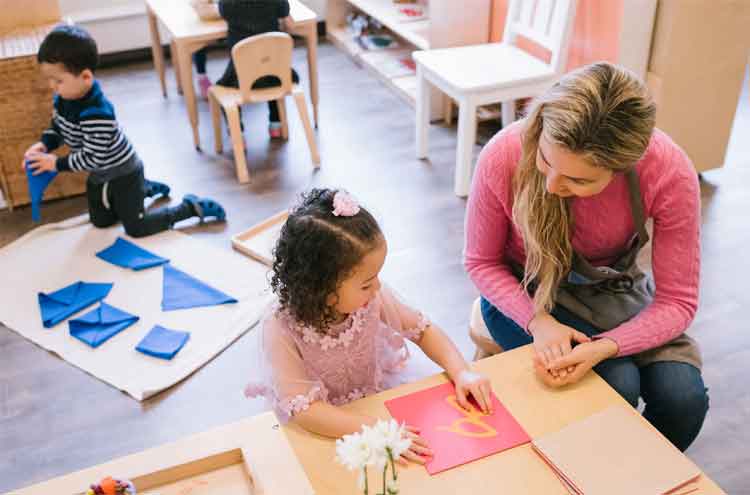
Maria Montessori believed that children learn best when they are free to explore within a structured environment. In this context, the teacher is not the center of attention but a facilitator of learning. Leadership still exists, but it is expressed through careful preparation of the environment and thoughtful observation. The teacher leads indirectly by creating opportunities for growth.
Balancing Leadership and Guidance
Montessori teachers must find a balance between leadership and guidance. Too much control can hinder independence, while too little direction can lead to confusion. Effective educators understand when to step in and when to step back. This balance requires emotional intelligence, patience, and deep understanding of each child’s needs.
Role of the Prepared Environment
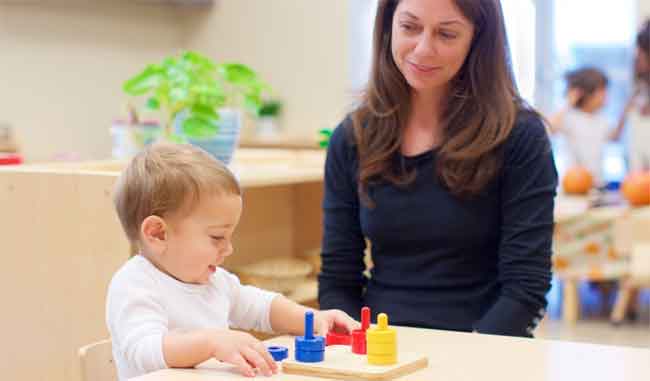
In Montessori classrooms, the environment itself acts as a leader. Materials are arranged in a way that encourages exploration and self-learning. The teacher’s leadership is reflected in how the environment is designed and maintained. This shifts the focus from direct instruction to indirect guidance.
Developing Independence
One of the main goals of Montessori education is to develop independence. Leadership in this context involves empowering children to make decisions and take responsibility for their actions. Teachers guide rather than command, allowing children to develop confidence and self-discipline.
Leadership is indeed necessary in Montessori classrooms, but it takes a different form. It is not about control but about influence and support. By blending leadership with guidance, Montessori teachers create an environment where children can thrive independently while still feeling supported.