Beyond the Name: Hallmarks of an Authentic Program
As the popularity of Montessori education has grown, so has the number of schools using the name. However, because the name “Montessori” is not trademarked, any preschool can legally call itself Montessori, regardless of whether it adheres to the core principles of the method. This can be confusing for parents who are seeking an authentic experience for their child. A true Montessori preschool is defined by a distinct set of characteristics that go far beyond having a few wooden toys on a shelf. It is a carefully orchestrated environment based on decades of scientific observation and a deep respect for the child. Knowing what to look for is crucial for parents navigating their preschool choices and ensuring their child receives the unique benefits of a genuine Montessori education.
Accredited, Trained Guides
The single most important element of an authentic Montessori classroom is the teacher, or “guide.” A true Montessori guide has completed a rigorous, comprehensive training program at a recognized institution, such as those accredited by the Association Montessori Internationale (AMI) or the American Montessori Society (AMS). This is not a weekend workshop; it is an intensive course of study that typically lasts an academic year or more. The training covers not only the philosophy and child development theory but also requires the trainee to master the presentation of every single piece of material. This ensures the guide understands the direct and indirect aims of each work and can present it to a child with precision and purpose. When touring a school, always ask about the lead guide’s training and certification. This credential is the cornerstone of authenticity and ensures the person leading the classroom has the deep knowledge required to facilitate this unique educational approach. The guide’s role is not to be a traditional teacher, but a facilitator, an observer, and a preparer of the environment—a role that requires specialized, in-depth training.
The Mixed-Age Classroom
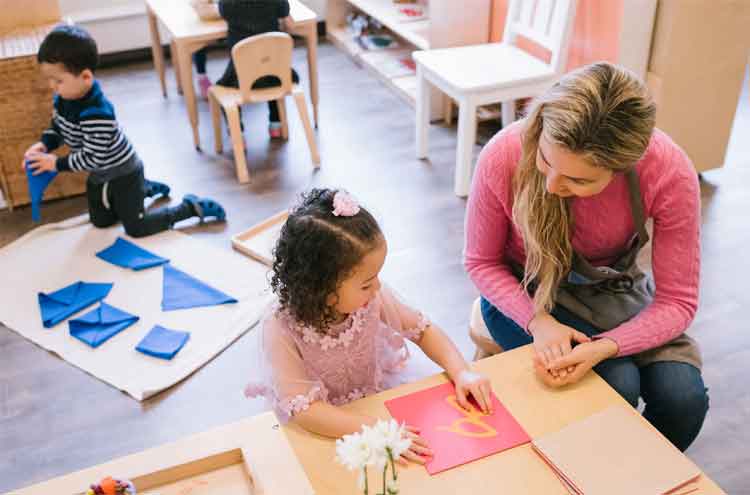
A hallmark of the Montessori method is the mixed-age classroom. The primary or “Children’s House” environment (for preschoolers) will have children aged approximately 3 to 6 years old together in the same community. This structure is a deliberate and crucial part of the philosophy, creating a dynamic social environment that mimics real life. The benefits are numerous. Younger children have the opportunity to learn from their older peers, who act as inspiring role models. They see the more advanced work being done, which sparks their curiosity and gives them a clear vision of what is to come. Older children, in turn, benefit by reinforcing their own knowledge when they explain a concept or help a younger friend. This leadership role builds confidence, empathy, and a deep sense of responsibility. The mixed-age setting fosters a supportive, collaborative community rather than a competitive one. It allows children to learn from and with each other, and it enables the guide to work with a child for three years, developing a deep understanding of their unique personality and learning style.
A Full Complement of Montessori Materials
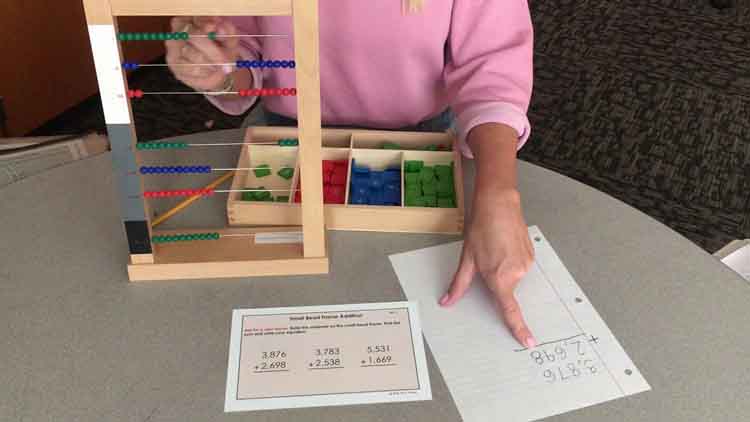
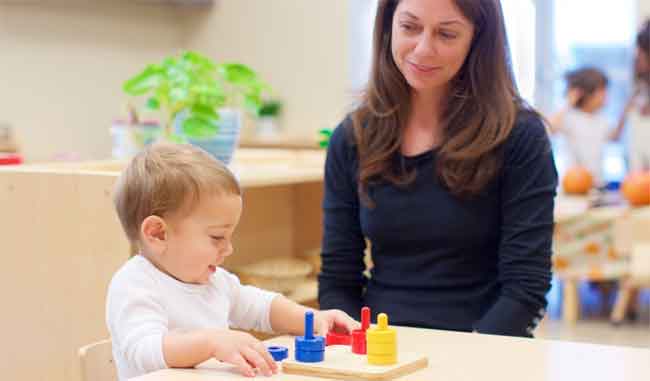
An authentic classroom is filled with a full range of scientifically designed Montessori materials, not a random assortment of educational toys. These materials should be displayed on low, open shelves, organized by curricular area: Practical Life, Sensorial, Language, Mathematics, and Culture (which includes geography, history, science, and art). The materials are designed to be self-teaching and have a built-in control of error. They are tools for development, not playthings. Look for a classroom where there is only one of each material, which teaches children patience and respect for others’ work. The environment should be orderly, beautiful, and meticulously maintained. The materials are the “keys to the world,” and their completeness and proper organization are essential for the child’s work. A school that has only a few of the iconic materials, like the Pink Tower, but lacks the full, sequential curriculum is not offering a complete Montessori experience.
The Uninterrupted Work Cycle
Perhaps the most profound and unique feature of a Montessori day is the long, uninterrupted work cycle. This is a period of at least two to three hours during which the children are free to choose their own work, engage with it for as long as they are interested, and not be interrupted by group activities or a scheduled change of subject. Dr. Montessori observed that children, when given the freedom to follow their interests in a prepared environment, will enter periods of deep concentration. This focus is essential for building the brain and is the foundation of all learning. The uninterrupted work cycle protects this concentration. During this time, the guide will be giving individual or small-group lessons, but the flow of the class is not dictated by an adult-led schedule. A school that breaks up the morning into short, 30-minute segments for “math time,” “circle time,” and “art time” is following a traditional model, not a Montessori one. Respect for this extended period of free, focused work is a non-negotiable element of an authentic program.