Teaching Social Skills with Intention and Precision
In a Montessori classroom, social learning is not left to chance. While academic skills are meticulously taught through carefully sequenced materials, the equally important skills of social interaction are given the same level of intention and respect. This is the purpose of the Grace and Courtesy curriculum. It is a series of simple, structured lessons that model the specific skills needed to navigate social situations with confidence and poise. Dr. Montessori recognized that children often struggle in social situations not because they are intentionally rude, but because they simply do not know what to do or say. By treating social skills as teachable activities, Montessori education empowers children with the tools they need to build a peaceful, respectful, and caring community. These lessons are as fundamental to the classroom as learning to count or read.
Breaking Down Social Interactions into Manageable Steps
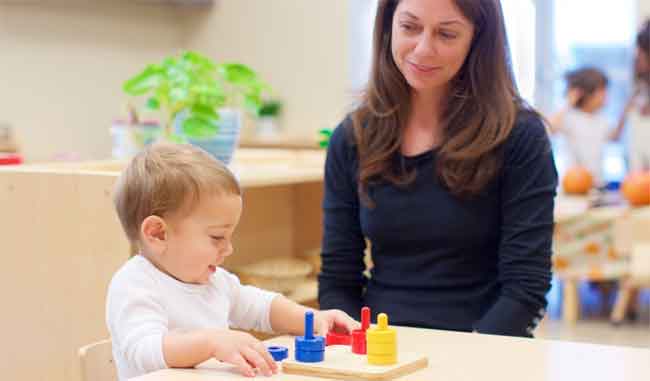
The core idea behind Grace and Courtesy is that complex social behaviors can be broken down into clear, simple steps that a young child can understand and practice. Instead of vaguely telling a child to “be nice” or “share,” a Montessori guide will give a specific, concrete lesson. For example, a common source of conflict in a preschool classroom is one child wanting to watch another child who is working. Instead of letting this lead to disruption, the guide will give a small group a lesson on “How to Watch Someone Work.” The guide might role-play the scenario, demonstrating how to approach quietly, how to find a place to sit without touching the person or their work mat, and how to watch with their hands in their lap. The children then have a chance to practice this skill with each other in a safe, guided context. This removes the ambiguity and anxiety from the social situation. The children now have a clear script for what to do. Other lessons might include:
- How to greet someone.
- How to offer help.
- How to politely interrupt a guide or another child.
- How to say “excuse me” when passing someone.
- How to wait for a turn.
- How to give and receive a compliment.
The Power of Role-Playing and Practice
Grace and Courtesy lessons are not lectures about morality. They are active, participatory experiences. Role-playing is a key component, as it allows children to practice the skill in a low-stakes environment before they need to use it in a real-life situation. The guide and the children will act out the scenarios, which is often a fun and engaging activity. This practice builds “social muscle memory.” When a real situation arises, the child does not have to panic or react impulsively; they can draw upon the practiced skill. The guide gives these lessons proactively, based on their observation of the community’s needs. If they notice children are struggling with joining a group, they will present a lesson on how to ask to join. If they see materials being handled carelessly, they will present a lesson on how to carry a tray or roll a mat. This proactive approach prevents many conflicts before they even begin and creates a culture of mutual respect. It frames social competence not as an innate personality trait, but as a set of skills that anyone can learn and master.
Creating a Culture of Peace and Respect
The cumulative effect of these small, consistent lessons is the creation of a profoundly peaceful and respectful classroom culture. Because everyone knows and understands the shared social conventions, the environment feels safe and predictable. Children learn that their needs and the needs of others can be met through respectful communication rather than aggression or frustration. The Grace and Courtesy curriculum is a key element of “normalization,” the process by which children in a Montessori environment settle into a state of calm, concentrated work and positive social behavior. It gives children a sense of agency over their social lives. They feel competent and confident because they have the tools to handle a variety of situations. This is arguably one of the most important life skills a child can learn. The ability to interact with others with grace, to solve problems peacefully, and to contribute positively to a community are skills that will serve them far beyond the preschool classroom, forming the foundation for healthy relationships and responsible citizenship throughout their lives.