
The Purpose Beyond the Task
Practical Life is the heart of the Montessori 3-6 classroom, but its name can be misleading to those outside the profession. While a child is ostensibly learning how to wash a table, pour water, or polish a shoe, the “direct aim” of these activities is not the cleanliness of the room. Instead, the primary purpose is the development of the child’s internal sense of order, coordination, concentration, and independence. These four pillars are the foundation upon which all later academic success is built. Without the ability to concentrate and follow a multi-step sequence, a child will struggle with the complexities of mathematics or reading later in their journey.
Refining Gross and Fine Motor Skills
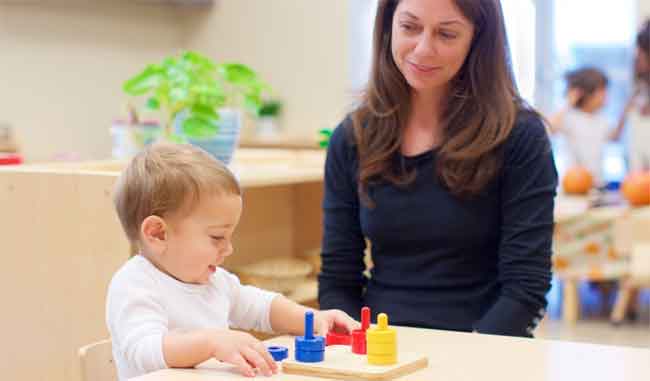
Practical Life activities are specifically designed to refine the child’s motor movements. Activities like “Transferring with Spoons” or “Using a Dropper” develop the “pincer grip” and hand-eye coordination necessary for writing. Gross motor skills are addressed through tasks such as “Walking on the Line” or carrying a heavy tray with balance and poise. In Montessori teacher training, we analyze these movements down to the smallest detail. We teach guides to move with “economy of motion,” showing the child the most efficient and beautiful way to complete a task. This physical mastery gives the child a sense of competence and confidence in their own physical body, which is essential for their overall self-image.
Developing the Logical Mind
Every Practical Life activity has a definite beginning, middle, and end. When a child engages in a “Table Washing” lesson, they must follow a logical 15-step sequence: from fetching the apron to emptying the dirty water and drying the basin. This logical progression trains the child’s mind to think in an orderly fashion. If a step is missed, the activity cannot be successfully completed, providing a natural “Control of Error.” This internal logic is the precursor to the mathematical mind. By repeating these tasks, the child develops the stamina and the mental structure required for abstract thinking. The orderly environment outside the child helps to create an orderly environment inside the child’s mind.
Building a Sense of Community
Practical Life is also the area where the child learns to care for their community. When a child spills water and takes the initiative to get a mop, they are practicing “Care of the Environment.” This fosters a sense of responsibility and belonging. The “Grace and Courtesy” portion of Practical Life teaches social navigation, such as how to greet a guest or how to walk around a classmate’s work rug. These are not just manners; they are the social tools that allow a diverse group of children to live and work together in harmony. By mastering these everyday tasks, the child realizes they are a capable, contributing member of their society, which is the ultimate goal of the Montessori philosophy.