Understanding the difference between leadership and guidance is essential in Montessori education. These two concepts are often confused, but they play distinct roles in shaping a child’s learning experience.
Defining Leadership
Leadership involves directing and influencing others toward a goal. In traditional classrooms, teachers lead by giving instructions and controlling activities. This approach ensures structure but may limit creativity and independence.
Defining Guidance
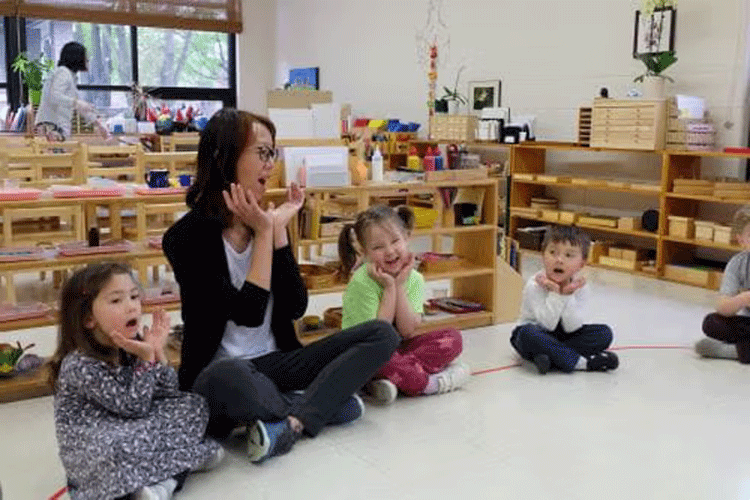
Guidance, on the other hand, focuses on supporting and facilitating learning. Montessori teachers guide children by observing their interests and providing appropriate resources. This approach encourages self-directed learning.
Key Differences
The main difference lies in control. Leadership often involves authority, while guidance emphasizes collaboration. In Montessori classrooms, teachers avoid dominating the learning process and instead act as facilitators.
Impact on Children
Guidance fosters independence, critical thinking, and confidence. Children learn to make decisions and solve problems on their own. Leadership, when used appropriately, provides structure and ensures a safe environment.
Finding the Right Balance
Montessori teachers must combine leadership and guidance effectively. They provide structure while allowing freedom, ensuring that children feel supported but not controlled.
Both leadership and guidance are important, but guidance plays a more prominent role in Montessori education. By understanding their differences, teachers can create a balanced and effective learning environment.