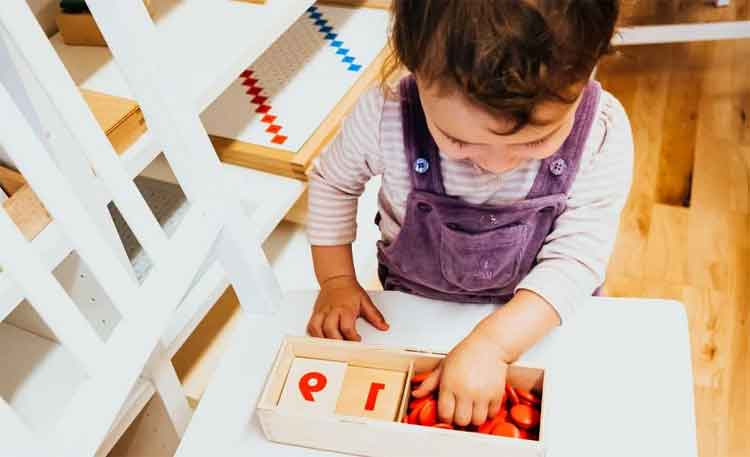
One of the most profound aspects of Montessori education is its approach to mathematics, which systematically moves the child from concrete, hands-on experience to abstract, symbolic understanding. This journey is facilitated by a carefully designed sequence of materials. The process begins with the **Golden Beads**, where a child can physically hold a single bead (unit), a bar of ten beads (ten), a square of one hundred beads (hundreds), and a cube of one thousand beads (thousands). This tangible, sensory experience makes the abstract concept of place value and the decimal system a concrete reality. The child isn’t just told that ten units make a ten; they can see it and feel it. They can physically exchange ten unit beads for one ten bar, and ten ten bars for one hundred square, internalizing the concept of exchange and hierarchy. After working with the Golden Beads and developing a solid foundation, the child is ready to move on to a new level of abstraction. The **Stamp Game** is introduced next, where small, color-coded wooden or plastic tiles represent the units, tens, hundreds, and thousands. At this point, the child is no longer using the physical quantity of the beads but is now using a symbolic representation. This is a crucial step in the child’s intellectual development, as they begin to internalize the concepts without needing the bulk of the Golden Beads. The Stamp Game allows the child to practice all four operations (addition, subtraction, multiplication, and division) with symbolic representations, preparing them for more complex calculations.
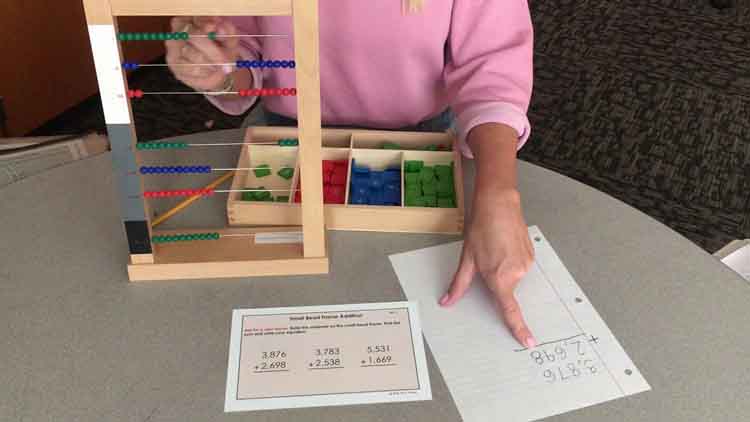
This progression continues with more advanced materials. The **Small and Large Bead Frames** are essentially a form of abacus that allows for much more efficient calculation and serves as a bridge to purely abstract, written math. The Bead Frame provides a visual representation of how numbers are manipulated, and the child’s hands-on work with the material reinforces their understanding of complex operations. By the time a child is ready to write down equations and solve them on paper, they have a deeply rooted, sensory-based understanding of the underlying principles. This journey from the concrete to the abstract is a hallmark of the Montessori method, ensuring that children don’t just memorize mathematical facts but truly comprehend them, building a lifelong love for the logic and beauty of numbers. This methodical, scaffolded approach removes the frustration and anxiety often associated with math, allowing children to build a natural and intuitive foundation. The ultimate goal is not just to teach a child to calculate, but to help them understand the very structure and purpose of numbers.