The mixed-age classroom is a defining feature of the **Montessori** method, a departure from the conventional, single-grade classroom model. In a typical Montessori environment, children from different age groups—for example, ages 3-6—learn and grow together in a single community. This arrangement is not random; it is a carefully considered aspect of the philosophy that is made possible by the unique design of the **Montessori materials** and the specific skills acquired during **Montessori teacher training**. But how do these materials and the teacher’s role support this seemingly chaotic environment, and does the social dynamic of the mixed-age classroom truly benefit a child more than a same-age grouping?
### Individualized Learning with Self-Correcting Materials
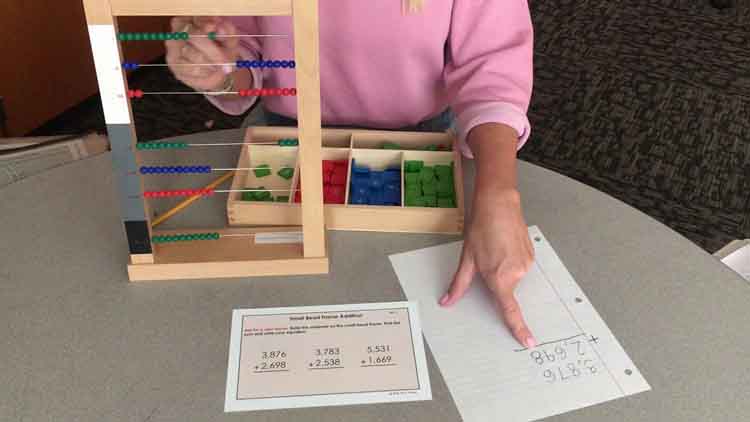
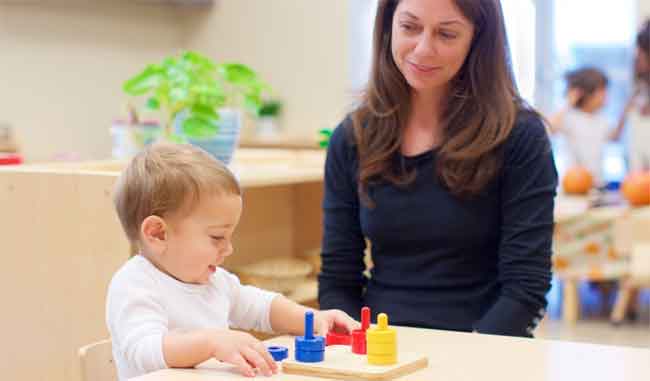
The key to the mixed-age classroom’s success lies in the individualized nature of the **Montessori materials**. Since each material has a specific learning objective and a built-in control of error, children can work with them independently, regardless of their age. A three-year-old might be working with the Cylinder Blocks, while a five-year-old works on the Golden Beads for complex math equations. The materials are designed to be self-correcting, so the children are not dependent on the teacher for feedback. This frees up the teacher to provide individual lessons and guidance to a small number of children at a time, rather than lecturing an entire group. This is in stark contrast to a traditional classroom, where the teacher’s attention is often divided among a large group of children all working on the same lesson at the same time. The materials, in essence, allow the teacher to act as a quiet facilitator, a role that is deeply explored during **Montessori teacher training**.
### The Power of Peer-Teaching
Furthermore, the materials foster a powerful social dynamic. When a younger child sees an older child confidently working with a more advanced material, it sparks their curiosity and provides inspiration. The younger child sees what is possible and is naturally motivated to work towards that goal. In turn, when an older child has the opportunity to present a lesson to a younger child, it reinforces their own understanding and builds their sense of leadership and empathy. This is a mutually beneficial relationship. The older child solidifies their knowledge by teaching it, and the younger child learns a concept from a trusted peer in a way that is often more relatable than from an adult. This powerful “peer-teaching” model is a key benefit of the mixed-age classroom, and it is a social dynamic that is nurtured by the teacher who has undergone rigorous training.
### The Role of the Trained Educator
The **Montessori teacher training** curriculum is designed to prepare educators for this specific environment. They learn how to observe and track each child’s individual progress, ensuring that they are introduced to new materials at the right time. They also learn how to manage the classroom’s social dynamics, promoting a culture of respect, collaboration, and mutual support. The teacher’s role is to create a peaceful and harmonious community where children feel safe to explore and learn at their own pace. This involves teaching grace and courtesy, mediating conflicts, and modeling respectful behavior. The training emphasizes that the teacher is the “spiritual guide” of the classroom, a presence that provides security and inspiration.
### A Community That Mirrors the World
Without the specific design of the **Montessori materials** and the comprehensive **Montessori teacher training** that supports their use, would the mixed-age classroom be effective? It is likely that it would devolve into chaos, as children would be unable to find purposeful work and would be in constant need of adult intervention. The materials and the trained teacher work in harmony to create an environment where children can thrive in a community that mirrors the real world. This social and academic integration is a unique benefit of the Montessori approach, and it is a direct result of the intentional design of the classroom and the dedication of the educators who have been trained to guide it. Ultimately, is the mixed-age classroom, supported by the materials and the trained teacher, a more effective model for preparing children for a diverse and collaborative world? The **Montessori** philosophy suggests that the answer is a resounding yes.