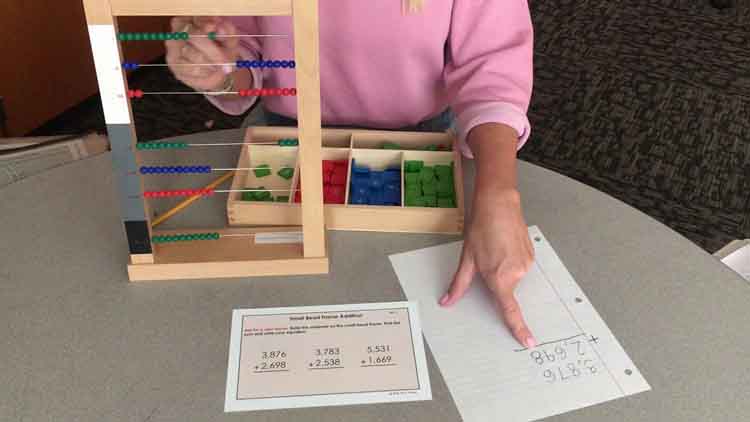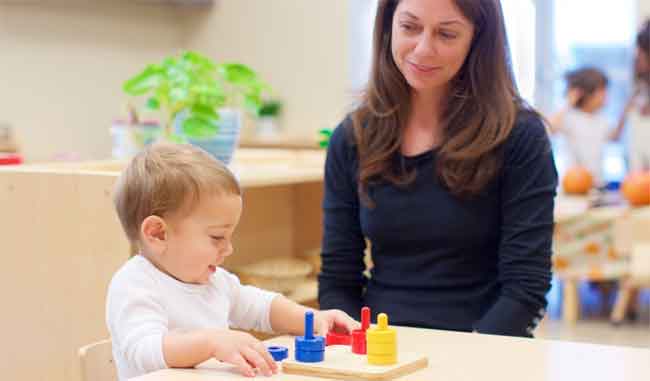

In the vast tapestry of educational theory, few concepts are as revolutionary and deceptively simple as the “prepared environment” articulated by Dr. Maria Montessori. At its core, this concept posits that a child’s learning is not a passive reception of facts, but an active, self-directed exploration facilitated by their surroundings. But is this environment merely a well-organized classroom, or is it a dynamic, living entity that fundamentally shapes a child’s cognitive and spiritual development? The answer lies in a deep understanding of what constitutes a truly prepared environment, a knowledge that is meticulously imparted through **Montessori teacher training**.
A prepared environment is more than a room filled with attractive **Montessori materials**; it is a space crafted to meet the specific developmental needs of children at different stages. The environment is orderly, beautiful, and accessible. Everything has a designated place, and the materials are arranged in logical sequences that invite the child to move from simple to complex concepts. This order is not just for aesthetic appeal; it provides a sense of security and clarity for the child, reducing cognitive load and allowing them to focus on the task at hand. When a child can easily find, use, and return a material, they are building a sense of independence and order within themselves. But can a child truly thrive in an environment that is so structured, or does it stifle creativity and spontaneity?
The genius of the prepared environment is its balance of freedom and limits. The freedom is in the child’s choice of work; they are free to choose any activity from the shelves that has been presented to them and to work with it for as long as they like, provided they use it respectfully and return it properly. The limits are the very structure of the environment and the materials themselves. For instance, the Geometric Cabinet, with its array of shapes, has a single purpose: to help the child learn to discriminate between different shapes. It provides a focused, sensorial experience without distraction. This intrinsic control of error—where a piece only fits in one specific place—teaches the child to be their own teacher. The educator, in this context, moves from a position of authority to one of a silent, humble guide.
This philosophical shift is at the very heart of **Montessori teacher training**. Trainees learn to view the classroom not as a place to deliver lessons, but as a space to observe and facilitate. They are taught to prepare the environment with meticulous care, ensuring every material is in perfect condition and every lesson is presented with grace and clarity. The training also emphasizes the social and emotional dimensions of the environment. The mixed-age classroom, a key feature of the Montessori environment, allows older children to act as mentors and leaders, reinforcing their own knowledge and fostering empathy. Younger children, in turn, are inspired by the work of their older peers, creating a natural flow of learning that transcends a rigid, age-based curriculum.
Furthermore, the prepared environment extends beyond the classroom to include practical life activities. Children learn to care for their surroundings—sweeping, watering plants, preparing snacks—which not only teaches them practical skills but also instills a deep sense of responsibility and connection to their community. These activities are just as important as the academic work with the **Montessori materials**. They build a child’s confidence and coordination, preparing them for more complex tasks. Is it possible for a child to develop this same level of self-sufficiency and independence in an environment that does not offer these specific, purposeful activities?
In essence, the prepared environment is a reflection of Dr. Montessori’s deep respect for the child as an individual with immense potential. It is a space that respects their need for movement, their desire to work with their hands, and their innate drive to learn. It is a place where a child can achieve concentration, a state of deep engagement that is the gateway to all true learning. A teacher trained in this method is not a mere instructor but a guardian of this sacred space, a facilitator who knows when to present a lesson, when to stand back, and when to simply observe the miracle of the child’s self-construction. Without this meticulously prepared environment and the **Montessori teacher training** that supports its creation, would the entire philosophy of child-led learning simply collapse? The prepared environment, far from being just a classroom, is a testament to the power of surrounding children with purpose and beauty, and in doing so, unlocking their truest selves.