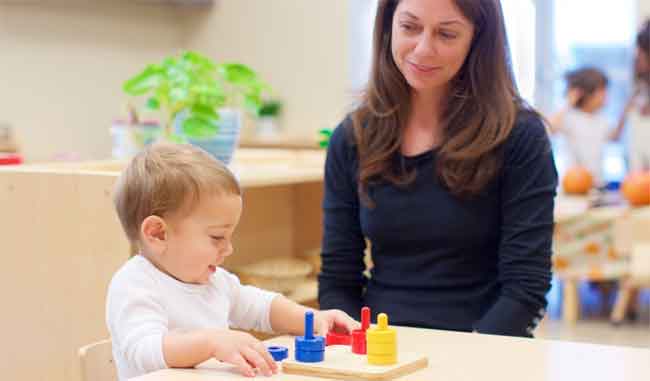
In traditional teacher education, the focus is often on curriculum delivery, classroom management techniques, and pedagogical theories. While these are all important, the Montessori approach introduces a radical, yet profoundly simple, concept: the centrality of **observation**. For a Montessori teacher in training, observation is not a passive activity but a foundational skill, a scientific discipline, and a spiritual practice. It is the very first step toward understanding the child and, by extension, the entire purpose of the prepared environment. Dr. Montessori believed that the adult must first learn to see the child as they are, without preconceived notions, judgments, or external expectations. This requires a level of patience, humility, and presence that is not typically emphasized in conventional training programs. An aspiring Montessori educator spends countless hours in a classroom, not as a teacher, but as a silent witness to the child’s unfolding development. They learn to watch for moments of deep concentration, for the spontaneous selection of work, and for the subtle cues that indicate a child’s developmental needs. This practice of observation fundamentally shifts the teacher’s role from a director of activity to a guide, a facilitator whose purpose is to support and protect the child’s natural journey of self-construction. Without this deep, observational foundation, a teacher may have all the knowledge of the materials but lack the crucial insight needed to connect with the child on a meaningful level. Observation is the anchor that grounds the Montessori teacher in the reality of the child, ensuring that their work is always responsive, relevant, and respectful.
The process of observation in Montessori teacher training is highly structured and purposeful. Trainees are taught to record their observations with a scientific objectivity, noting specific actions, behaviors, and reactions rather than making subjective interpretations. For example, instead of writing “The child was bored,” a trainee would document, “The child worked with the Pink Tower for 30 seconds and then walked to the window.” This factual, non-judgmental approach trains the educator to see the world from the child’s perspective. It helps them to discern the child’s interests, their sensitive periods, and their specific needs at any given moment. This is a skill that takes practice and intentional cultivation. It forces the adult to quiet their own ego and to be fully present for the child’s journey. Observation is also a powerful tool for self-reflection. By documenting the child’s interaction with the environment, the trainee begins to see how their own actions and interventions might be helping or hindering the child’s work. They learn to recognize the power of their presence and the importance of stepping back and allowing the child to work independently. The training includes specific exercises, such as “follow the child,” where a trainee observes one child for an extended period, documenting their every move and choice. This exercise reveals the incredible intelligence, purpose, and logic that a child brings to their own learning. It is a transformative experience that shatters many preconceived notions about childhood and education. The observation log becomes a personal curriculum for the teacher, a record of their own professional and philosophical growth. It is through this deep, sustained practice of observation that the Montessori teacher truly learns to “follow the child.”
The Link Between Observation and the Prepared Environment
Observation is not an isolated skill; it is the vital link between the child and the **prepared environment**. A Montessori teacher’s first job is to create a classroom that is meticulously designed to meet the developmental needs of the children within it. However, the environment is not a static place; it is a dynamic space that must constantly be adapted and refined based on the observations of the children. An educator in training learns that the prepared environment is a living, breathing curriculum, and that their observations are the key to its effectiveness. If they observe that a particular material is not being used, they must ask why. Is it in the wrong place? Is the lesson not clear? Are the children not yet ready for it? If they observe that a child is consistently struggling with a certain task, they must reflect on whether the material itself is too difficult or if the child needs a new, tailored presentation. In this way, observation becomes a continuous feedback loop that ensures the environment is always aligned with the child’s needs. The training process emphasizes this cyclical relationship. A trainee learns to first observe, then to analyze their observations, then to make a change in the environment or their approach, and finally, to observe again to see the results. This scientific method is at the core of Montessori education. The prepared environment is not a a one-size-fits-all solution; it is a custom-built space that is constantly being shaped by the very people who inhabit it. The educator’s role is to be the steward of this living curriculum, and observation is their most important tool. It is what allows them to move from simply managing a classroom to truly nurturing a community of learners. The guide becomes an artist and a scientist, and their observations are the raw material for their creation. The training teaches them that the most beautiful and effective classrooms are those that are most closely aligned with the inner life of the children within them.
From Observation to Inner Preparation
Beyond the practical applications, observation is also a tool for the teacher’s **inner preparation**. Dr. Montessori insisted that the greatest obstacle to a child’s development is the adult’s own ego and preconceived notions. The act of observing without judgment is a profound exercise in self-awareness. It forces the educator to confront their own biases, to set aside their desire for control, and to surrender to the child’s natural process. A teacher in training learns that they must first “work on themselves” before they can truly work with the child. This involves cultivating a sense of calm, patience, and non-reactivity. When an educator can remain calm in the face of a challenge, they provide a sense of security and stability for the entire classroom. This inner calm is not something that can be taught in a lecture; it must be practiced and cultivated through the discipline of observation. As a trainee observes the child, they begin to see the profound wisdom and purpose that guides the child’s actions. They witness moments of deep concentration and spontaneous joy. These observations fill the trainee with a sense of wonder and respect for the human spirit. This reverence for the child is what ultimately transforms a good teacher into a great one. It is the wellspring from which all the other virtues of a Montessori educator flow—the patience to wait, the humility to step back, and the courage to trust the child’s inner guide. Observation is the door to this inner transformation. It is what allows the teacher to move from being a mere technician of a method to a true practitioner of a philosophy. The training, therefore, is not just about learning a curriculum; it is about a profound personal and spiritual journey. And the first, most important step on that journey is to learn to see with the heart, and to observe with the mind. This is the enduring power of observation in Montessori teacher training, and it is what makes a Montessori educator a guide in the truest sense of the word.