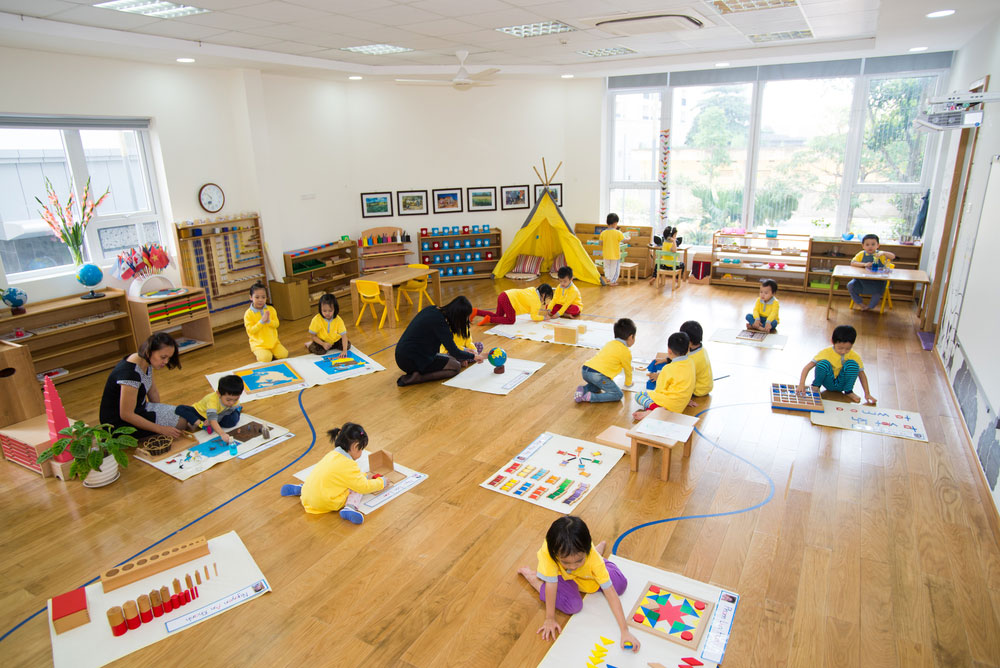
The Purpose of Sensory Refinement
In the Montessori philosophy, the sensorial materials are often described as “the mathematics of the senses.” Between the ages of three and six, a child is in a sensitive period for sensory refinement. They are naturally driven to touch, taste, smell, hear, and see everything in their environment with intense curiosity. However, without a structured way to organize these impressions, the child can become overwhelmed. Sensorial materials provide the child with a mental filing system, allowing them to categorize and label the thousands of sensory inputs they receive daily. This refinement is not just about the physical organs of the senses; it is about the development of the intellect through the gateway of the senses.
The Principle of Isolation of Quality
One of the most technical aspects of sensorial materials is the “Isolation of a Single Quality.” Dr. Maria Montessori realized that to help a child focus on a specific concept—like weight or color—all other variables must remain constant. For example, in the Baric Tablets, every tablet is the same size, shape, and color; the only difference is the weight of the wood. This isolation allows the child’s mind to focus entirely on the pressure felt in their palms. By removing distractions, the material makes the abstract concept of “weight” concrete and understandable. This scientific precision is what separates Montessori materials from ordinary toys, turning every activity into a focused lesson in cognitive discrimination.
Building the Foundation for Mathematical Thinking
Sensorial work is the direct precursor to formal mathematics. Many materials, such as the Pink Tower or the Red Rods, are based on the number ten. The Pink Tower consists of ten cubes, increasing in volume from one cubic centimeter to one cubic decimeter. As the child builds the tower, they are physically experiencing the base-ten system and the concept of three-dimensional space. They are not just stacking blocks; they are absorbing mathematical relationships that they will later encounter in abstract formulas. This concrete foundation ensures that when the child moves to the Math area of the classroom, they have a deep, intuitive understanding of quantity, sequence, and dimension that is grounded in physical reality.
Refining the Stereognostic Sense
Beyond the primary five senses, Montessori introduced work for the “stereognostic sense”—the ability to recognize an object’s form through tactile exploration without the use of sight. Activities like the “Mystery Bag” challenge the child to use their hands to “see” an object. This requires the brain to synthesize tactile information into a mental image. This refinement of the muscular memory and touch is vital for the development of the hand as a tool for intelligence. It fosters a sense of wonder and focus, encouraging the child to pay close attention to the details of the physical world. By training the stereognostic sense, we prepare the child for complex tasks like writing and geometry, where the relationship between touch and form is paramount.