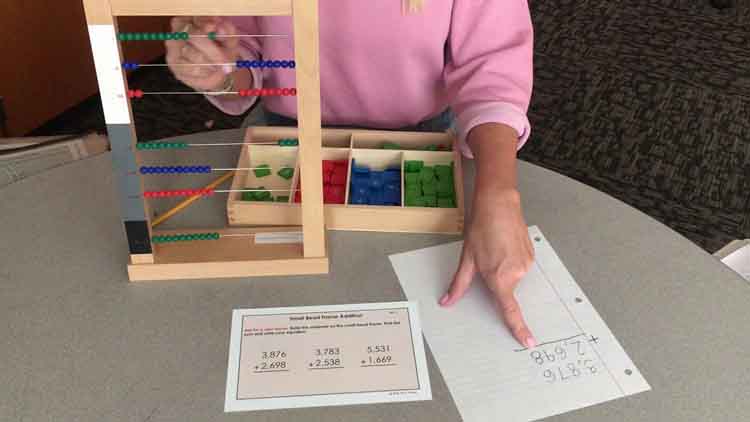

Montessori materials are specifically designed to promote independent learning and creative problem solving. These materials are not just tools for teaching concepts; they are instruments that encourage children to explore, experiment, and discover solutions on their own. The thoughtful design of these materials plays a crucial role in developing a child’s ability to think creatively.
Purposeful Design of Materials
Each Montessori material has a clear purpose and is designed to isolate a specific concept. This simplicity allows children to focus and understand the task at hand. Materials are also self-correcting, which means children can identify and fix their own mistakes without external intervention. This feature encourages independent problem solving.
Hands-On Learning Experience
Montessori materials provide a tactile learning experience. Children learn by doing, which enhances their understanding and retention. When children manipulate objects, they engage multiple senses, which helps them grasp complex ideas more effectively. This hands-on approach encourages experimentation and creative thinking.
Encouraging Trial and Error
Trial and error is an essential part of creative problem solving. Montessori materials are designed to allow children to try different approaches until they find the correct solution. This process teaches persistence and resilience. Children learn that mistakes are a natural part of learning and not something to fear.
Promoting Logical Thinking
Many Montessori materials are structured in a way that promotes logical sequencing and reasoning. Children learn to identify patterns, relationships, and cause-and-effect connections. This logical thinking forms the foundation for creative problem solving, as children learn to approach challenges systematically.
Fostering Independence
Because Montessori materials are self-explanatory, children can work independently without constant guidance. This independence encourages them to take initiative and explore solutions on their own. Teachers provide support only when necessary, allowing children to develop confidence in their abilities.
Integration Across Subjects
Montessori materials are not limited to a single subject. They often integrate multiple areas of learning, encouraging children to make connections between concepts. This interdisciplinary approach enhances creativity and problem-solving skills.
Montessori materials play a significant role in developing creative problem-solving skills. Their thoughtful design, hands-on nature, and emphasis on independence create an environment where children can explore, experiment, and learn from their experiences. By using these materials, Montessori educators help children become confident and capable problem solvers.