pratheek

Pressure Cylinders

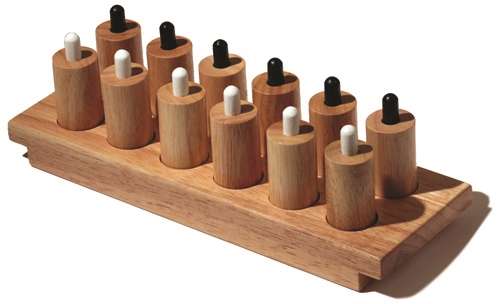
The Pressure Cylinders provide experiences in pairing and grading degrees of pressure. By pressing the spring-loaded plungers, the child senses the difference in resistance pressure. The set includes a wooden tray that holds 6 matching pairs of pressure cylinders. Designed by George Russell. This set helps to develop the ability to discriminate varying degrees of

Pressure Cylinders Read More »

Montessori for Children with Special Needs

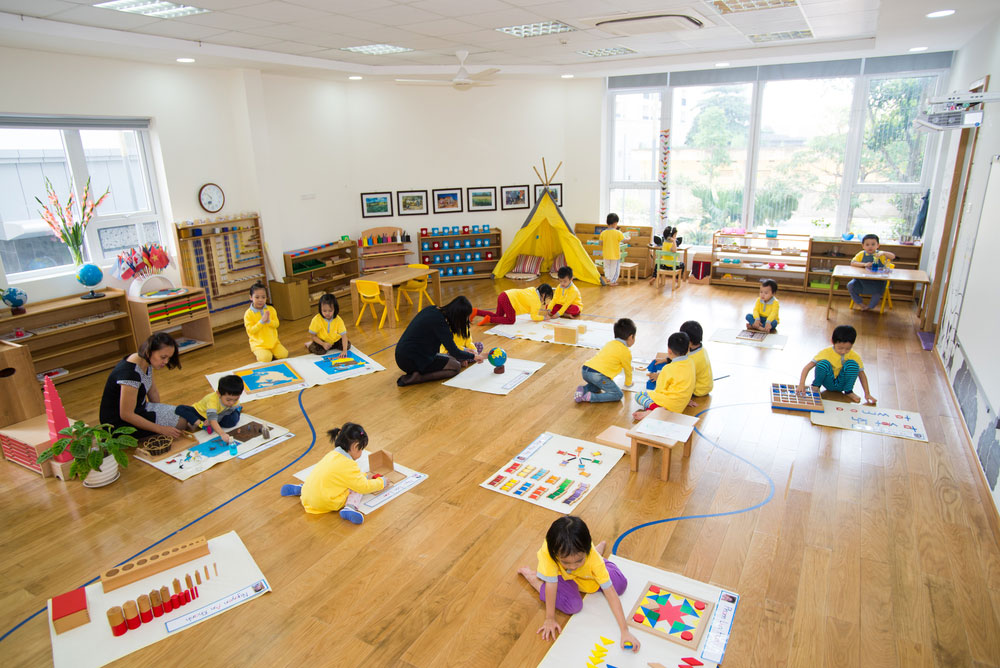
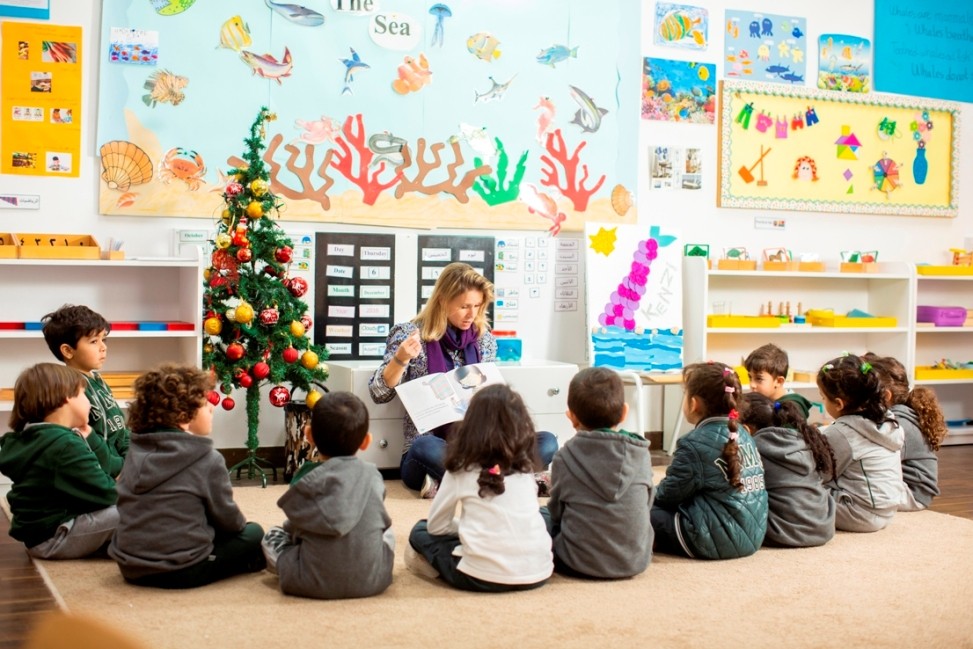
The Montessori Method of education provides a nurturing, supportive environment for children of all abilities and learning styles. This includes children with special needs, including physical disabilities; learning differences in reading, writing, spelling and/or math; ADHD; and mild-to-moderate autism spectrum disorders. Children learn in multi-age classes, with the same teacher, for 3 years. This sustained

Montessori for Children with Special Needs Read More »

Bead Frame

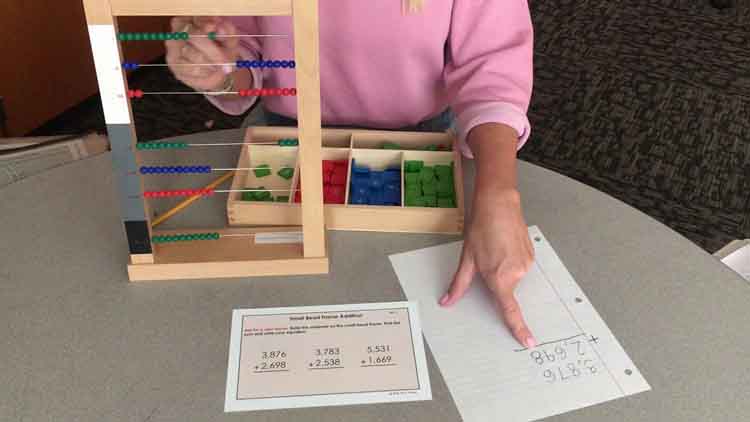
The Bead Frame helps to a child of transition from a separate understanding of a more abstract understanding of the decimal system, added, subtraction, multiplication and division of a thousand digits. The setting of Montessori Math Small Bead Frame is often overlooked in early childhood classes. The framework comes at the end of lessons on

Bead Frame Read More »

Number Rods

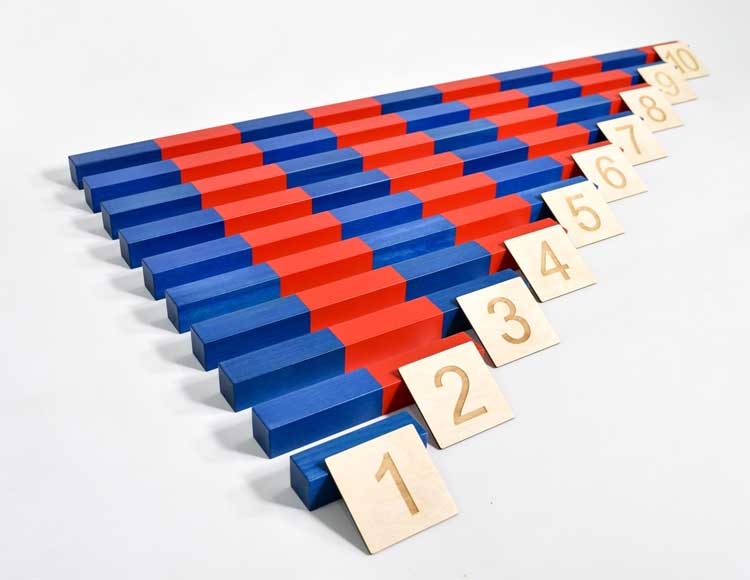
The Number Rods divulge college students to the idea of measurement. Instead of searching at rods and saying, “this one is longer,” now the pupil is capable of really quantify precisely how a whole lot longer. While this could appear to be a as a substitute intuitive skill, it really takes a honest little bit

Number Rods Read More »

Sandpaper Letters

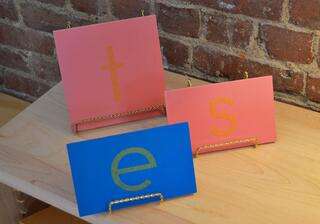
The Sandpaper Letters are certainly considered one among Maria Montessori’s maximum first rate materials. Tracing the letters offers kids the inspiration for lovely penmanship. Working with the Sandpaper Letters, kids find out how the sounds they listen are written. Montessori emphasized that writing comes first, then reading. From the earliest levels, college students are brought

Sandpaper Letters Read More »

Beads Chain

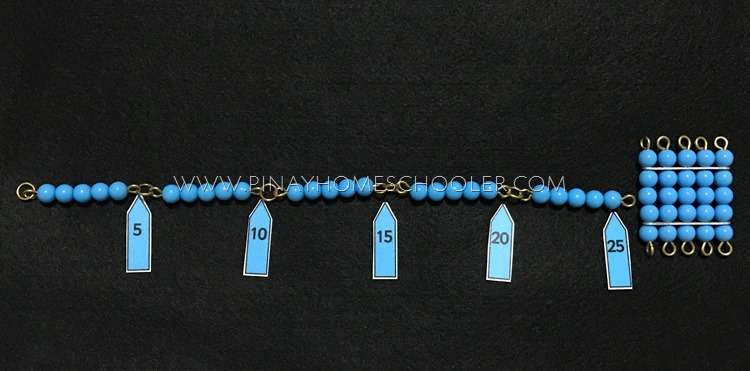
The bead chains are a colorful, quintessential Montessori material. In the primary classroom, children use them to learn how to count, and perhaps how to skip count. In a lower elementary classroom ,they are used for skip counting and to help memorize multiplication facts. In upper elementary children use them to solidify concepts like squaring

Beads Chain Read More »

BROWN STAIRS

Brown Stairs, additionally called Broad Stairs, have many commonalities with the Pink Tower. The Brown Stairs are composed of square prisms, 20 Montessori brown stairs centimeters long, of step by step growing sizes. These stairs are used to increase the standards of thickness. Similarly to the Pink Tower, they’re utilized by arranging them in ascending

BROWN STAIRS Read More »

THE PINK TOWER

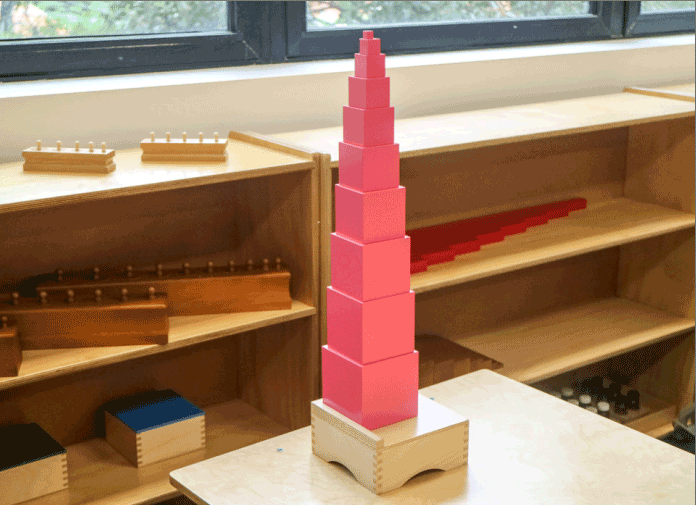
The Pink Tower includes ten timber cubes of progressively the red tower growing length. Students prepare those blocks to create a tower, from the most important on the base, to the smallest on the top. This fabric facilitates college students analyze and refine their feel of length in 3-dimensional space. As college students use the

THE PINK TOWER Read More »

Playful Learning and Montessori Education

In recent years, educators have begun using the didactic teaching methods appropriate for older children in preschool settings (Zigler and Bishop-Josef2004). Increasingly, we see children ages three to five expected to sit and listento lessons without interacting (Hamre and Pianta 2007). Such an approach tolearning belies the principles of constructivism that much research on humanlearning

Playful Learning and Montessori Education Read More »

error: Content is protected !!