pratheek

montessori-teaching

Can a prepared environment foster social growth?

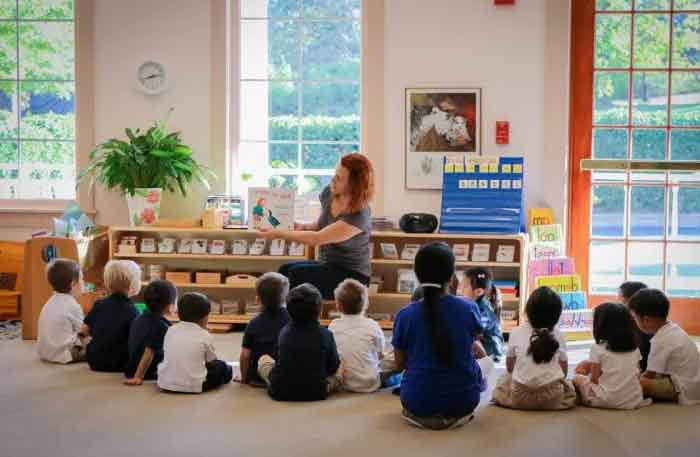
The Classroom as a Micro-Society While the Montessori environment is often praised for its academic materials, its role in social development is equally significant. The prepared environment is designed to be a “micro-society” where children of different ages (usually in a three-year span) live and work together. This mixed-age grouping is an essential component of

Can a prepared environment foster social growth? Read More »

montessori-teacher-training

मोंटेसरी गतिविधियाँ ध्यान केंद्रित करने की क्षमता में सुधार क्यों करती हैं?

ध्यान की विज्ञान और मोंटेसरी डिज़ाइन ध्यान केवल शांति से बैठना नहीं है: यह चुनी हुई गतिविधि पर निरंतर ध्यान केंद्रित करने की क्षमता है। मोंटेसरी वातावरण इस गहन जुड़ाव को आमंत्रित करने के लिए डिज़ाइन किए जाते हैं। सामग्री को सरल से जटिल तक क्रमबद्ध किया जाता है और ये स्व-नियंत्रित होती हैं ताकि

मोंटेसरी गतिविधियाँ ध्यान केंद्रित करने की क्षमता में सुधार क्यों करती हैं? Read More »

montessori-and-dual-language-immersion

What Techniques Enhance Teacher Emotional Awareness?

Introduction: importance of emotional awareness Emotional awareness is a core aspect of emotional intelligence for Montessori teachers. Awareness of one’s own emotions and those of children supports empathy, effective communication, and classroom management. This article provides techniques to enhance emotional awareness and integrate it into daily teaching practice. Mindfulness and observation exercises Mindfulness strengthens awareness

What Techniques Enhance Teacher Emotional Awareness? Read More »

teaching-summary

Why Do Montessori Teachers Need Emotional Intelligence?

Introduction: understanding emotional intelligence in teaching Montessori classrooms are unique ecosystems where children learn through exploration, repetition, and self-directed activity. Emotional intelligence equips teachers with the ability to read classroom dynamics, respond empathetically, and foster self-regulation among students. Teachers with high EI are better positioned to manage stress, build strong relationships, and model appropriate emotional

Why Do Montessori Teachers Need Emotional Intelligence? Read More »

montessori-teacher-training

How Can Teachers Enhance Emotional Intelligence?

Introduction: the role of emotional intelligence in Montessori classrooms Emotional intelligence (EI) is a critical skill for Montessori teachers, influencing classroom atmosphere, child development, and teacher-child relationships. Developing EI enables teachers to respond empathetically, manage stress, and foster social-emotional learning in children. This post explores strategies and practices that help teachers enhance emotional intelligence while

How Can Teachers Enhance Emotional Intelligence? Read More »

child-care-centres

Can Traditional Training Incorporate Montessori Principles?

Practical cross-pollination in teacher education Many elements of Montessori pedagogy can be adapted into traditional teacher training and classroom practice. The core ideas—respect for the child, observation, small-group work, and sensorial experiences—are pedagogically sound and can enrich teacher practice across settings. This article explores how traditional programs can incorporate Montessori principles without abandoning their accountability

Can Traditional Training Incorporate Montessori Principles? Read More »

sensory-senitive-student

What Practices Build Patient Classroom Cultures?

Introduction: culture over rules Patience emerges from culture more than from a single rule. A patient classroom culture is a web of interlocking practices: predictable routines, explicit social scripts, material design, teacher modeling, and community norms. Building such a culture requires intentional action across physical, temporal, and interpersonal domains. This post outlines practical strategies schools

What Practices Build Patient Classroom Cultures? Read More »

skill-development

What Reading Builds Montessori Observation Skills?

Observation as the heart of Montessori training Observation is not a peripheral activity in Montessori education; it is the teacher’s central discipline. Montessori described the adult as a scientist, carefully watching children to identify sensitive periods, signs of normalization, and developmental needs. For trainees, building observation skills means learning how to see without judging, record

What Reading Builds Montessori Observation Skills? Read More »

error: Content is protected !!