Early literacy foundations in Montessori play
Literacy development in the preschool years is multifaceted. It includes oral language, vocabulary, phonemic awareness, letter knowledge, and symbolic play. Montessori integrates these elements through purposeful play that combines sensorial, motor, and language experiences. The materials and activities are sequenced to connect sensory impressions with symbolic representation—sandpaper letters, matching objects to classified cards, and storytelling routines create a rich context in which early literacy skills naturally emerge.
Sandpaper letters and multisensory approaches
Sandpaper letters are a signature Montessori tool for early literacy. Children trace the textured letter shapes while saying the corresponding sound, combining tactile, visual, and auditory input. This multisensory approach strengthens the neural connections between the motor act of tracing, the visual shape of the letter, and its phonetic value. By grounding phonemic awareness in the body, Montessori reduces abstraction and helps children internalize letter-sound correspondences more readily.
Movable alphabet and pre-writing skills
The movable alphabet allows children to build words before they are expected to write them. This activity separates the conceptual task of word formation from the fine motor demands of handwriting. Children can arrange letters to spell words they hear and then later practice writing those words. This sequencing reduces cognitive load and builds confidence: when a child can show they know a word using physical letters, they are more motivated to attempt writing it by hand later.
Storytelling, vocabulary, and narrative skills
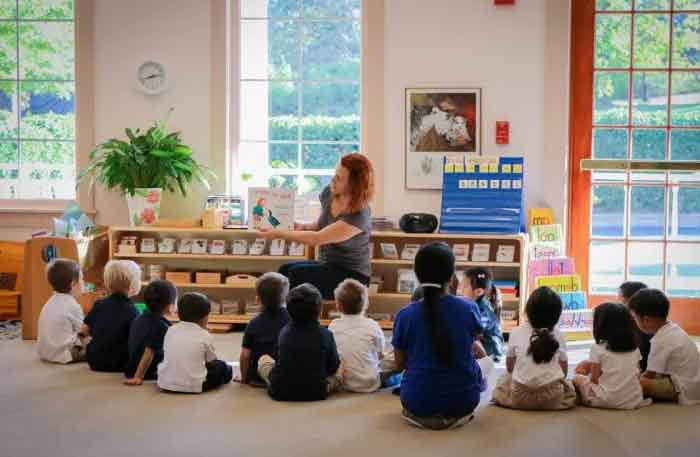
Montessori classrooms prioritize rich oral language through storytelling, descriptive lessons, and classified vocabulary work. Teachers deliberately introduce specific vocabulary—names of objects, action words, and descriptive adjectives—within meaningful contexts. Developing narrative skills through retelling and dramatization supports comprehension and expressive language. These narrative competencies are crucial for later reading comprehension, where understanding sequence, cause-effect, and character motivations becomes central.
Phonemic awareness through play
Playful phonemic exercises—rhymes, alliteration games, and sound scavenger hunts—build the capacity to hear and manipulate sub-word units. Phonemic awareness predicts later reading success and is practiced in Montessori with fun, child-centered activities. Rather than decontextualized drills, these games situate phoneme work in social and sensory play, preserving engagement while training a skill critical to decoding written text.
Home strategies to mirror Montessori literacy support
Parents can replicate these strategies by offering simple tactile letter materials, reading aloud daily, and engaging in sound-focused games. Encourage children to tell stories about their day and to compose simple narratives with pictures. Provide writing materials alongside toys so that symbolic production feels natural and integrated with play rather than a separate, pressured task.
Assessment through observation and portfolios
Montessori teachers assess literacy progress via observation and work samples rather than standardized tests. Portfolios of children’s attempts—recorded vocabulary, copied words, and early invented spelling—demonstrate growth over time. Observational notes about a child’s ability to identify initial sounds, blend phonemes, or write letters guide the timing of new lessons and interventions.
Conclusion: literacy as an embodied, playful process
Montessori approaches early literacy by embedding letter and sound learning in multisensory, meaningful play. Sandpaper letters, movable alphabets, storytelling, and playful phonemic activities create a coherent progression from perception to symbol to written language. For preschool educators and parents, the lesson is clear: literacy thrives when it is sensory, social, and joyful.