
Intro
Choosing Montessori materials for home doesn’t require buying a complete catalog. The goal is to select purposeful, high-quality items that isolate skills and invite repetition. This post outlines criteria, recommended starter materials for different ages, and tips to adapt household items into Montessori lessons.
Criteria for choosing materials
Choose materials that are: beautiful and inviting, few but purposeful, safe and durable, and that isolate a single concept (e.g., pouring isolates coordination). Avoid multi-purpose toys that distract from focused repetition. Prioritize open-ended materials that grow with the child.
Starter list for toddlers (18–36 months)
- Practical life: small pitcher for pouring, child-size broom, spooning sets
- Sensorial: texture boards, sound jars, simple puzzle boards
- Language: picture books, object-sorting trays, simple nomenclature cards
Starter list for preschool (3–6 years)
- Practical life: dressing frames, food preparation set (child-safe knife), polishing set
- Sensorial: pink tower-like stacking blocks, knobbed cylinders, geometric solids
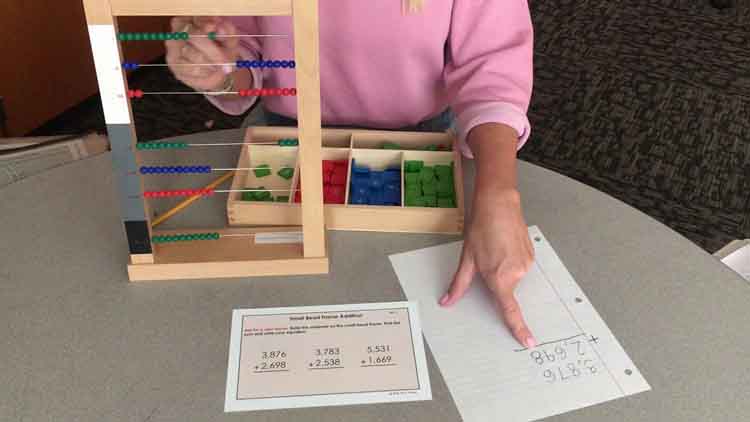
- Math & language: counting beads, number rods, movable alphabet set
Starter list for elementary-aged children
At this stage, materials become more abstract: bead chains for large number work, fraction circles, grammar symbols, and project-based resources like science kits and timelines. Also include tools for research and expression: notebooks, rulers, maps, and accessible reference books.
Adapting household items
Many Montessori activities can be made from everyday objects: measuring cups for pouring and fraction activities, clothespins for fine motor work, or jars for sorting and sound games. The adult’s creativity can stretch a limited budget into a rich environment.
When to invest in authentic materials
Some materials — like the Montessori knobbed cylinders or the movable alphabet — are designed to present a concept with clarity. If you find you’ll use an item frequently and it supports a sensitive period for the child, it may be worth purchasing an authentic set. Look for solid construction and neutral aesthetics.
Rotation and maintenance
Introduce a limited number of materials and rotate them every 1–3 weeks based on interest. Maintain materials by replacing broken pieces and keeping them clean and organized. A well-cared-for material invites respect and repeated use.
Conclusion
Choosing Montessori materials for home is less about quantity and more about intention. Prioritize materials that isolate skills, invite repetition, and support independence. Use household items creatively, and invest in select authentic materials as needs arise.