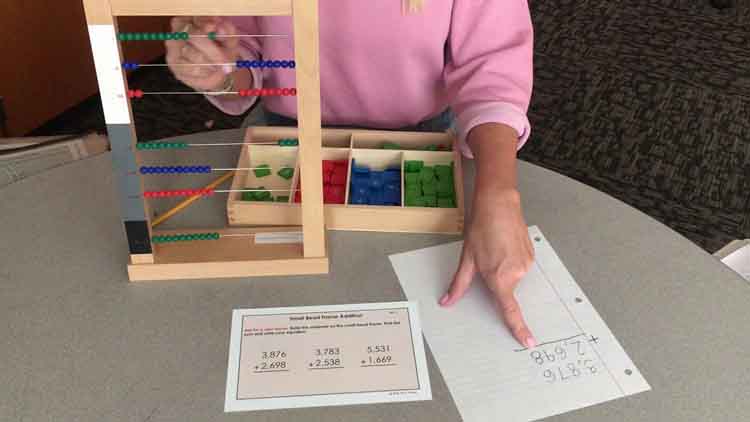

Defining competence in a Montessori context
Montessori competence blends practical skill with a pedagogical disposition. Competent teachers can present materials with clarity, manage an environment to support concentration, and observe children to make timely instructional decisions. Beyond technical skill, competence includes emotional regulation, respectful communication, and a reflective practice. This article describes how teachers demonstrate Montessori competence—through concrete classroom behaviors, measured outcomes, and professional habits that signal readiness to guide children’s learning.
Clear, concise presentations
A visible sign of competence is the teacher’s ability to present lessons succinctly and precisely. Presentations must be short, kinetic, and rely more on demonstration than on verbal explanation. For example, when introducing a sensorial material, the competent teacher models each step slowly, reverses the steps to show completion, and then watches silently as the child attempts the work. Competence is evident when a teacher’s demo minimizes confusion and invites the child to explore without constant adult correction.
Maintaining the prepared environment
Competent teachers maintain an orderly, inviting environment: materials are complete, neatly presented, and logically arranged. They rotate materials thoughtfully, repair or replace worn items, and ensure that displays reflect current learning priorities. An environment that consistently invites long, uninterrupted work cycles is both a sign and a product of teacher competence.
Observation translated into action
Observation is not passive; competent teachers translate careful notes into intentional interventions. When a teacher notices that a child repeats a particular activity, they interpret whether it indicates mastery, boredom, or unfinished work. The teacher’s response might be to introduce a more complex material, offer a brief individual lesson, or scaffold the task subtly. This calibrated responsiveness demonstrates both observational skill and pedagogical judgment.
Fostering independence and social responsibility
Teachers demonstrate competence by nurturing independence and classroom citizenship. Competent guides set up clear, consistent routines—how materials are borrowed, how work is carried to the table, how cleanup occurs—and then model and reinforce these norms. They also encourage older children to mentor younger ones, which multiplies learning opportunities and develops leadership. When a classroom operates with minimal adult policing, it indicates that the teacher has successfully instilled norms of responsibility and mutual respect.
Emotional balance and conflict mediation
Emotional competence is central. Teachers manage their own responses to stress and model calm problem solving. In conflicts among children, a competent teacher uses brief, neutral language to help children articulate feelings and find repair strategies—\”I see you are upset; what happened?\”—rather than imposing quick punishments. This coaching builds children’s capacity for self-regulation and constructive social interactions.
Documentation, reflection, and family communication
Competent teachers document progress through portfolios, anecdotal notes, and work samples. They use these artifacts to reflect on classroom patterns and to communicate meaningfully with families. Clear, honest communication with parents about a child’s strengths and next steps reinforces consistency between home and school, supporting the child’s development. Teachers who can narrate a child’s growth with evidence demonstrate both professional care and competence.
Continuous learning and collegiality
Finally, competence is sustained through professional humility: competent Montessori teachers remain learners. They participate in peer observations, study groups, and professional development, and they welcome feedback. Competence is relational—nurtured in communities of practice where teachers exchange ideas and refine their craft.
Conclusion: competence as practice and posture
Montessori competence is visible in precise presentations, a well-maintained environment, deep observational practice, and an emotionally regulated classroom presence. It is enacted through daily habits, documentation, and ongoing learning. Teachers demonstrate competence when their classrooms hum with independent work, mutual respect, and purposeful activity—signs that both curriculum and pedagogy are in alignment.