
The pursuit of a **Montessori teacher training** is more than just an academic endeavor; it is a profound journey of personal and professional transformation. Unlike traditional teacher education that often focuses on curriculum delivery and classroom management, Montessori training is rooted in a deep-seated philosophy of respecting the child as an individual with immense potential. The training program is designed to instill not just knowledge, but a sense of humility, observation, and a fundamental belief in the child’s ability to self-construct. But does this unique approach to training truly create educators who are more effective at fostering a lifelong love of learning, and is this philosophical shift the most critical outcome of the entire process?
The training curriculum is intensive and multifaceted. A significant portion is dedicated to the study of child development, a subject that goes beyond mere theory and into practical application. Trainees are required to spend countless hours in a real Montessori classroom, not as instructors, but as silent observers. They learn to meticulously document a child’s behavior, patterns of concentration, and interactions with the environment and the **Montessori materials**. This practice of objective, non-judgmental observation is designed to change the way an educator sees a child. Instead of seeing a child who is misbehaving or distracted, they learn to see a child who is communicating a need or entering a sensitive period for a particular skill. This observational skill is paramount, as it allows the teacher to know when to present a new lesson, when to stand back, and when to simply be a supportive presence. Without this observational training, could an educator truly “follow the child,” which is a cornerstone of the philosophy?
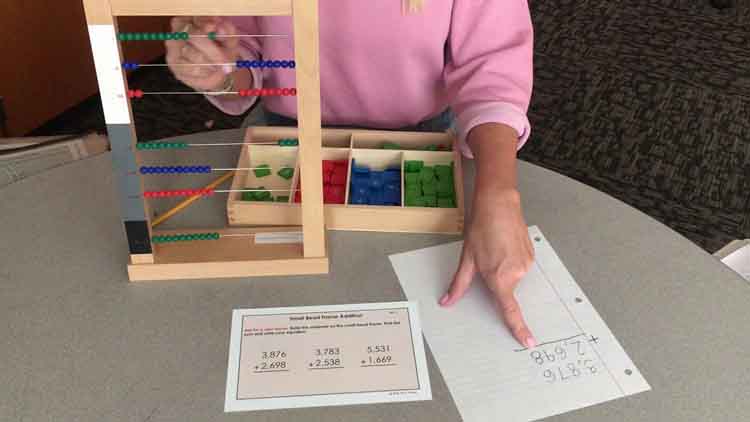
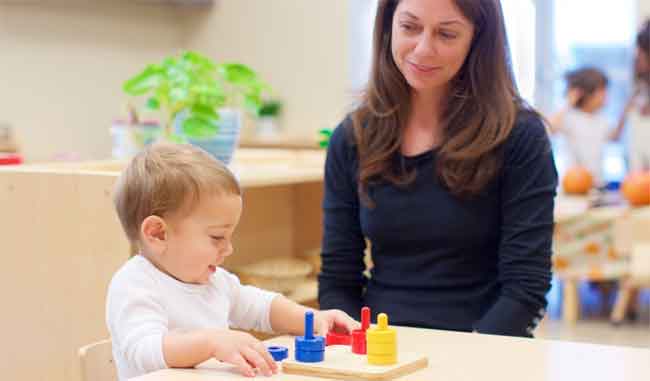
Furthermore, **Montessori teacher training** involves hands-on work with the **Montessori materials** themselves. Trainees do not just study the materials from a distance; they use them, practice with them, and understand their purpose and sequence. This hands-on experience is crucial for two reasons. First, it allows the future teacher to deeply understand the materials’ purpose and to present them to a child with confidence and grace. Second, and perhaps more importantly, it allows the educator to experience the materials from the child’s perspective, fostering a deep empathy for the learning process. By working with the materials, the trainee gains a first-hand appreciation for their design, the control of error, and the way they build a bridge from concrete to abstract. This empathy and understanding are essential for creating a classroom environment that is respectful and nurturing.
The philosophical aspect of the training also extends to the role of the teacher as a “link” between the child and the prepared environment. The training emphasizes that the educator is not the primary source of knowledge but a facilitator who prepares the environment and presents lessons. The focus is on empowering the child to learn on their own, to find their own path to mastery. This requires an educator to surrender control and to have a deep trust in the child’s inner drive. This can be a challenging transition for those who come from a more traditional educational background. Can this trust and surrender of control truly be taught in a training program, or is it a quality that must be cultivated through years of practice?
In conclusion, **Montessori teacher training** is a holistic and transformative process. It combines rigorous academic study with extensive practical experience and a deep dive into the philosophy of child development. The outcome is not just an educator with a new set of skills, but a person who has undergone a fundamental shift in perspective. They emerge with a newfound sense of humility, a profound respect for the child, and a powerful set of tools to guide children on their own unique learning journeys. This is not just about teaching a child how to read or do math; it’s about helping them develop a love for learning that will last a lifetime. And in a world that so often prioritizes test scores and academic achievement, is this focus on cultivating a love for learning the most valuable outcome of all?