Why Timing Matters in Educational Transitions
Choosing the right time to transition into a new educational model is a decision that can shape a child’s development and family rhythm. For families considering hybrid Montessori homeschooling, timing is especially important because the model blends independence at home with community collaboration in co-ops or learning centers.
Too early a transition may overwhelm parents and children, while waiting too long can make adjustment more difficult. Understanding developmental stages, family readiness, and available resources helps families decide the best moment to embark on this journey.
Understanding Developmental Stages in Montessori
Dr. Maria Montessori identified four planes of development, each with distinct needs and learning styles. These stages provide a useful lens for determining when to transition to hybrid Montessori homeschooling.
First Plane (0–6 years)
Children are absorbing their environment like sponges.
Focus is on sensorial exploration, language, movement, and independence.
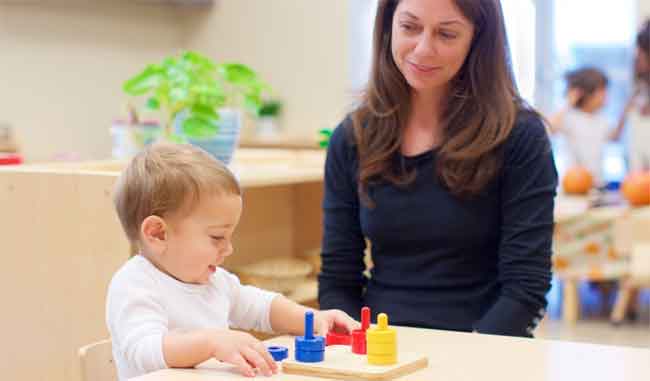
Hybrid Montessori homeschooling can begin here, especially for preschool-aged children, but parents must commit to creating a prepared environment at home.
Second Plane (6–12 years)
Imagination, reasoning, and social development dominate.
Children seek peer interaction and collaborative work.
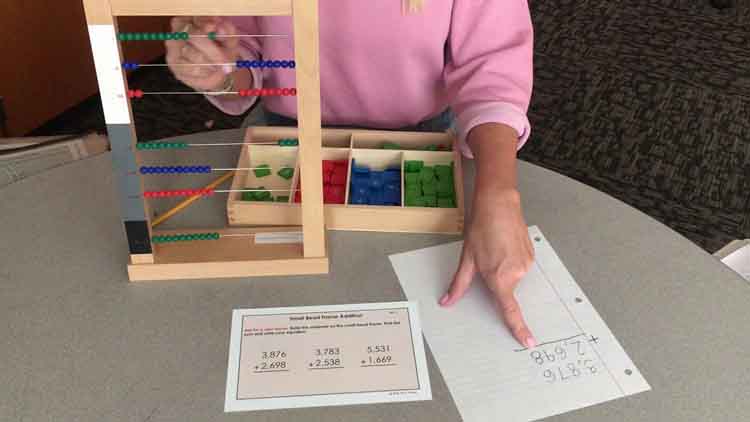
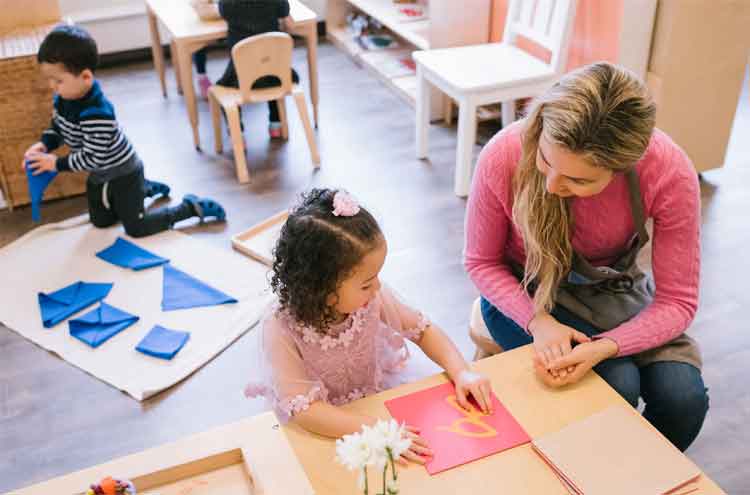
Many families find this the ideal time to move into hybrid models, as co-op days satisfy social needs while home time fosters independent exploration.
Third Plane (12–18 years)
Adolescents crave real-world experience and meaningful work.
Hybrid models may shift toward internships, apprenticeships, and project-based learning.
Transitioning at this stage can still work but requires strong community infrastructure.
Fourth Plane (18–24 years)
Early adulthood emphasizes independence, identity, and contribution.
Montessori-informed approaches may guide higher education and career paths, but hybrid homeschooling is less common.
In short: while hybrid Montessori can begin at any stage, the 6–12 range often provides the smoothest and most natural transition point.
Signs Your Family Is Ready for Transition
Families often recognize a set of signals indicating it’s time to shift into hybrid Montessori homeschooling:
The Child Craves Independence
They resist worksheets and prefer hands-on, self-directed learning.
They enjoy making choices and following personal interests.
Traditional Schooling Feels Restrictive
Parents notice stress, boredom, or disengagement in traditional settings.
Children may struggle with rigid schedules or standardized approaches.
Parents Desire More Family Involvement
Families want a deeper role in shaping education.
They see homeschooling as an opportunity to strengthen bonds.
Community Resources Are Available
A Montessori co-op, hybrid program, or supportive network exists nearby.
Without community support, the hybrid model may feel unbalanced.
The Family Can Commit to Preparation
Parents are willing to prepare environments, observe children, and participate actively in their education.
If several of these signs are present, the family may be ready to transition.
Benefits of Transitioning at Different Ages
Early Childhood (3–6 years):
Pros: Early independence, strong foundation, fewer habits to unlearn.
Cons: Requires intensive parental involvement and home environment preparation.
Lower Elementary (6–9 years):
Pros: Natural curiosity, eagerness for social interaction, flexibility in routines.
Cons: May need adjustment if transitioning from rigid schooling.
Upper Elementary (9–12 years):
Pros: Strong reasoning, ability to manage projects, readiness for hybrid schedules.
Cons: May resist change if strongly attached to old systems.
Adolescence (12+ years):
Pros: Desire for autonomy and real-world learning.
Cons: Requires mature co-op structures and external mentors.
The earlier the transition, the smoother the adaptation—but any stage can work with careful planning.
How to Prepare for Transition
Transitioning isn’t just about pulling children from traditional schooling; it’s about building a new educational ecosystem. Preparation involves:
Research and Observation
Visit Montessori classrooms or co-ops.
Observe how children engage with materials and peers.
Gradual Shifts at Home
Begin with practical life activities (cooking, cleaning, gardening).
Introduce small sets of Montessori-inspired materials before committing fully.
Adjusting Family Routines
Set aside dedicated work cycles.
Create rhythms that support independence and exploration.
Finding Community
Connect with hybrid co-ops, Montessori groups, or online communities.
Collaboration is vital for social and academic balance.
Setting Realistic Expectations
The transition may bring resistance or uncertainty.
Parents must be patient and flexible while children adapt.
Case Studies: Transition Timelines
Case 1: Early Start Success
A family introduces Montessori homeschooling at age 4. By age 6, their child is thriving in a hybrid program with peers, already accustomed to independence and choice.
Case 2: Midway Shift
A 7-year-old leaves traditional school after showing frustration with worksheets. The family transitions into hybrid Montessori, and within months, the child regains enthusiasm for learning.
Case 3: Adolescent Realignment
A 13-year-old disengaged in middle school finds new purpose in a hybrid program offering community gardening, internships, and independent research. The transition is challenging but ultimately rewarding.
These stories show that timing is flexible—but family readiness and community support matter most.
Potential Challenges and How to Address Them
Resistance to Change
Children used to structured schooling may feel uncertain with more freedom.
👉 Solution: Provide guidance and gradual transitions.
Parental Overwhelm
Parents may worry about preparing the home environment or keeping up academically.
👉 Solution: Start small and lean on co-ops for support.
Community Access Issues
Some families lack local Montessori co-ops.
👉 Solution: Explore online communities, form small groups, or create hybrid-style partnerships with like-minded families.
Academic Concerns
Parents may fear gaps compared to traditional schooling.
👉 Solution: Trust Montessori’s holistic approach while supplementing if needed.
Conclusion: Transition Is a Process, Not a Deadline
So, when should families transition to hybrid Montessori homeschooling? The best time is when the child shows readiness for independence, the family desires a new educational rhythm, and community resources are accessible.
For some, this means starting as early as preschool; for others, it may be a realignment in elementary or even adolescence. The key is not a specific age but the family’s willingness to embrace Montessori principles of freedom, responsibility, and self-directed learning.
Hybrid Montessori homeschooling is not an overnight switch—it’s a process of gradual adjustment, observation, and growth. When approached thoughtfully, the transition can open doors to a more joyful, engaged, and holistic learning journey.