
Introduction: theory as foundation for practice
For Montessori trainees, theory is not an abstract ornament; it is the compass that informs every classroom decision. Understanding Montessori theory—her observations about the absorbent mind, sensitive periods, normalization, and the prepared environment—helps teachers create conditions that allow children to flourish. This post reviews the key books that explain Montessori theory clearly and practically for trainees, offering guidance on which readings to prioritize and how to integrate theoretical reading with hands-on practice.
Primary texts by Maria Montessori
Begin with Maria Montessori’s own seminal works. *The Absorbent Mind* provides the clearest articulation of her observations of early mental development, explaining how children internalize language, culture, and cognition through their environment. *The Secret of Childhood* is shorter and more accessible, offering vivid vignettes of children at work and emphasizing dignity, freedom, and respect. *The Discovery of the Child* presents the historical and developmental context for Montessori’s ideas, while *To Educate the Human Potential* connects pedagogy to social purpose. Reading Montessori’s original prose immerses trainees in the spirit of the method, but these texts require thoughtful reflection and discussion—trainees should annotate, question, and relate passages to classroom observations.
Accessible modern overviews
While Montessori’s originals are indispensable, modern interpretations help translate her ideas into contemporary practice. Paula Polk Lillard’s *Montessori: A Modern Approach* is widely recommended for trainees because it synthesizes Montessori’s principles with clear classroom descriptions and practical examples. Angeline Stoll Lillard’s *Montessori: The Science Behind the Genius* presents a research-driven perspective that links Montessori practices to findings in developmental psychology and neuroscience. These secondary texts help trainees bridge the gap between historical theory and current evidence, making the pedagogy easier to explain to parents and administrators.
Pedagogical manuals and presentation guides
Trainees must pair theory with precise pedagogy. Manuals and material guides explain how to present lessons succinctly, how to stage the prepared environment, and how to sequence materials. Well-known manuals used in training centers describe practical life presentations, sensorial exercises, early literacy sequences, and the mathematics material progression. These books often include scripts or step-by-step directions that trainees can practice in practicums. While manuals vary across training centers, choosing those that align with your certifying body (AMI, AMS, or equivalent) ensures congruence between study and practicum expectations.
Reflection and reflective practice texts
Montessori education values reflective practitioners. Books that encourage reflective practice—journaling, observation techniques, and case-study analysis—are invaluable. Works that focus on observation methodology help trainees translate notes into pedagogical decisions: when to introduce a new material, when to withdraw an intervention, and how to support normalization. Reflective practice literature encourages the habit of self-analysis, helping teachers become adaptive and responsive rather than formulaic.
Specialized reads: subject-specific theory
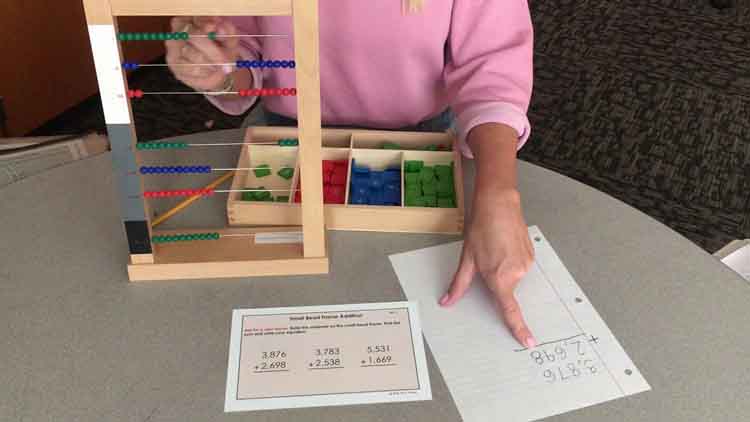
As trainees progress, subject-specific theoretical resources deepen understanding. For language, readings that connect phonemic awareness, sensorial letter work, and emergent literacy are useful. For mathematics, texts that explain the concrete-to-abstract progression (from bead materials to abstract operations) are essential. Cultural and cosmic education texts expand the trainee’s conception of how history, geography, and science integrate into a coherent curriculum for children aged 6–12. Choosing subject-specific theory texts helps trainees present material with conceptual clarity.
Practical tips for reading and integration
Reading theory alone is insufficient; trainees should integrate reading with observation and practice. Create a reading schedule that pairs a chapter from a theoretical text with a practicum focus—observe related child behavior, attempt a presentation, and record reflections. Form study groups to discuss challenging passages and to practice presentation scripts aloud. Keep a reading journal that links quotations to classroom anecdotes; over time, this journal becomes a personalized pedagogy reference.
Conclusion: theory as a living tool
Choosing the right books matters because theory shapes stance. The blend of Montessori’s original texts, modern research-driven commentaries, practical manuals, and reflective practice literature forms a robust library for trainees. These readings equip teachers not only with knowledge but with the interpretive lens to respond thoughtfully in the moment. By prioritizing these texts and integrating them with hands-on practicum, trainees develop the confident, reflective stance essential for effective Montessori teaching.