The Art of Pencil Control
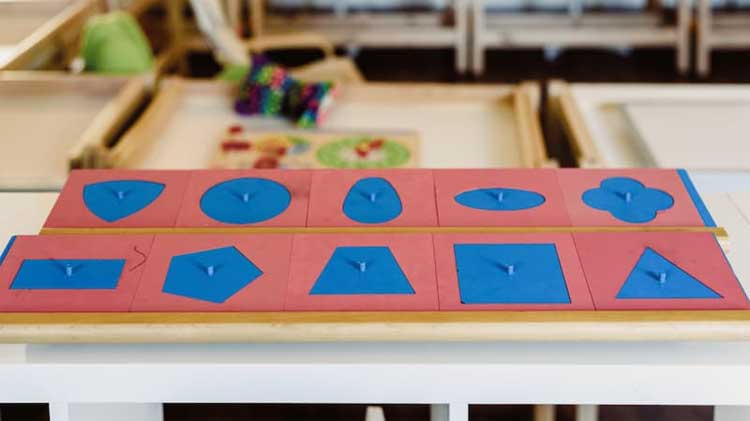
Handwriting is a complex physical skill that requires the coordination of dozens of small muscles in the hand and wrist. In a Montessori preschool, we do not ask children to trace letters on worksheets to learn this skill. Instead, we use the Metal Insets. This material consists of ten different geometric shapes—such as circles, triangles, and squares—rendered as metal frames and insets. The child’s task is to trace the frame on paper and then fill in the resulting shape with careful, parallel lines. While the child believes they are making art, they are actually undergoing a rigorous training program in pencil control. They are learning how much pressure to apply, how to maintain a steady grip, and how to control the direction of the lead.
Refining the Pincer Grip
The Metal Insets are specifically designed to refine the “pincer grip”—the three-finger hold required for efficient writing. Each metal inset has a small knob in the center, which forces the child to use their thumb, index, and middle fingers to lift and move it. This repetitive motion strengthens the specific muscles needed for handwriting. In teacher training, we learn to observe the child’s grip during this work. If a child is struggling, the Metal Insets provide a non-threatening way to practice. Because the activity is self-correcting—the pencil must stay within the lines of the frame—the child receives immediate feedback on their physical control. This develops the fine motor precision that will make writing a cursive letter a simple task later on.
Integrating Geometry and Art
The Metal Insets also serve as a sensorial introduction to geometry. As the child traces the quatrefoil or the curvilinear triangle, they are absorbing the properties of these shapes through their hands. This work is often paired with colored pencils, allowing the child to experiment with shading, cross-hatching, and color blending. This artistic element keeps the child engaged and motivated. They are not just “practicing writing”; they are creating something beautiful. This integration of art and mechanics is a hallmark of the Montessori Method. It respects the child’s aesthetic sense while simultaneously building the technical skills they need for academic success. The resulting booklets of colored shapes are often a source of great pride for the child, representing their growing physical mastery.
The Path to Calligraphy
The ultimate goal of the Metal Insets is to make the act of writing effortless. When the mechanics of writing—holding the pencil and controlling the stroke—become automatic, the child’s mind is free to focus on the content of their writing. We often see children who have worked extensively with the Metal Insets move seamlessly into calligraphy and cursive writing. Their lines are steady, their strokes are deliberate, and their hand does not tire easily. This preparation is essential for the long-form writing required in the elementary years. By providing a beautiful and engaging way to practice the physical foundations of literacy, the Metal Insets ensure that the child develops a positive and confident relationship with the written word.