Separating the Mind from the Hand
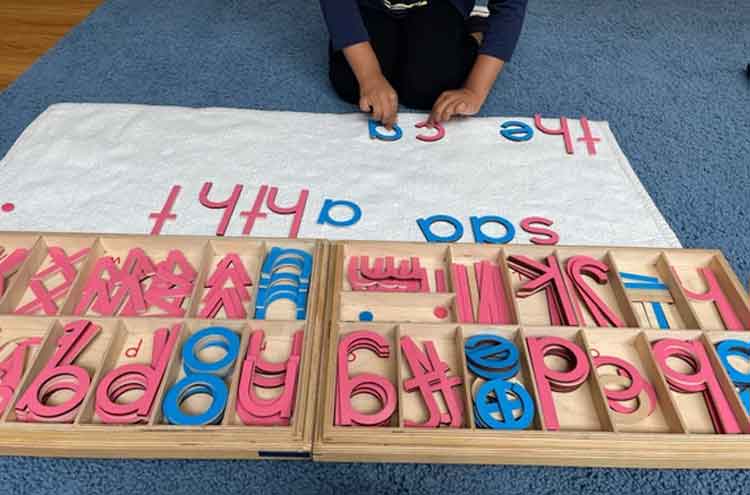
One of Maria Montessori’s most brilliant pedagogical moves was the separation of the intellectual act of composition from the physical act of handwriting. The Moveable Alphabet—a box containing multiple wooden or plastic letters—allows the child to “write” their thoughts before their hand is physically strong enough to hold a pencil for extended periods. For many children, the desire to communicate far outpaces their fine motor development. The Moveable Alphabet solves this problem by providing a tool where the child only needs to select and arrange letters on a rug. This removes the mechanical barrier to expression, allowing the child’s creativity and vocabulary to flourish without being hindered by physical fatigue or the fear of making a permanent mistake on paper.
Phonetic Synthesis and Word Building
The Moveable Alphabet is primarily used for word building. After a child has learned phonetic sounds through the Sandpaper Letters, they can begin to construct three-letter, consonant-vowel-consonant (CVC) words. The guide might place a small object, like a “cat,” on the rug, and the child listens for the sounds: /c/… /a/… /t/. They then find the corresponding letters in the box and arrange them. This is an act of “phonetic synthesis.” It teaches the child that words are made of individual components that can be manipulated. In our teacher training modules, we emphasize that at this stage, the child’s “invented spelling” should be respected. If a child spells “phone” as “f-o-n,” they are demonstrating an understanding of phonetics, and we celebrate that intellectual achievement.
A Bridge to Reading
While the Moveable Alphabet is a tool for writing, it is also a powerful bridge to reading. As the child builds words, they are inadvertently practicing the decoding skills needed for reading. By arranging the letters themselves, they become intimately familiar with how words are structured. This material makes the abstract concept of spelling concrete. The child can see, touch, and move the components of a word. This physical interaction builds confidence and a sense of mastery. Often, a child who has spent significant time building words with the Moveable Alphabet will spontaneously “discover” that they can read the words they have built. This discovery is a source of immense joy and marks the beginning of their journey as an independent reader.
Developing the Creative Will
Beyond its academic value, the Moveable Alphabet fosters the development of the child’s “Will.” The child chooses what they want to write about, whether it’s a story about a dog or a list of items in the room. This freedom of choice is essential for developing a love of writing. The Moveable Alphabet allows the child to be an author before they are a scribe. It encourages them to experiment with language and to see writing as a powerful tool for self-expression. By providing a risk-free environment where letters can be easily swapped or moved, we encourage the child to take intellectual risks. This material is a testament to the Montessori belief that if we provide the right tools, the child’s natural desire to communicate will lead them to literacy.