The Five Pillars of Montessori Materials
The Montessori classroom is often described as a “prepared environment,” and at the heart of this environment are the materials. These materials are organized into five key areas, each designed to meet a specific developmental need of the child. Understanding these five pillars is the first step to understanding the Montessori curriculum. They are: Practical Life, Sensorial, Language, Mathematics, and Culture. This organization is not accidental; it represents a logical progression that mirrors the child’s own development. The materials are placed on low, open shelves in this order, inviting the child to explore them at their own pace. The teacher’s role is to present the materials and then step back, allowing the child to engage in “purposeful work.” The materials themselves are the “keys” to the curriculum, and a child’s interaction with them is the primary mode of learning in a Montessori classroom. This is a significant departure from traditional education, where the teacher is the primary source of information. In a Montessori environment, the materials themselves are the teachers, and they are designed to be used independently, with a built-in “control of error” that allows the child to correct their own mistakes. This system of organized, hands-on learning is what makes the Montessori method so effective and unique.
Practical Life: The Foundation of Independence
The Practical Life materials are the first thing a child encounters in a Montessori classroom. This area is the foundation for all subsequent learning. The materials are designed to teach children skills for daily living, such as pouring, scooping, buttoning, and sweeping. They are often made from real, child-sized tools, which communicates a sense of respect and purpose. The goal of Practical Life is not just to teach a specific skill, but to help the child develop concentration, coordination, independence, and a sense of order. When a child carefully polishes a shoe or arranges flowers in a vase, they are developing the fine motor skills and the ability to focus on a task from start to finish. These skills are essential for all future academic work. The Practical Life area is the heart of the classroom, and it is a place of calm, focused work. It is here that the child begins to build a sense of self-confidence and self-reliance, which are key components of the Montessori philosophy. The materials are simple but profound, and their impact on the child’s development is immeasurable.
Sensorial: Refining the Senses
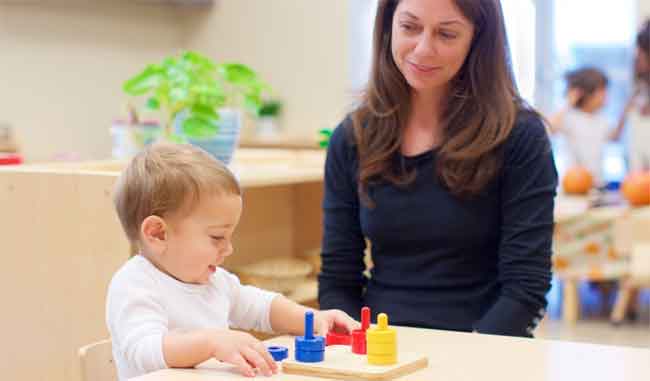
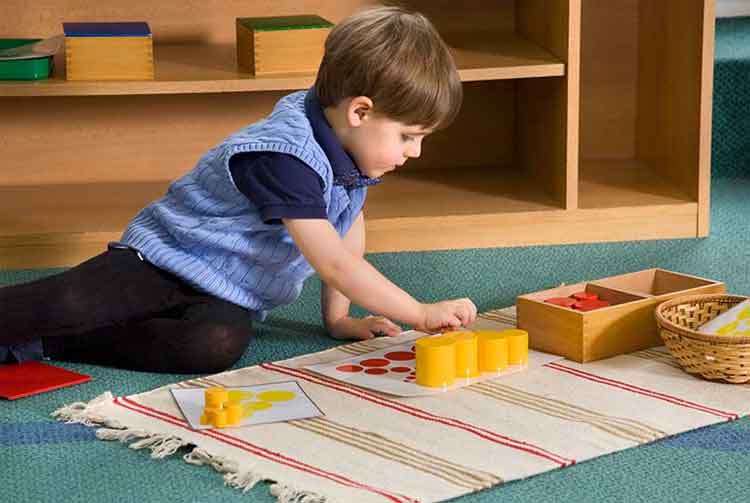
The Sensorial materials are designed to help the child refine and organize their senses. Maria Montessori believed that children learn about the world through their senses, and she created materials that isolate a single quality, such as color, shape, size, or texture. The Pink Tower, for example, is a set of ten wooden cubes that differ only in size. A child working with the Pink Tower is learning to visually discriminate size, a skill that is a foundational step in understanding mathematical concepts. The Red Rods teach length, the Sound Cylinders teach auditory discrimination, and the Cylinder Blocks teach a combination of visual and motor skills. The Sensorial materials are the “key to the universe,” as they help the child make sense of the vast amount of information they are absorbing through their senses. They are a bridge between the concrete world and the abstract world of concepts. By working with these materials, the child is not just learning; they are building the neural pathways in their brain that will allow them to think, reason, and solve problems. The Sensorial area is a place of exploration and discovery, where the child learns to see the world with new eyes.
Language, Mathematics, and Culture
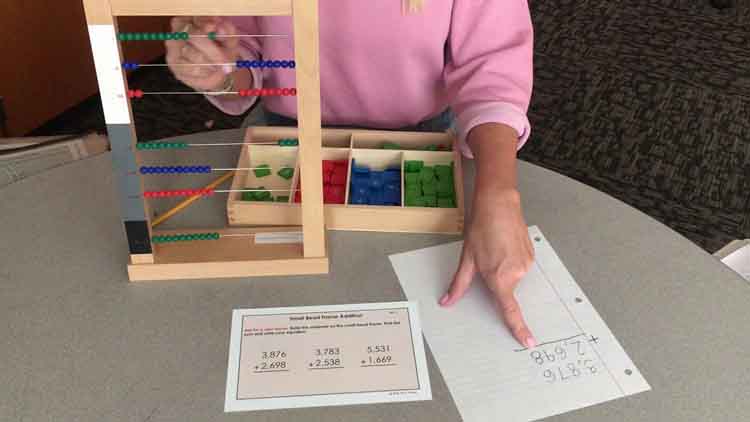
The remaining three areas of the curriculum—Language, Mathematics, and Culture—are built upon the foundation laid by Practical Life and Sensorial. The Language materials are a carefully sequenced set of tools that help a child develop phonemic awareness, a love for reading, and the ability to express themselves. They begin with sandpaper letters, which provide a tactile experience of the sounds of the alphabet, and they progress to movable alphabets, reading cards, and grammar games. The Mathematics materials are a brilliant collection of hands-on tools that make abstract mathematical concepts tangible. The Golden Beads, for example, are a concrete representation of the decimal system, allowing the child to physically manipulate and understand place value. Finally, the Cultural materials introduce the child to the world around them. This area includes geography, history, botany, zoology, art, and music. The materials are designed to spark a sense of wonder and curiosity, whether it’s by exploring the globe puzzle, learning about the parts of a plant, or listening to music from different cultures. These five areas of the curriculum are deeply interconnected, with each material serving a specific purpose and preparing the child for the next step in their learning journey. The core materials are the heart and soul of the Montessori method, and they are what truly makes the classroom a place of profound learning and discovery.