Understanding the Fit: Aligning Family Values with Educational Philosophy
Choosing the first school experience for your child is a significant decision, filled with both excitement and anxiety. Amid the many options, from play-based to academic-focused programs, Montessori stands out as a unique and comprehensive philosophy. Its child-centered approach, mixed-age classrooms, and emphasis on independence are highly appealing to many families. However, Montessori education is not a one-size-fits-all solution. Its structure and philosophy are distinct from traditional preschools, and its success often depends on a strong partnership between the school and the family. Understanding the core tenets of the Montessori method and reflecting on your own child’s temperament and your family’s values can help you determine if a Montessori preschool is the right environment for your child to thrive.
Does Your Child Thrive on Independence and Choice?
The Montessori environment is built around the principle of “freedom within limits.” Children are given a great deal of autonomy to choose their own activities (work), decide where to sit, and manage their own needs, such as preparing their own snack or tidying up their space. This freedom is ideal for children who are naturally curious, self-motivated, and capable of working independently. If your child shows a strong desire to do things for themselves, is able to focus on a task for a period of time, and seems to enjoy having control over their own learning, they will likely flourish in a Montessori setting. The environment is designed to nurture this intrinsic motivation. However, it’s a common misconception that Montessori is only for quiet, introverted children. The freedom of movement and choice can also be highly beneficial for active children, as it allows them to channel their energy into purposeful work rather than being forced to sit still for long periods. The key is the child’s ability to eventually develop focus and self-direction within the structured freedom of the classroom.
Are You Comfortable with a Child-Led, Individualized Pace?
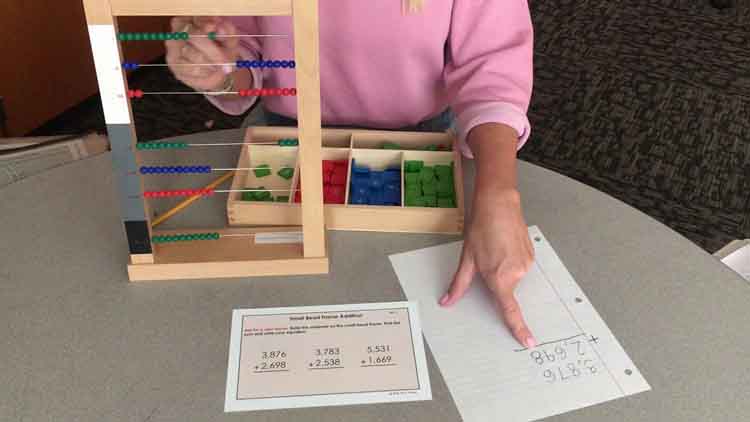
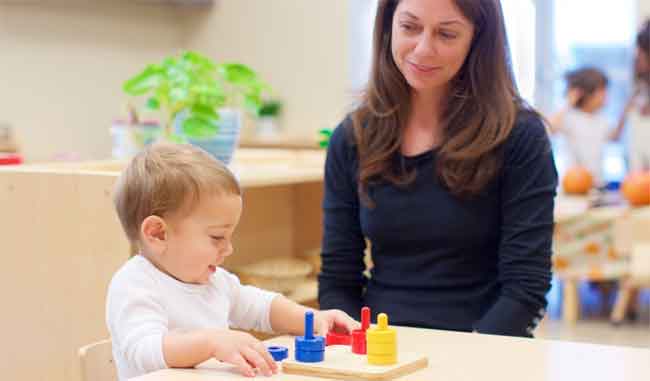
In a Montessori classroom, learning is not dictated by a group-wide, teacher-led curriculum. The guide presents lessons individually or in small groups based on their observation of a child’s readiness and interests. This means that one four-year-old might be deeply engaged in advanced phonetic reading exercises, while another is still mastering the fine motor skills of pouring and spooning. There is no external pressure to keep up with the group, and children are not compared to one another. This approach respects each child’s unique developmental timeline and allows for a much deeper mastery of concepts. This can be incredibly reassuring for many parents, as it ensures their child is neither bored by work that is too easy nor frustrated by work that is too advanced. However, parents who are looking for a more traditional academic structure, with whole-group lessons, daily worksheets, and a predictable, linear progression of skills for the entire class, might find the Montessori approach less familiar. It requires a trust in the child’s natural ability to learn and the guide’s skill in facilitating that process at an individualized pace.
Do Your Family Values Align with Montessori Principles?
The Montessori philosophy extends beyond academics; it is a holistic approach to human development. The classroom is a carefully cultivated community built on principles of grace, courtesy, and mutual respect. Children are taught how to resolve conflicts peacefully, how to interrupt politely, and how to care for their shared environment. There is a strong emphasis on intrinsic motivation rather than external rewards and punishments. Children work for the satisfaction of the task itself, not for stickers or praise. For the experience to be truly successful, there needs to be a philosophical alignment between home and school. If your family values independence, fosters curiosity, believes in respecting the child as a capable individual, and prefers to guide behavior through connection and clear limits rather than rewards or punishments, you will find a strong partner in a Montessori school. This consistency between the two most important environments in a child’s life creates a secure and cohesive foundation for their development.
Observing a Classroom in Action: The Most Important Step
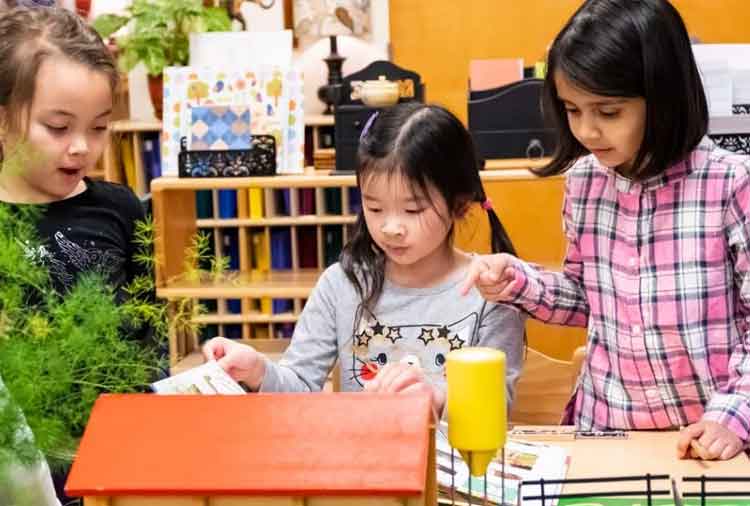
Ultimately, the best way to determine if a Montessori preschool is right for your child is to see it for yourself. A reputable school will insist that prospective parents come and observe a classroom during the morning work cycle for at least 30 minutes. When you observe, pay attention to the atmosphere. Is it calm and purposeful? Are the children engaged and concentrating on their work? How does the guide interact with the children—are they redirecting respectfully, giving quiet lessons, and observing from a distance? Watch the interactions between the children. Do you see older children helping younger ones? Do the children move about the classroom with confidence and respect for each other’s work? Seeing the philosophy in action will give you the most valuable insight. Look for a community that feels like a place where your unique child would not only learn but would feel seen, respected, and empowered to become their best self.