Refining the Sensory Organs
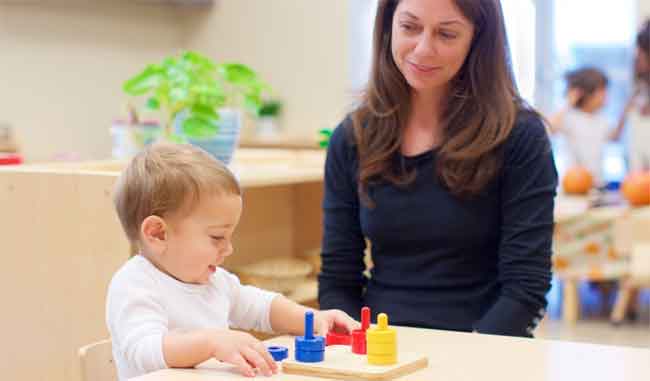
In a Montessori preschool, the “Sensorial” area is often described as the “Mathematics of the Senses.” Between the ages of three and six, children are naturally driven to explore the physical properties of their world. The sensorial materials—such as the Pink Tower, the Brown Stair, and the Color Tablets—are designed to isolate a single quality, such as size, weight, color, or sound. By working with these materials, the child is not just playing; they are refining their sensory organs. They are training their eyes to see minute differences in dimension and their ears to hear subtle shifts in pitch. This sensory refinement is the foundation for all later intellectual work, as all knowledge begins with the senses.
Creating a Mental Filing System
The ultimate goal of sensorial work is to help the child categorize and order the thousands of impressions they have already absorbed. Before entering the classroom, a child knows that things are different sizes or colors, but they may not have a clear mental structure for these concepts. The sensorial materials provide the “Keys to the Universe.” They give the child the vocabulary and the mental framework to say, “This is larger than that,” or “This is a triangular prism.” This process of naming and categorizing is what allows the child to move from a state of “unconscious absorption” to “conscious intelligence.” The materials provide a physical, concrete bridge to abstract thinking.
Building the Mathematical Mind
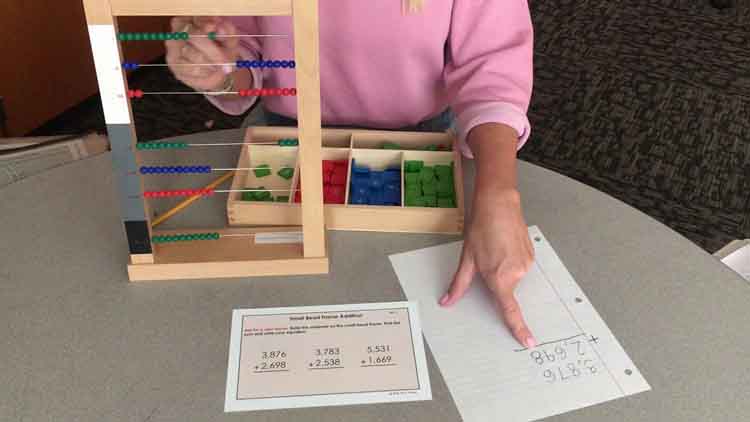
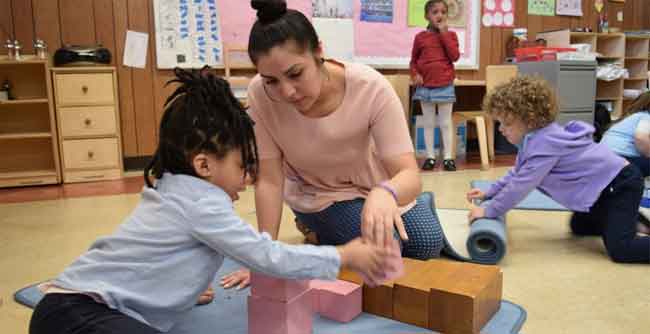
Sensorial materials are also the child’s first introduction to mathematical concepts. The Pink Tower, for instance, consists of ten cubes ranging from 1cm cubed to 10cm cubed. While the child is building a tower, they are actually experiencing the base-ten system and the concept of volume. The “Geometric Cabinet” introduces the child to dozens of polygons and curved figures, allowing them to trace the shapes and absorb their properties through their fingertips. Because these experiences are tactile and pleasurable, the child develops a “Mathematical Mind” that is comfortable with patterns, precision, and order. When they later encounter abstract math problems, they have a deep, intuitive understanding of the underlying principles because they have literally “held” the math in their hands.
Developing Aesthetic Appreciation
Finally, sensorial work fosters an appreciation for beauty and harmony. The materials are beautiful and require a high level of care. When a child works to perfectly grade the “Color Tablets” from the darkest shade to the lightest, they are developing their “aesthetic sense.” This refinement of taste and observation carries over into all parts of their life. They become individuals who notice the beauty in nature, the precision in art, and the order in the universe. In this way, the sensorial area does more than just prepare the child for academics; it prepares them to be a more perceptive, sensitive, and appreciative human being. It is the education of the “whole child” through the gateway of the senses.