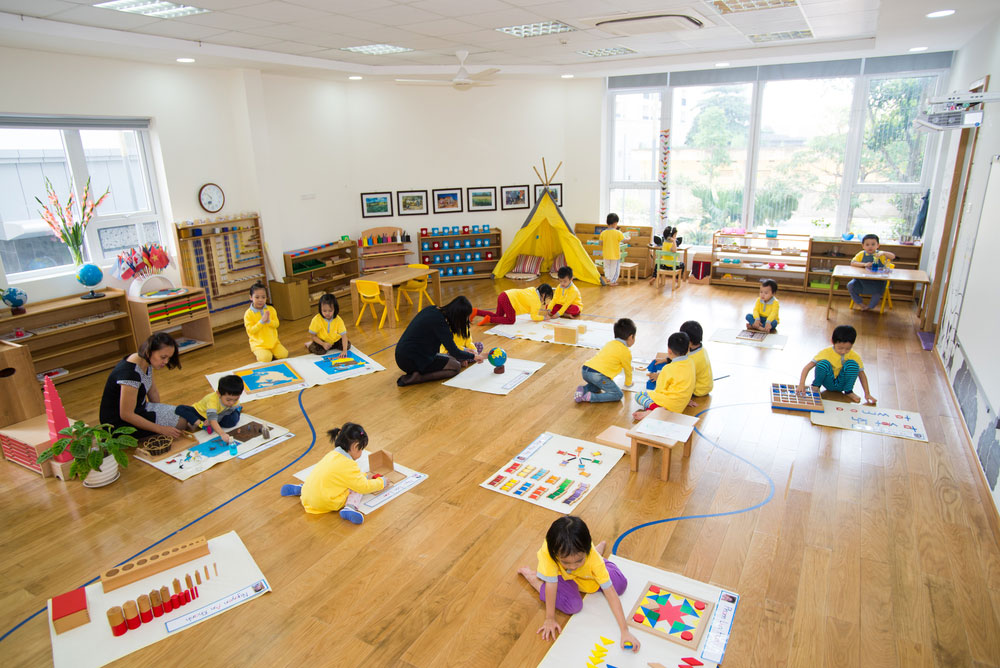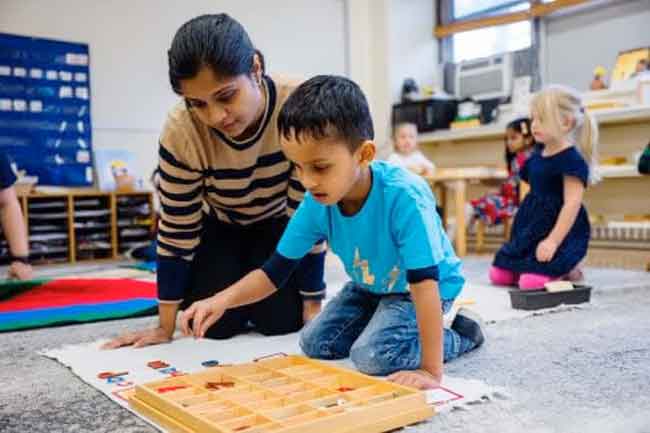

Practical Life is often seen as the entry point for the young child in a Montessori classroom, but for the ESL learner, it serves a dual purpose as a foundational language laboratory. The exercises in this area—ranging from pouring water to polishing brass—provide a concrete context for English vocabulary that simply cannot be replicated through textbooks or flashcards. When a child performs a task, they are engaging their muscle memory, which in turn acts as a powerful anchor for the linguistic labels provided by the guide.
In our teacher training modules, we focus on the “Analysis of Movement.” This same precision must be applied to the language we use during a Practical Life lesson. For an ESL student, every object and every action is a potential new word. When showing a child how to wash a table, the guide uses specific nomenclature: “basin,” “pitcher,” “scrub brush,” and “sponge.” These are not just words; they are tools that the child is currently using to achieve a meaningful goal. This creates what linguists call “high-utility language.” The child has a reason to remember the word “pitcher” because they need to use the object to complete their work.
The verbs associated with Practical Life are equally important. Instead of generic verbs like “do” or “put,” we use precise terms like “submerge,” “lather,” “rinse,” and “buff.” For a child learning English as a second language, this exposure to rich, varied verbs is a significant advantage. It allows them to build a sophisticated vocabulary that allows for clearer communication of their needs and observations. Because the Montessori guide speaks slowly and clearly, pairing the word exactly with the physical action, the meaning becomes self-evident. There is no need for a translator because the child’s eyes tell them exactly what the guide’s mouth is saying.
Additionally, Practical Life fosters the social language necessary for a successful school experience. The “Grace and Courtesy” lessons within this area provide scripts for social interaction. Phrases like “May I please have a turn?” or “Would you like to join me?” are practiced through role-play. For the ESL student, these scripts are a lifeline. They provide the social confidence to navigate the classroom community. By reducing the stress of not knowing what to say, we open the child’s mind to the broader academic curriculum. Practical Life, therefore, is not just about cleaning or motor skills; it is the essential first step in becoming a confident, fluent speaker of English in the Montessori environment.