The Importance of Real-World Skills
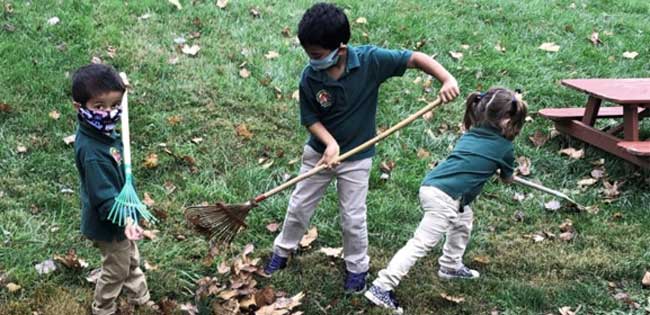
Practical Life is often the most beloved area of the Montessori preschool. It consists of activities that reflect the daily tasks of an adult world: pouring, sweeping, polishing, and food preparation. While these may seem like “chores” to an adult, to a three-year-old, they are the most exciting work in the room. This is because these tasks allow the child to participate in the real world. By learning how to zip their own coat or pour their own water, the child gains a massive sense of accomplishment. This area of the curriculum is the primary driver of “functional independence.” It tells the child, “You are capable. You can do this yourself.”
Developing Coordination and Order
Beyond the immediate goal of the task, Practical Life activities are designed to develop “Fine Motor Skills” and “Executive Function.” Activities like “Using a Tweezer” or “Spooning Beads” require intense concentration and precise hand-eye coordination. Furthermore, every Practical Life activity has a logical sequence of steps. A child must fetch an apron, set up their tray, perform the task, clean up any spills, and return everything to the shelf. This “Logic of the Task” helps the child develop the ability to plan, sequence, and execute a multi-step project. These skills are essential for all later academic work, particularly in science and mathematics, where orderly thinking is paramount.
Fostering a Sense of Responsibility
Practical Life also introduces the child to the concept of “Care of the Community.” In a Montessori preschool, there is no “janitorial staff” that cleans up after the children during the day. If a child spills water, they are shown how to use a mop. If the leaves on a plant are dusty, they are shown how to gently wipe them. This responsibility fosters a deep sense of belonging and ownership. The child realizes that they are an important part of a community and that their actions have an impact on the environment and others. This develops a social conscience and a proactive attitude toward solving problems. They become contributors rather than just consumers.
Grace and Courtesy as Social Practical Life
A vital sub-section of Practical Life is “Grace and Courtesy.” These are role-playing lessons where the guide shows the children how to navigate social situations with kindness and respect. Lessons might include “How to interrupt a teacher,” “How to offer a snack,” or “How to blow your nose.” For a preschooler, these social scripts are a lifeline. They provide the confidence to handle social interactions without anxiety. By mastering these social skills, the child develops “Social Independence.” They learn that they can navigate their social world with the same competence they navigate the physical world. This emotional and social security is the ultimate foundation for a happy, productive, and normalized child.