Understanding Montessori Philosophy in a Modern Context
Montessori education is built upon the belief that children are naturally curious and capable of directing their own learning. Dr. Maria Montessori, the Italian physician and educator who pioneered the approach, emphasized self-paced exploration, hands-on materials, and respect for individual development. At its heart, the Montessori method trusts children to follow their intrinsic motivation, while adults serve as guides rather than instructors.
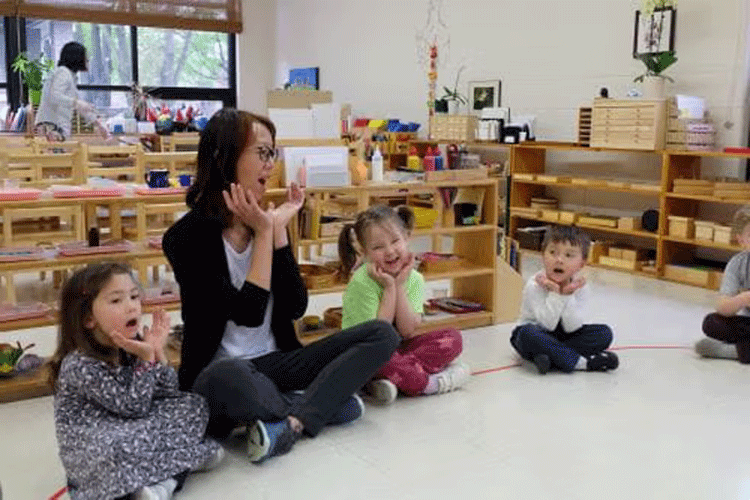
In traditional Montessori classrooms, this vision is realized through carefully prepared environments where children move freely among materials, engage in uninterrupted work cycles, and learn from both individual exploration and peer collaboration. But with the rise of flexible schooling models, particularly in the wake of global disruptions to education, families are increasingly asking: Can these principles translate effectively into a hybrid homeschooling model?
A hybrid Montessori homeschool combines at-home learning directed by parents with community-based opportunities such as Montessori co-ops, enrichment programs, or part-time school attendance. This blend raises important questions about fidelity to Montessori philosophy, adaptability, and whether children can truly thrive in such a model.
Why Montessori Fits Well with Hybrid Learning
Montessori is uniquely positioned to succeed in hybrid settings because its core is not tied to a physical school building but to a way of seeing the child. Freedom, independence, and respect for natural developmental stages can thrive in a home setting just as they do in a classroom. Several aspects of Montessori make hybrid homeschooling particularly effective:
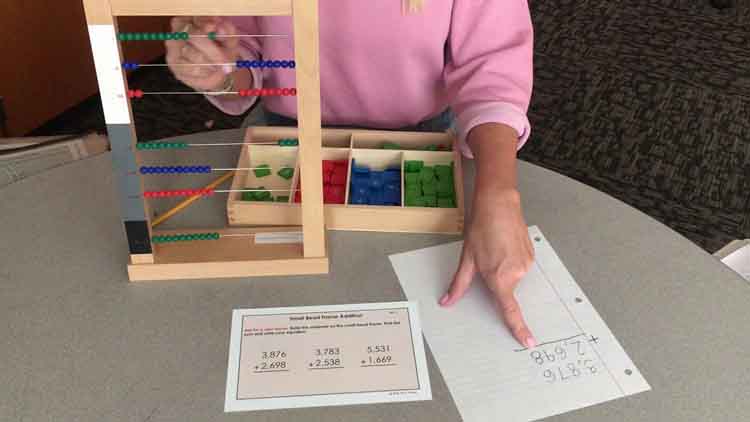
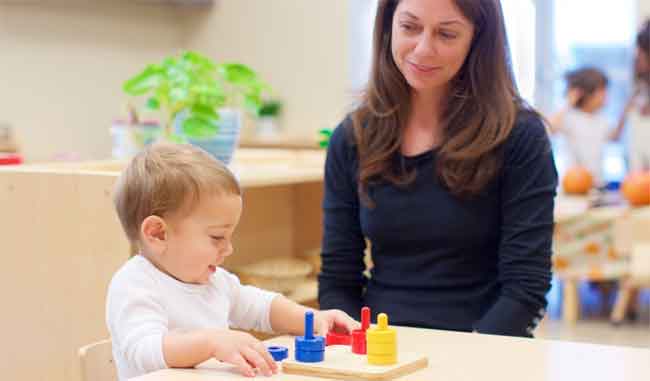
Flexibility in Environment: A Montessori home need not replicate a full classroom. With a few carefully chosen materials and a commitment to respecting independence, children can develop focus and skills at home. Co-op days can supplement areas where parents lack expertise or resources.
Emphasis on Practical Life: Montessori prioritizes life skills such as cooking, cleaning, gardening, and self-care. These are often easier to integrate at home than in a school. Hybrid models allow children to practice academic skills in community groups while reinforcing independence at home.
Mixed-Age Benefits: In co-op or hybrid setups, children often interact with peers of varying ages. This mirrors the mixed-age classroom dynamic, where younger children learn from older ones, and older children solidify knowledge by teaching.
Adaptability for Families: Hybrid Montessori allows families to design routines that reflect their work-life balance while still giving children access to Montessori environments and peer interaction.
Challenges Families Face in Hybrid Montessori Homeschooling
While Montessori principles are adaptable, implementing them in hybrid homeschooling comes with challenges:
Maintaining Consistency: Montessori thrives on rhythm and predictability. Switching between home and community settings may disrupt flow unless carefully structured. Parents must coordinate routines so that children experience consistency rather than fragmentation.
Parent Preparedness: Montessori teachers undergo intensive training. Parents, even well-intentioned, may not fully understand how to observe, introduce materials, or follow the child’s lead. Without guidance, there is a risk of blending Montessori with conventional “school-at-home” methods.
Material Access: Authentic Montessori materials can be expensive and space-consuming. While many can be adapted or DIY, parents may feel pressure to invest heavily. Hybrid co-ops often help by pooling resources.
Socialization Balance: Too much time at home may limit peer interaction, while too much external scheduling risks overwhelming children and losing the essence of Montessori’s calm, focused work cycles.
Strategies for Making Montessori Work in Hybrid Models
Families can overcome these challenges by adopting practical strategies:
Design a Prepared Home Environment: Create child-sized spaces for independence—accessible shelves, low hooks for coats, and practical life tools. Keep materials minimal and rotated to avoid overstimulation.
Honor the Work Cycle at Home: Even in a homeschool setting, children benefit from uninterrupted blocks of time (2–3 hours) to engage deeply with tasks. Parents should avoid overscheduling or constant interruptions.
Collaborate with Co-ops and Guides: Hybrid models work best when parents partner with trained Montessori educators or experienced peers. Co-ops can introduce more advanced materials, foreign languages, or cultural lessons.
Focus on Observation: Parents must learn to step back and watch rather than direct. Observing the child’s choices provides insight into readiness for new lessons and helps maintain alignment with Montessori principles.
Use Technology Mindfully: While Montessori traditionally minimizes screen use, hybrid models can thoughtfully integrate digital tools—such as nature documentaries, music apps, or online language exchanges—without undermining hands-on exploration.
The Parent’s Role as Guide
In Montessori, the adult is not the center of the classroom but a quiet, observant guide. This role is amplified in hybrid homeschooling. Parents must balance being facilitators of independence at home with coordinators of community learning. Unlike traditional homeschooling, where the parent often assumes the role of direct teacher, Montessori requires humility, patience, and trust in the child’s natural development.
Parents in hybrid models also act as bridges between environments. They help children transition smoothly from the calm focus of home to the social energy of community learning. Open communication with co-op leaders or part-time school teachers ensures consistency in expectations and respect for the child’s rhythm.
Examples of Hybrid Montessori in Practice
Case Study 1: The Working Parent Family
A family where both parents work part-time structures their week so that children spend three days at home following Montessori routines, with two days in a local Montessori co-op. At home, mornings are dedicated to math and language materials, while afternoons focus on practical life and outdoor exploration. Co-op days provide group science projects, music lessons, and art workshops.
Case Study 2: Rural Homeschoolers
In a rural setting with limited access to Montessori schools, families form a micro-school. Each parent contributes according to their strengths—one handles science experiments, another leads gardening, while Montessori-trained guides introduce academic materials. Children rotate between home learning and group sessions, creating a well-rounded hybrid experience.
Case Study 3: Transition from Traditional School
A family pulls their child from a conventional classroom where stress and lack of engagement were issues. In the hybrid Montessori model, the child spends mornings with a homeschool group exploring Montessori math and sensorial materials, while afternoons at home focus on practical life and quiet reading. The shift results in improved focus, confidence, and joy in learning.
So, can Montessori principles work in a hybrid homeschool? The answer is a confident yes—provided families are intentional, observant, and committed to upholding the spirit of Montessori rather than merely the form. By blending the independence and self-directed learning of Montessori with the flexibility and community support of hybrid models, children benefit from the best of both worlds.
Ultimately, hybrid Montessori homeschooling empowers families to personalize education while remaining faithful to the child-centered philosophy that has transformed lives for more than a century. It may not look identical to a traditional Montessori classroom, but when rooted in respect for the child’s natural development, it is Montessori in essence.