Adapting Montessori principles to compact spaces
Small living spaces need not prevent Montessori practice. The same principles—accessibility, order, limited choices, and meaningful materials—apply; they simply require more creative storage and rotation. A small shelf, a single drawer, or a trolley can serve as a rotating station. Use vertical space with wall hooks and low peg rails, and keep activity trays that can be stacked when not in use. Thoughtful adaptation preserves core benefits without requiring major square footage.
Smart storage and rotation
Because space is limited, rotate materials more frequently: change activities every 4–7 days to maintain novelty. Store extras out of sight in a bin or under the bed. Use compact trays and baskets that fit into drawers or on top of wardrobes. Label containers and maintain a simple inventory to make rotation easy. Minimal visible choices reduce overwhelm and make the present activities more engaging.
Multipurpose furniture and dual-use zones
Choose multipurpose furniture—folding tables, stools that double as storage, and low benches that provide seating and surface area. Create dual-use zones: a dining table can become the workspace for sensorial activities, and a closet shelf can hold rotating trays. Establish clear rituals for setup and cleanup to quickly transform spaces between family use and independent work zones.
Outdoor excursions and community spaces
If indoor space is tight, leverage local resources: parks, community centers, and libraries. Regular outdoor sessions can become a primary sensorial curriculum—water play, sand, collecting natural materials, and plant care. Join or form a local homeschool group where children can access mixed-age interactions and shared materials on a rotational basis.
Keeping the environment beautiful and intentional
Even in small apartments, presentation matters. Use small baskets and trays to present materials neatly. Choose a few tactile, natural materials rather than many plastic toys. A tidy, attractive presentation signals respect for materials and invites careful attention, even in limited space.
Safety and realistic expectations
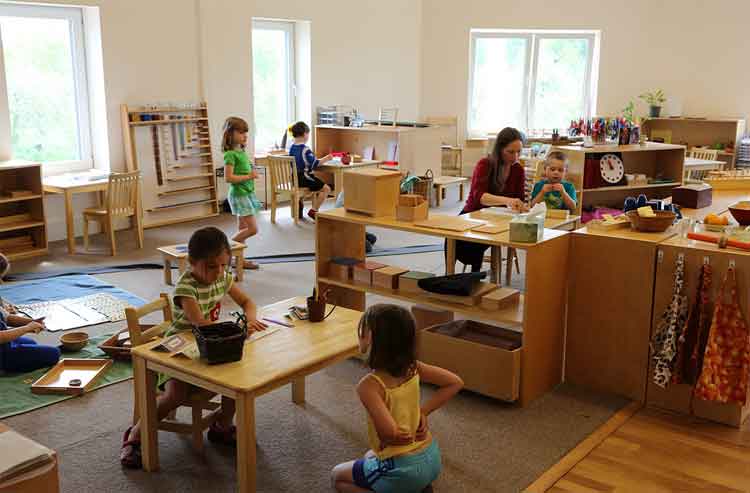
Prioritize safe access to real tools: a small, supervised kitchen area for food prep, a step stool for sink access, and simple cleaning tools. Keep high-risk items out of reach but provide alternatives that are safe and meaningful. Accept that Montessori in small spaces will look different from a large classroom—focus on process and consistency rather than replication.
Involving family members
Ask family members to support routines: set times when common areas become independent-work zones, and agree on cleanup rituals. Older siblings can mentor younger ones; rotating chores can ensure materials are cared for. Family buy-in makes the home system sustainable and less burdensome for a single parent or caregiver.
Conclusion: principles over square footage
Montessori is a philosophy that prioritizes accessibility, order, and meaningful work—principles that translate well to compact spaces. With smart storage, rotation, use of community spaces, and family routines, even a small apartment can support deep, child-led learning and autonomy.