In an age dominated by digital screens and abstract concepts, the **Montessori materials** stand as a powerful counterpoint. Designed by Dr. Maria Montessori herself, these materials are not mere toys; they are meticulously crafted tools intended to guide a child from a concrete, sensorial understanding of the world to an abstract, intellectual one. The philosophy posits that a child’s mind, particularly in the early years, is not yet ready for pure abstraction. It needs to touch, to feel, to manipulate and to see in order to truly grasp an idea. But is this process a more effective pathway to learning than traditional methods, and is it a direct result of a dedicated **Montessori teacher training**?
Each set of **Montessori materials** is designed with a specific purpose, often isolating a single quality or concept. For instance, the Pink Tower is a sensorial material that teaches visual discrimination of size. The child handles ten cubes of varying sizes, stacking them in order. The control of error is visual; if the tower is not built correctly, it will be unstable and clearly look wrong. This sensorial experience lays a deep foundation for later mathematical concepts like volume and size relationships. The Golden Beads, on the other hand, are a mathematical material that gives children a concrete experience of the decimal system, from units to thousands. By physically holding and moving the beads, a child can grasp the concepts of quantity and place value in a way that a textbook or a worksheet could never achieve.
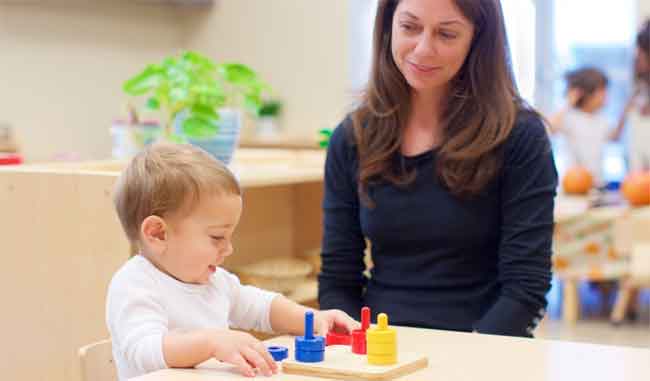
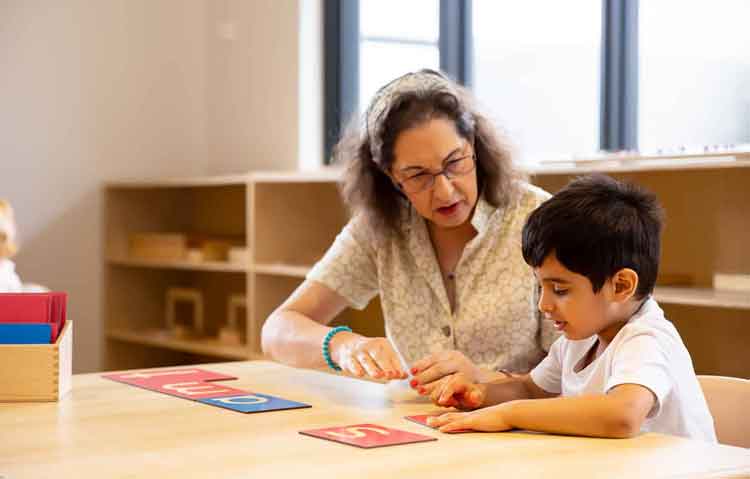
The role of the educator in this process is paramount, and it is a skill that is cultivated during **Montessori teacher training**. A trained teacher knows how to present the material to the child with a simple, clear, and engaging lesson. They do not just hand the material over; they show the child how to work with it, modeling concentration and purpose. The teacher then steps back, allowing the child to engage with the material on their own. This is where the magic happens. The child repeats the work, not out of compulsion, but out of an inner drive for mastery. This repetition leads to concentration, which is a state of deep focus that Dr. Montessori saw as the cornerstone of learning. But does this repetition with the same materials lead to a superficial understanding, or does it build a solid cognitive structure upon which all future learning can be built?
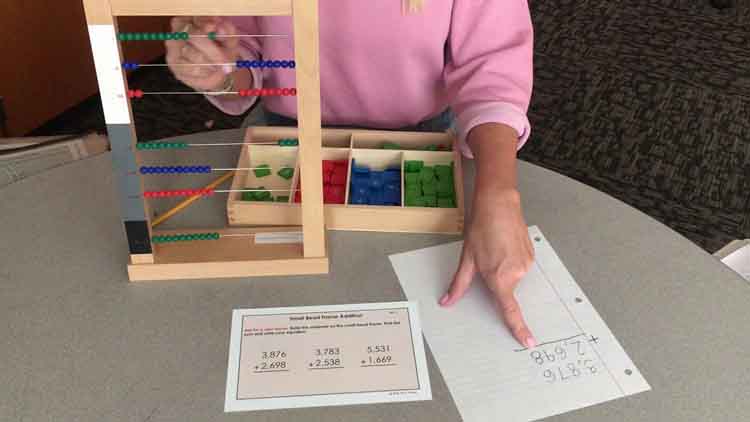
The materials also work in sequence, building upon each other to create a continuous path from concrete to abstract. For example, a child who has mastered the sensorial aspects of the Geometric Cabinet and the Golden Beads is then introduced to more abstract mathematical concepts using the Stamp Game or the Bead Frames. The skills and understanding gained from the initial materials serve as a bridge, making the leap to abstraction feel natural and intuitive. The teacher, armed with their **Montessori teacher training**, knows exactly when and how to introduce the next material, guided by their careful observation of the child’s readiness. Without this specific training, could an educator effectively guide the child through this complex, interlinked curriculum?
Furthermore, the materials are not just for academic learning. There are also materials for Practical Life, which teach children skills like buttoning, tying, pouring, and sweeping. These activities, which seem so simple, are crucial for a child’s development. They build coordination, concentration, and a sense of order. They also teach a child to care for their environment, fostering a deep sense of responsibility and self-worth. These activities, just like the academic **Montessori materials**, are a key part of the curriculum and are an integral part of the training.
In conclusion, the **Montessori materials** are a meticulously designed system that serves as a physical representation of abstract concepts. They are the tools that allow a child to learn through movement and the senses, building a foundation of deep understanding. The success of these materials, however, is inseparable from the skills and philosophy of the educator who has undergone rigorous **Montessori teacher training**. Together, they form a powerful educational partnership that respects the child’s natural learning process and empowers them to become confident, self-reliant, and truly knowledgeable individuals.