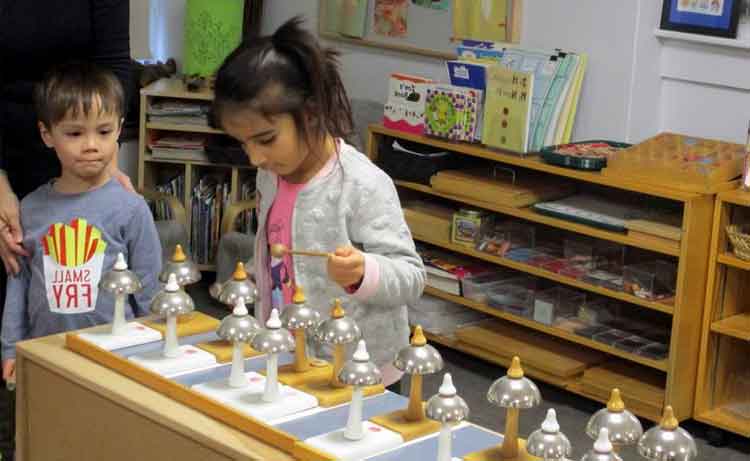
In the philosophical framework of Dr. Maria Montessori, the role of the teacher is fundamentally different from that of a traditional instructor. Instead of being the center of the classroom, the **Montessori** educator is a quiet, unobtrusive guide. This shift in role is at the very heart of **Montessori teacher training**, and its most critical component is the cultivation of the art of observation. But why is observation considered a skill of paramount importance, and how does it transform the way an educator interacts with a child?
### The Scientific Basis of Observation
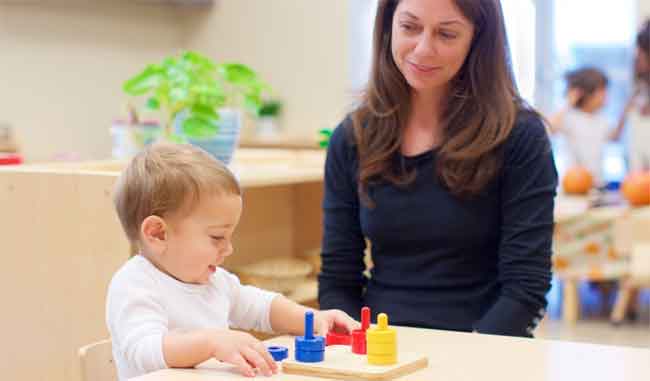
Montessori’s method is often referred to as a “scientific pedagogy.” She developed her approach by meticulously observing children in their natural environments, documenting their behaviors, interests, and patterns of concentration. This is the same scientific approach that is taught in **Montessori teacher training**. Trainees are required to spend countless hours in a prepared environment, not to lead or instruct, but to watch. They learn to be objective, non-judgmental observers who can see the child as they truly are, not as a reflection of their own expectations or a product of their curriculum. This process is often described as “following the child,” a phrase that encapsulates the entire philosophy. The teacher’s role is to identify a child’s sensitive periods—those windows of time when a child is most receptive to learning a specific skill—and to present the appropriate **Montessori materials** at the right time.
### Observation as a Tool for Individualization
In a traditional classroom, a curriculum is often one-size-fits-all, delivered to a group of children at the same time. This approach overlooks the unique pace and style of each individual learner. Observation in a Montessori environment is the key to true individualization. By carefully watching a child work with the **Montessori materials**, an educator can glean a wealth of information. They can see what a child is interested in, what they are struggling with, and when they have achieved mastery. For example, an educator might notice a child repeatedly working with the Cylinder Blocks, and from this observation, they can infer that the child is in a sensitive period for order and visual discrimination. This knowledge allows the educator to subtly introduce the next level of material, or to simply let the child continue their work without interruption. This is the essence of a truly responsive education.
### From Observer to Guide: The Teacher’s Transformation
The process of observation in **Montessori teacher training** is not just about gathering data; it is a transformative experience for the educator. It teaches humility. When an educator witnesses a child become deeply absorbed in their work, they learn to trust the child’s inner drive and to refrain from unnecessary intervention. They learn that their role is not to be a source of all knowledge, but to be a link between the child and the prepared environment. This shift from “teacher” to “guide” requires a profound change in mindset. It is a surrender of control and a deep-seated belief in the child’s innate potential for self-construction. This philosophical transformation is often the most challenging but also the most rewarding part of the training.
### The Impact of Observation on the Child
What does this kind of observation-based education do for the child? It creates a sense of security and trust. A child in a Montessori environment knows that their work is respected and that their independent efforts are valued. They are not constantly being corrected or interrupted. This sense of autonomy fosters a love of learning that is driven by intrinsic motivation rather than external rewards or punishments. The child learns to trust themselves and their own abilities, which is a powerful foundation for a lifetime of learning and growth. In an age where children are often overscheduled and micromanaged, the Montessori approach offers a quiet space for them to simply be, to learn, and to grow at their own pace.
### Observation Beyond the Classroom
The skills learned in **Montessori teacher training** extend far beyond the classroom. The ability to observe without judgment, to listen with empathy, and to trust in the developmental process is invaluable in all aspects of life. It is a skill that helps a parent understand their child, a leader understand their team, and a person understand themselves. It is a practice of mindfulness and presence that cultivates a deeper sense of connection to the world around us. In this way, the **Montessori** method is not just an educational philosophy; it is a way of life, and it all begins with the simple, profound act of watching. But can this skill truly be taught, or is it a quality that must be nurtured through years of practice? The training suggests that it is a discipline, a habit that, once cultivated, transforms the educator and the child in equal measure.