
Why start Montessori at home?
Montessori homeschooling has grown in popularity because it provides families with a child-centered framework that emphasizes independence, purposeful activity, and respect for the child. Parents choose Montessori at home for different reasons: to provide individualized pacing, to embed learning in everyday life, or to preserve specific values like deep concentration and practical life skills. Starting is less about following a rigid curriculum and more about adopting a mindset: prepare the environment, observe the child closely, and provide real, manageable tasks that the child can accomplish.
Begin with observation and a small shelf
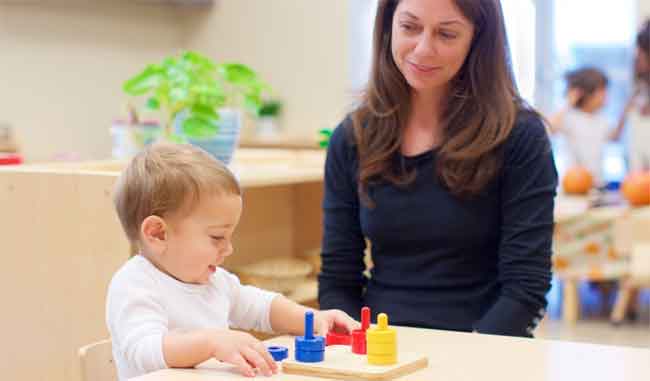
Observation is the first and most important practice. Spend several days watching the child’s interests, motor control, and attention span without intervening. Note what they repeat and what frustrates them. Next, prepare a single, low shelf or basket with three to five rotated activities. These activities should be meaningful—practical life tasks (pouring, spoon transfers), simple sensorial work (sorting by color or size), and a language or movement option. Keep the presentation minimal: the item should be displayed on a tray or in a basket so the child can take it to a workspace and return it easily.
Practical life: the backbone of early practice
Practical life is the most powerful entry point for very young children. These are real tasks: dressing frames, pouring, sweeping, washing fruits, and preparing snacks. Practical life activities develop fine motor skills, sequencing, and the inner satisfaction of completing a job. They are also socially meaningful—children learn to contribute to family life. Start with one or two activities you and the child can repeat daily, and gradually introduce new tasks as competence grows.
Protect concentrated work time
One of Montessori’s hallmark practices is extended work periods that allow deep concentration. At home, aim for 30–60 minute uninterrupted blocks, depending on the child’s age. During this time, reduce background noise, avoid screens, and let the child choose from the prepared shelf. If you have multiple children, stagger activity zones or involve older children in mentoring roles so that the younger child can sustain attention.
Use demonstration rather than instruction
Demonstrate a task once, slowly and precisely, then step back. Children learn from watching and doing; long verbal explanations are less effective. For example, show how to pour from a small pitcher into a cup, then let the child try. Offer a gentle cue if needed, but resist the urge to take over. The goal is to create opportunities for problem solving and to let the child discover corrections through the activity’s feedback (a self-correcting outcome helps learning).
Language and vocabulary development
Montessori homes prioritize precise, rich language. Narrate actions, use specific vocabulary, and extend the child’s phrases. For example, if the child says “bird,” you might say, “Yes, that’s a sparrow. The sparrow has brown feathers and sings quickly.” Incorporate naming, matching, and classification activities to build vocabulary. Tactile language tools like sandpaper letters or matching cards can link sensation with symbols for pre-literacy development.
Matching materials to developmental readiness
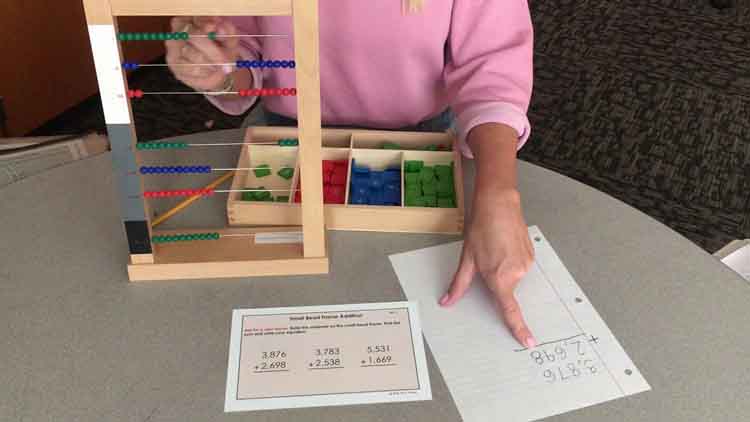
Introduce materials in a sequence that respects readiness. For example, before introducing letters, provide sensorial work that refines discrimination—color, shape, and texture differentiation. Then introduce sandpaper letters to pair touch with phonetic sounds. For numeracy, begin with concrete manipulatives like bead bars before moving to abstract symbols. Always base introductions on observation of readiness, not on age alone.
Family involvement and authentic tasks
Bring children into genuine family life. Let them help prepare snacks, set the table, fold laundry, and water plants. Authentic, meaningful contribution reinforces the dignity of work and motivation. Children who see their efforts matter are more likely to engage and show pride in their competence.
Socialization and community
Homeschooling families can create mixed-age social opportunities through co-ops, playgroups, and community classes. Mixed-age interactions give younger children role models and older children leadership practice. If co-ops aren’t available, arrange rotating playdates or join online communities for resource sharing and mutual support.
Tracking progress through observation, not tests
Montessori educators track development by observation and portfolios. At home, keep simple notes about what the child chooses, how long they concentrate, and what new skills appear. Photographs of sequential progress and short narrative notes can form a portfolio that documents growth and helps plan future lessons.
Challenges and realistic expectations
Expect a transition period. Parents often need to unlearn the impulse to do tasks for children and allow mess and slow progress as part of learning. Begin small, be consistent, and expand only as routines solidify. Sustainability is more important than a perfect setup—small, persistent changes often yield significant developmental gains.
Conclusion: a gentle, intentional start
Starting Montessori homeschooling is about setting a tone: respect, accessibility, and trusting the child’s capacity to learn through doing. With a focus on observation, simple environments, real tasks, and protected concentration time, parents can create a rich foundation for lifelong learning.