Overview: preschool years and development
The preschool period is a window of rapid growth in cognition, language, motor skills, and social understanding. Montessori education offers a distinctive approach during these years by combining a prepared environment, developmentally sequenced materials, and a pedagogy that respects the child’s innate curiosity. Parents often ask why Montessori is a strong choice for preschool development — the short answer is that Montessori aligns teaching with natural learning processes and supports holistic growth.
Sensorial foundations and cognitive growth
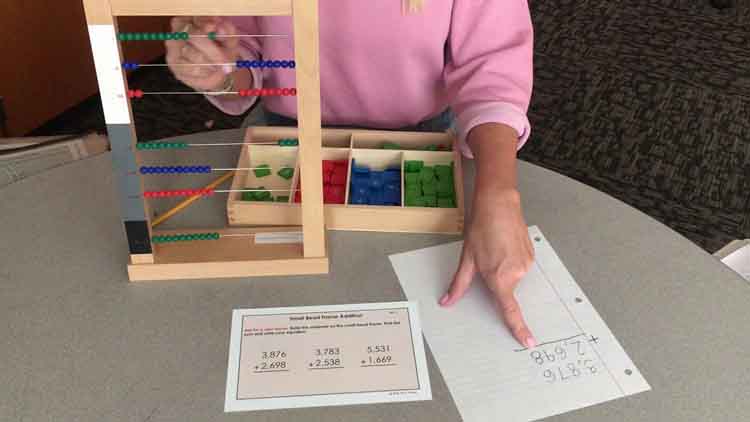
Sensorial materials in Montessori target the child’s perceptual development. Activities that refine color discrimination, dimension, texture, and sound sharpen the brain’s ability to sort and categorize input. These early perceptual discriminations underlie later academic skills such as reading and mathematics. By engaging the senses in structured but explorative ways, Montessori supports early cognitive organization and attention control.
Language and early literacy
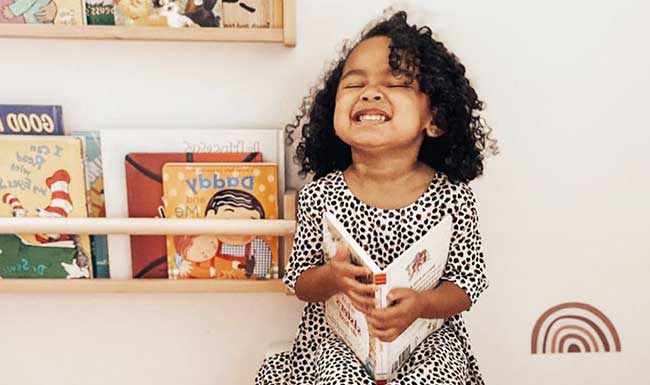
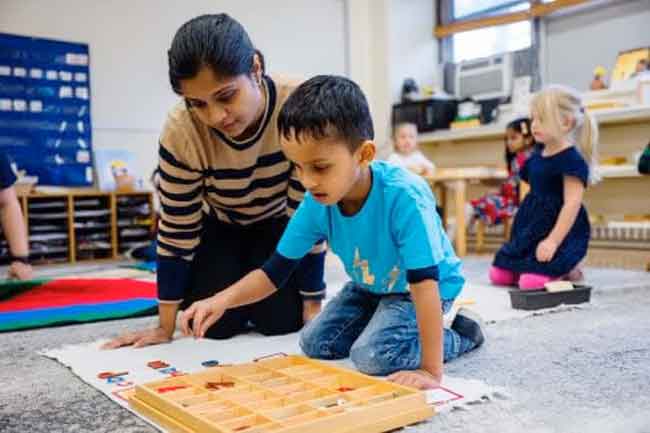
Montessori’s language materials progress from oral language enrichment to phonetic awareness and tactile letter work. Child-sized books, storytelling, and language-rich group times expose children to vocabulary and syntax. Tactile letters and movable alphabets bridge sensory exploration with symbolic representation, giving children a concrete foundation for abstract literacy skills.
Motor skills and independence
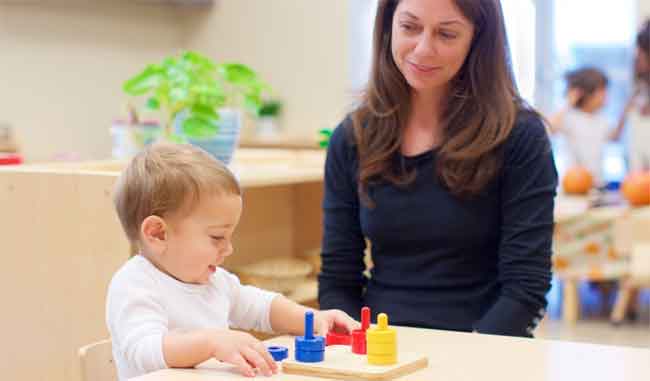
Fine and gross motor activities are embedded across the curriculum. Practical life tasks strengthen pincer grip and bilateral coordination, while physical movement and outdoor time support balance and spatial awareness. These motor skills are closely linked to academic readiness; for example, a stable pencil grip emerges from earlier coordinated hand work.
Social-emotional learning
Montessori classrooms explicitly teach social routines — grace and courtesy lessons, conflict resolution language, and cooperative classroom jobs. These routines combine with mixed-age interactions to build empathy, leadership, and emotional regulation. Children learn to name feelings, take responsibility, and repair relationships — foundational skills for later success in school and life.
Parent takeaways
Parents choosing Montessori for preschool can expect an environment that fosters self-confidence, curiosity, and foundational skills. For best alignment, provide consistent routines at home, encourage practical life participation, and value process over product. The preschool years are formative; the habits and dispositions cultivated in Montessori often scaffold long-term learning and motivation.
Conclusion
Montessori supports preschool development by addressing sensorimotor, cognitive, language, and social-emotional domains within a coherent, child-centered framework. This alignment with natural developmental sequences makes Montessori a compelling option for families seeking holistic early education.