
The arrival of Maria Montessori in India was not a mere historical event; it was a profound convergence of two philosophies—one modern and scientific, the other ancient and spiritual. The remarkable alignment between the Montessori method and traditional Indian culture is a key reason why her ideas took such deep root and have flourished for nearly a century. At its heart, Indian culture, with its roots in Vedic thought and yogic practices, places a high value on self-realization, inner peace, and the interconnectedness of all living things. These very principles are echoed in the Montessori philosophy. The concept of the child as a spiritual being with an inner guide, for example, resonates with the Indian belief in atman, the soul or true self. The prepared environment, designed for concentration and purposeful work, mirrors the serene and contemplative atmosphere of a traditional ashram or Gurukul, where learning was a journey of self-discovery. Montessori’s emphasis on a peaceful, non-competitive environment finds a natural home in a culture that values non-violence (ahimsa) and communal harmony. This philosophical synergy made it easier for Indian educators and parents to embrace the method, not as a foreign import, but as a natural extension of their own cultural values. It is this unique and powerful alignment that has allowed the Montessori method to become a meaningful and lasting part of the Indian educational landscape, and it is a testament to the universal appeal of her ideas when they are presented in a culturally sensitive and relevant way.
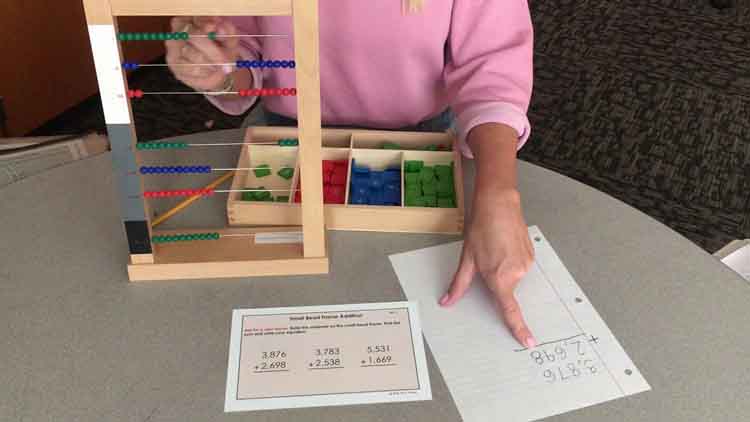
One of the most powerful connections lies in the Montessori approach to discipline. In traditional Indian thought, discipline is not about external control but about self-control, or sanyam. It is a quality that is cultivated from within through practice and self-awareness. This aligns perfectly with Montessori’s concept of “inner discipline,” which is developed through purposeful work and a sense of belonging in a community. In a Montessori classroom, the child is not disciplined through rewards or punishments, but through the natural consequences of their actions. If they misuse a material, it will not work properly; if they are disruptive, they will not be able to work with their friends. This is a form of discipline that is rooted in love and respect, and it is a discipline that the children will internalize and carry with them for a lifetime. This is in stark contrast to the conventional model, which often relies on a system of external controls. Another powerful connection is in the Montessori approach to hands-on learning. The traditional Indian educational system has a long history of learning through doing, from apprenticeships in crafts to the study of ancient texts through recitation and practice. The Montessori materials, with their logical progression and self-correcting nature, are a modern embodiment of this hands-on, experiential approach. They are not just toys, but tools for development, and their beauty and purpose invite the child to engage in meaningful work. This cultural alignment is what made the Montessori method so immediately understandable and appealing to Indian educators, who saw in it a modern and scientific way to revive the best of their own educational traditions.
Montessori’s Role in India’s Educational Renaissance
Maria Montessori’s arrival in India came at a pivotal moment in the country’s history. India was on the cusp of independence, and there was a widespread desire to create a new educational system that would be both modern and rooted in Indian values. The conventional British-style education system, with its emphasis on rote memorization and standardized testing, was seen as a relic of the colonial past. Montessori’s philosophy offered a fresh and empowering alternative. Her emphasis on the child’s natural curiosity and innate potential resonated with the nationalist sentiment of the time, which was focused on empowering the individual and building a new nation. Leaders like Mahatma Gandhi and Rabindranath Tagore, who had a deep respect for indigenous knowledge and a holistic view of education, were natural allies. They saw in Montessori’s work a way to combine the best of Western science with the timeless wisdom of Indian philosophy. Montessori’s method offered a practical and powerful way to nurture the next generation of Indian citizens—citizens who would be not just educated, but self-reliant, creative, and purposeful. Her training centers became a hub for a new generation of Indian educators who were dedicated to building a new and better educational system. The legacy of this period is a powerful testament to the power of a single person’s vision to inspire a movement. Montessori’s work in India was not just about establishing schools; it was about sparking an educational renaissance that would forever change the way India saw its children and its future. Her enduring legacy is a powerful reminder that the best educational ideas are those that are universal, yet deeply rooted in a culture of respect, dignity, and a profound love for the child.
Challenges and Future Directions for Montessori in India
Despite its deep cultural roots, the Montessori movement in India faces its own set of challenges. One of the biggest is the issue of scalability and accessibility. While the method has a strong presence in private schools, it has yet to be widely adopted in public schools, which serve the vast majority of the population. The challenge is to find a way to make the method accessible and affordable to a wider audience without compromising its integrity. This requires innovative thinking, a willingness to adapt, and a strong partnership between the public and private sectors. Another challenge is the misrepresentation of the method. With the rise in popularity of the name “Montessori,” many schools have adopted the label without a genuine understanding of its core principles. This can lead to a dilution of the philosophy and a misrepresentation of the method. The challenge for the authentic Montessori community in India is to educate parents and the public about the difference between a true Montessori school and a “Montessori-inspired” one. This requires strong leadership, clear communication, and a commitment to upholding the highest standards of the philosophy. The future of Montessori in India lies in its ability to address these challenges and to continue to evolve while staying true to its core principles. The enduring legacy of Maria Montessori’s time in India is a testament to the power of her ideas to transform education. It is a legacy that is not just a part of history, but a living and breathing force that continues to shape the lives of countless children across the subcontinent. The future of Montessori in India is bright, but it will require a new generation of leaders and educators to carry the torch forward, with the same passion, dedication, and unwavering commitment to the child that Maria Montessori herself demonstrated during her time in the country.