Building Capable, Confident, and Curious Learners
A common question from parents considering a Montessori preschool, especially if they plan to transition their child into a traditional elementary school, is about academic and social readiness. Will my child be prepared for a more structured, teacher-led environment? The answer, overwhelmingly, is yes. While the Montessori Children’s House looks very different from a typical kindergarten classroom, the skills it cultivates provide an exceptionally strong foundation for future academic and social success, no matter the setting. Montessori education is not about teaching a specific set of facts; it is about developing the executive functioning skills, intrinsic motivation, and intellectual curiosity that make a child an effective learner for life. Children transition from Montessori not just with a robust academic knowledge base, but with the even more valuable traits of independence, adaptability, and a genuine love for learning.
Advanced Academic Foundations
Due to the individualized nature of the curriculum and the hands-on materials, many children who complete the full three-year cycle in a Montessori preschool are working at an academic level that is advanced for their age. Because they are not held back by a group-paced curriculum, they are free to progress as quickly as they are able.
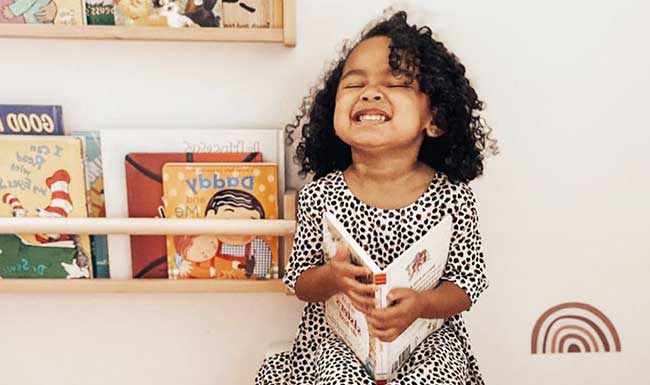
Reading and Writing: The phonetic, multi-sensory approach to language often leads to early literacy. Many five- and six-year-olds in a Montessori environment are not just reading simple phonetic words; they are often reading fluently, analyzing grammar, and writing their own creative stories. They have a deep understanding of how language works, not just a memorized list of sight words.
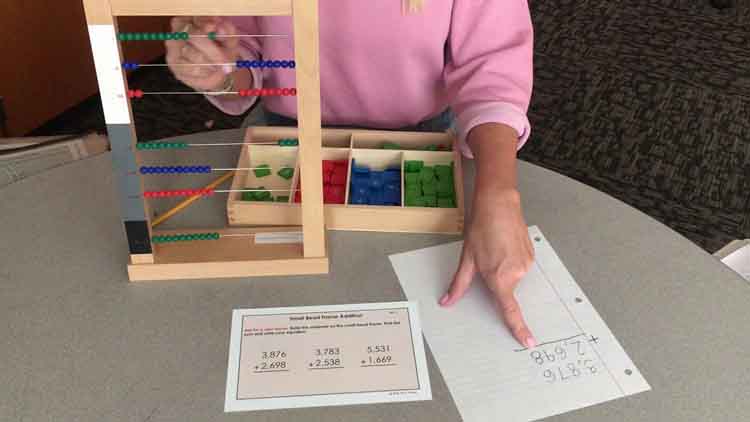
Mathematical Understanding: The Montessori math materials, like the Golden Beads, provide a concrete foundation for understanding the decimal system and mathematical operations. Children who complete the kindergarten year have often been introduced to concepts like multiplication, division, and fractions in a tangible way. This creates a deep, intuitive understanding of mathematical principles that makes the transition to abstract paper-and-pencil math in elementary school seamless and logical. They understand the “why” behind the math, not just the “how.”
Cultural and Scientific Knowledge: The curriculum is rich in geography, biology, history, and science. Children learn the names of continents and countries from puzzle maps, study the life cycles of plants and animals, and develop a sense of the vastness of time. This broad knowledge base sparks their curiosity and gives them a rich context for all future learning.
Executive Functioning: The Skills for Success
Perhaps the greatest gift a Montessori preschool education gives a child is the development of strong executive functioning skills. These are the critical cognitive abilities that allow us to plan, focus, remember instructions, and manage multiple tasks. They are consistently cited as being more predictive of long-term success than IQ. The very structure of the Montessori day is designed to cultivate these skills.
Concentration: The long, uninterrupted work cycle protects and develops the child’s ability to focus on a task for an extended period—a skill that is invaluable in any learning environment.
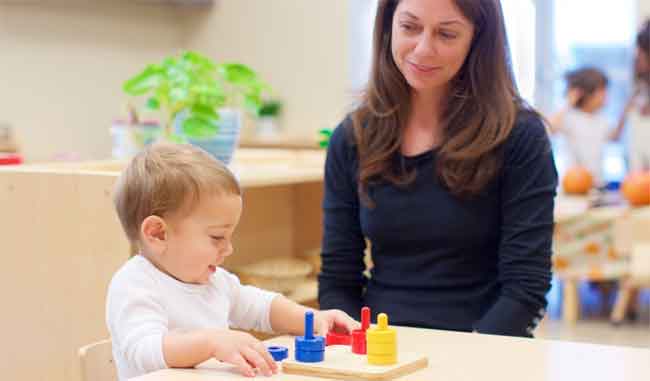
Initiation and Planning: Children are responsible for choosing their own work. This requires them to assess their options, make a decision, gather the necessary materials, and see the task through to completion. This is the daily practice of planning and project management.
Self-Correction and Problem-Solving: The “control of error” built into the materials encourages children to identify and fix their own mistakes. They learn that errors are a natural part of the learning process, which builds resilience and strong problem-solving skills.
Order and Organization: The emphasis on a prepared environment and the “work cycle” (taking a material out, using it, and returning it to the shelf ready for the next person) develops a strong sense of order and responsibility.
Social Adaptability and Intrinsic Motivation
Montessori children are exceptionally well-prepared for the social dynamics of a new school. The mixed-age classroom has given them years of practice interacting with a wide variety of personalities and age levels. The Grace and Courtesy curriculum has given them explicit tools for navigating social situations, from introducing themselves to resolving conflicts peacefully. They are typically confident, articulate, and able to advocate for their own needs respectfully. Furthermore, because the Montessori environment does not use external rewards like stickers or punishments, children develop a strong sense of intrinsic motivation. They learn to work for the pure satisfaction and joy of discovery. This love of learning is the most precious gift they carry with them. While they may need a short period to adjust to a new classroom’s rules—like raising their hand to speak or asking for permission to use the restroom—their adaptability, confidence, and curiosity make them active and engaged members of any school community they join.