The World as the Ultimate Prepared Environment
Dr. Maria Montessori believed passionately in the connection between children and the natural world. She wrote, “There is no description, no image in any book that is capable of replacing the sight of real trees, and all the life to be found around them, in a real forest.” While much of the focus in Montessori education is on the meticulously prepared indoor classroom, the philosophy does not stop at the door. The outdoors is seen as the ultimate prepared environment, a boundless source of learning, discovery, and restoration. An authentic Montessori approach does not treat outdoor time as simply “recess”—a time to burn off energy. Instead, it views nature as an extension of the classroom, a rich, multi-sensory environment that offers limitless opportunities for practical life, sensorial exploration, and scientific discovery. Integrating meaningful outdoor activities is an essential component of nurturing the whole child.
Nature as the Original Sensorial Material
The natural world is the richest sensorial material available. Every element invites children to engage and refine their senses in a way that is far more complex and stimulating than any indoor material. The goal is to encourage children to become keen observers of the world around them.
Visual Exploration: A simple nature walk is a feast for the eyes. Children can observe the infinite shades of green in a collection of leaves, the intricate patterns on a butterfly’s wing, or the way the light filters through the trees. These experiences in visual discrimination are far more nuanced than sorting colored tablets.
Tactile Discovery: Nature provides an endless variety of textures to explore: the rough bark of a tree, the smooth surface of a stone, the soft fuzz of a lamb’s ear plant, the dampness of moss, the prickle of a pinecone. These real-world tactile experiences give depth and context to the lessons learned inside.
Auditory Awareness: A few moments of quiet listening in a natural setting can be a profound auditory exercise. Children learn to distinguish the different songs of birds, the rustle of leaves in the wind, the buzz of a bee, and the trickle of water. This focused listening refines the auditory sense, a key skill for language development.
Olfactory and Gustatory Senses: The outdoors is filled with smells and tastes. The scent of damp earth after rain, the fragrance of a flower, the fresh smell of pine needles—these all engage the olfactory sense. School gardens offer opportunities to taste fresh herbs, vegetables, and fruits, connecting children directly to the source of their food.
Practical Life in the Great Outdoors
The outdoors provides a grand stage for practical life activities that are often larger in scale and more collaborative than those inside. This “real work” is deeply satisfying for children and develops both fine and gross motor skills, as well as a sense of responsibility and stewardship for the environment.
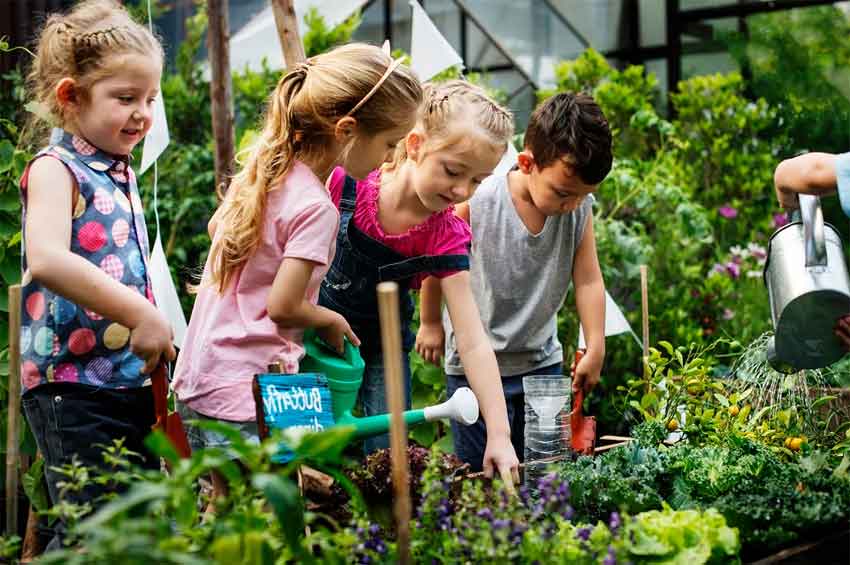
Gardening: Tending a garden is the quintessential outdoor practical life work. Children can be involved in every step: preparing the soil, planting seeds, watering, weeding, and harvesting. This long-term project teaches patience, care for living things, and an understanding of life cycles. The physical work of digging, raking, and carrying watering cans develops strength and coordination.
Care of the Environment: Outdoor practical life also includes caring for the shared space. Raking leaves, sweeping paths, washing outdoor furniture, or filling bird feeders are all purposeful, valuable activities. This work instills a sense of connection to and responsibility for the natural world. It moves beyond the concept of simply “not littering” to a more active role of care and stewardship.
The Outdoor Classroom for Science and Discovery
Nature is the child’s first science laboratory. The outdoors provides endless, spontaneous opportunities for observation, inquiry, and discovery, which are the foundations of scientific thinking.
Botany and Zoology: Children can learn the names of the trees and plants in their schoolyard. They can observe insects, watch birds build nests, and look for animal tracks. This direct experience with flora and fauna is far more memorable than learning from a book.
Physical Sciences: The outdoors is a place to study physics and geology. Children can explore concepts of gravity by watching things fall, study leverage by using a seesaw, or observe erosion by watching how water moves through the soil. Collecting and sorting rocks is a hands-on geology lesson.
Weather and Seasons: The ever-changing nature of the outdoors provides a living lesson on weather patterns and the cycles of the seasons. Children experience these changes directly, from the crisp air of autumn to the new buds of spring. This connection to natural rhythms is grounding and helps them understand their place in the larger world. Dr. Montessori knew that fostering a deep love and respect for nature in the early years was essential for a child’s well-being and for the future of the planet. Providing ample time for rich, meaningful experiences in the outdoors is therefore not an add-on, but a fundamental part of an authentic Montessori education.