The Importance of the Long Work Cycle
Concentration is the cornerstone of the Montessori Method, and the prepared environment is engineered specifically to protect and foster it. One of the primary ways it does this is through the “Long Work Cycle,” typically a three-hour block of uninterrupted time. In a traditional setting, the day is often chopped into 20-minute segments, which prevents the child from ever reaching a state of deep focus. The Montessori environment respects the child’s internal rhythm. By providing a large block of time, the environment allows the child to settle into their work, repeat a task as many times as they need, and eventually reach a level of profound concentration. This ability to focus intensely is a fundamental skill that underpins all academic and personal success.
Isolation of Difficulty in Materials
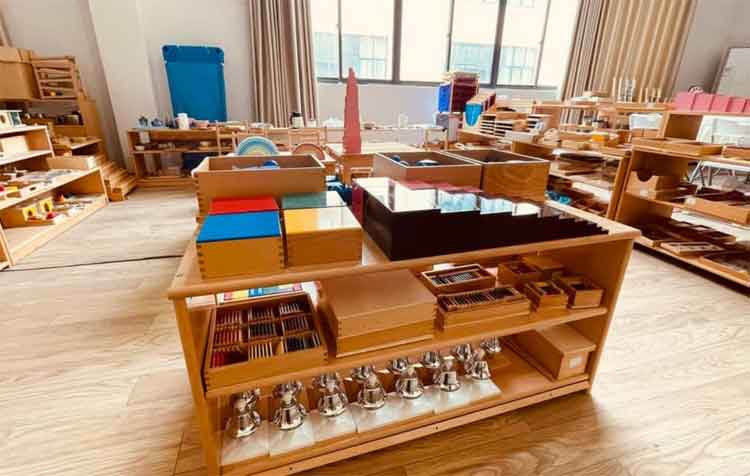
The materials within the prepared environment are designed with the principle of “Isolation of Difficulty.” This means that each material focuses on one specific concept or skill at a time. For example, the Color Tablets focus solely on color, while the Cylinder Blocks focus on dimensions. This isolation ensures that the child is not overwhelmed by too many variables at once. By simplifying the task, the environment makes it easier for the child to achieve success and stay focused. This success builds confidence, which in turn motivates the child to tackle more complex tasks. This gradual increase in difficulty, supported by a clear and focused environment, ensures that the child’s concentration grows stronger over time, much like a muscle.
Freedom from Adult Distraction
In the prepared environment, the adult’s role is to be a keen observer rather than a constant interrupter. Montessori teacher training emphasizes the “interference of the adult” as a major barrier to child development. Once a child is concentrated on a piece of work, the guide does not interrupt to offer praise or correction. This respect for the child’s focus is a critical part of the environment’s design. It tells the child that their work is valuable and that their concentration is sacred. When a child knows they won’t be constantly redirected or managed, they are much more willing to dive deep into a task. This independence from adult oversight is what allows the child to develop their “internal will” and self-discipline.
The Role of Repetition in Development
The prepared environment encourages repetition, which is the primary way a child masters a skill and builds concentration. Because the materials are always available on the shelf and the work cycle is long, a child can return to the same activity day after day. This repetition is not boring for the child; it is a sign of intense mental work. Through repetition, the child refines their movements, deepens their understanding, and achieves a sense of mastery. The environment provides the stability and the resources for this repetition to occur naturally. As the child masters one task through repeated focus, they develop the mental stamina needed to concentrate on even more challenging concepts in the future, ensuring a continuous cycle of growth and development.