The Importance of Rhythm in Hybrid Montessori Homeschooling
One of the most remarkable aspects of Montessori education is its emphasis on rhythm and consistency. Unlike rigid schedules in conventional schools, Montessori uses a flexible daily rhythm that respects children’s natural cycles of concentration, rest, and exploration. For hybrid homeschooling families, this rhythm becomes the anchor that balances home learning with community or co-op days.
But what does a typical day in a hybrid Montessori homeschool actually look like? The answer depends on the child’s age, the family’s commitments, and whether the day is home-based or includes community engagement. Still, certain guiding principles make Montessori days recognizable: long work cycles, child-led activity choices, respect for independence, and integration of practical life with academics.
Morning Routines: Starting the Day with Independence
Montessori mornings begin with self-care and practical life. Instead of parents rushing to dress and feed children, Montessori encourages children—even toddlers—to take charge of morning routines: brushing teeth, preparing a simple breakfast, choosing clothes, and organizing their work space.
In a hybrid homeschool setting, this independence is especially valuable. Parents balancing work or preparing for a co-op commute can rely on children’s practiced routines, reducing stress. For example, a 5-year-old might pour cereal and milk independently, while an 8-year-old helps tidy the breakfast table. These seemingly small tasks are foundational to Montessori—they build confidence, order, and readiness for focused learning.
After morning care, families often gather briefly for a centering ritual: reading a poem, lighting a candle, or reviewing the day’s flow. Unlike traditional schools, where schedules are dictated externally, Montessori families co-create rhythms that children anticipate and respect.
The Work Cycle: Heart of Montessori Learning
At the core of Montessori education is the uninterrupted work cycle, typically lasting 2–3 hours. This is where children choose activities from a prepared environment and dive deeply into them without interruption.
In a home-based hybrid day, the work cycle might look like this:
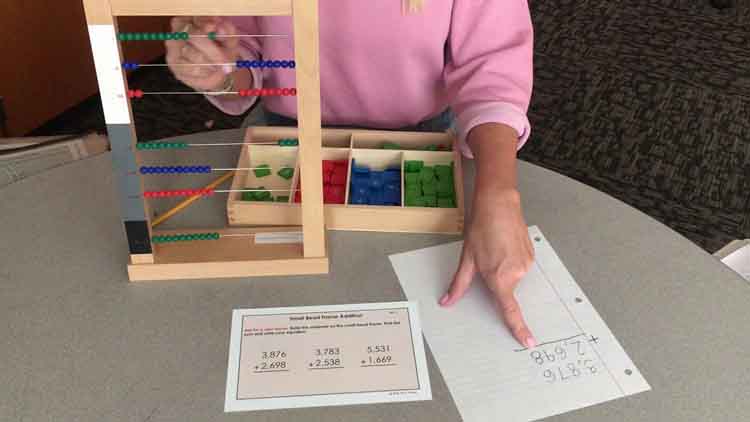
A 6-year-old selects bead chains to explore multiplication while her younger sibling works with sandpaper letters.
After some time, she shifts to reading a storybook aloud or writing in her journal.
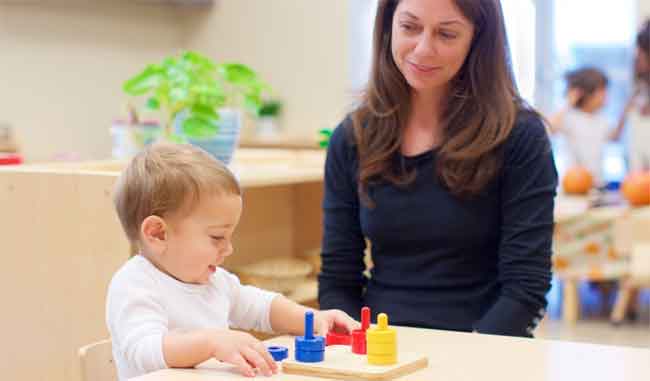
The parent observes quietly, stepping in only to present new materials when the child shows readiness.
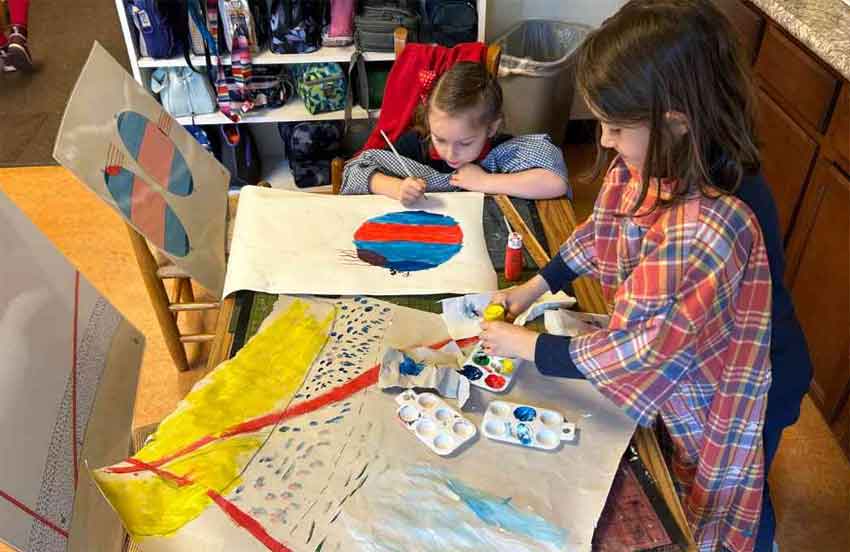
In a co-op or community day, the same principle applies but with more peers and a broader selection of materials. Children may work individually, in pairs, or in small groups. An older child might guide a younger peer in a geography puzzle map, reinforcing their own mastery.
The work cycle in hybrid Montessori ensures that, regardless of setting, children develop focus, responsibility, and intrinsic motivation.
Balancing Academics and Practical Life
Unlike conventional schooling that separates “academic time” from “home chores,” Montessori blends them seamlessly. In a hybrid model, this becomes even more powerful.
For example:
A child practices fractions by slicing fruit during snack preparation.
Measuring soil for a garden project becomes a math and science lesson.
Writing a grocery list doubles as language practice.
At home, parents can integrate practical life tasks more naturally than classrooms allow. On co-op days, these skills are reinforced through group cooking, gardening, or community service projects. This balance ensures that children see learning not as confined to textbooks but as a natural part of life.
Outdoor Exploration and Movement
Montessori philosophy emphasizes nature and movement as essential to child development. Hybrid homeschooling provides rich opportunities for outdoor engagement.
A typical day often includes:
Morning nature walks where children observe seasonal changes, sketch in journals, or collect leaves for classification.
Afternoon playtime for free movement, climbing, and sports.
Community-based field trips on co-op days to farms, museums, or cultural centers.
Outdoor time not only supports physical development but also provides space for reflection and calm, helping children return to work cycles with renewed focus.
Sample Daily Rhythms by Age Group
To better visualize hybrid Montessori homeschooling, here are example rhythms for different ages.
Ages 3–6 (Early Childhood):
7:30 AM – Independent morning routines (dress, breakfast, tidy up)
8:30 AM – Montessori work cycle at home (letters, numbers, sensorial activities)
11:00 AM – Outdoor exploration and play
12:00 PM – Lunch (child helps set and clear table)
1:00 PM – Rest or quiet time with books
2:00 PM – Practical life (baking, gardening)
3:30 PM – Free play or art
6:00 PM – Family dinner and storytelling
Ages 6–9 (Elementary):
7:00 AM – Morning independence routine
8:00 AM – Community co-op day: group work cycle, cultural studies, science experiments
12:00 PM – Shared lunch with peers
1:00 PM – Outdoor learning (nature journaling, group projects)
3:00 PM – Return home: individual quiet work or reading
5:00 PM – Chores and family time
Ages 9–12 (Upper Elementary):
7:30 AM – Morning chores and personal care
8:30 AM – Home work cycle: research project, math with Montessori materials, or writing
11:30 AM – Outdoor run or exercise
12:00 PM – Lunch prepared by children
1:00 PM – Community day (debates, presentations, group collaboration)
4:00 PM – Independent follow-up work at home
6:00 PM – Dinner, reflection, and free time
These examples show how Montessori principles translate into both home and community settings while maintaining flexibility for each family’s lifestyle.
Co-op Days: Extending the Home Environment
Hybrid Montessori homeschooling thrives when families connect with like-minded communities. On co-op days, children gain access to resources and peer interaction that may not be available at home.
For instance:
A co-op may pool funds to purchase large Montessori materials like the bead cabinet or stamp game.
Parents with different expertise rotate roles: one introduces science experiments, another guides art, while a Montessori-trained facilitator oversees core lessons.
Mixed-age groupings mirror traditional Montessori classrooms, giving children the chance to learn collaboratively.
These experiences complement the quieter, individualized work at home and help children develop social and collaborative skills.
Evening Routines: Reflection and Family Connection
Montessori values reflection, order, and closure at the end of the day. In a hybrid homeschool, evenings often include:
Journaling or storytelling about the day’s discoveries
Helping prepare dinner
Family walks or shared reading
Preparing the environment for the next day (organizing shelves, laying out clothes)
These routines reinforce responsibility, gratitude, and continuity, helping children feel secure in their daily rhythm.
Conclusion: A Day That Nurtures the Whole Child
A typical hybrid Montessori homeschool day does not mirror traditional schooling. Instead, it integrates independence, hands-on learning, practical life, community collaboration, and outdoor exploration into a balanced rhythm. Children spend uninterrupted time in work cycles, practice life skills at home, and benefit from peer interaction in co-op settings.
The beauty of hybrid Montessori is its flexibility—it adapts to each family’s needs while staying grounded in Montessori principles. Whether at home or in community, the day respects the child’s natural rhythms and supports holistic growth.
In this way, hybrid Montessori homeschooling creates days filled with purpose, balance, and joy—days that prepare children not just for academics, but for life.