
A hybrid Montessori co-op blends the independence of homeschooling with the community of a Montessori classroom. Families come together—sometimes once a week, sometimes several times a week—to share resources, offer social opportunities, and provide access to materials that are difficult to replicate at home.
Unlike full-time Montessori schools, hybrid co-ops rely heavily on parental involvement. Parents may rotate teaching roles, contribute to the purchase of materials, or collaborate on community projects. The goal is not to replicate traditional schooling but to extend Montessori principles into a shared, flexible environment.
Montessori co-ops differ from traditional homeschooling groups because they intentionally follow Montessori philosophy:
- Child-Led Learning
Children choose their work within a prepared environment rather than following a rigid schedule. - Prepared Environment
Co-ops organize shelves, materials, and workspaces to foster independence. - Mixed-Age Groupings
Like Montessori classrooms, co-ops often group children in 3-year spans (3–6, 6–9, 9–12). - Freedom Within Limits
Respectful boundaries guide behavior, ensuring harmony without strict adult control.
These principles create a community that feels both structured and free, mirroring authentic Montessori settings.
While each co-op adapts to its community, most share some common elements:
- Meeting Frequency
- Once or twice weekly is most common.
- Some co-ops meet more often, depending on resources.
- Work Cycles
- Children enjoy 2–3 hour uninterrupted work periods.
- They freely choose from Montessori materials, art supplies, and cultural projects.
- Lesson Presentations
- Parent-guides or trained facilitators introduce new lessons.
- Lessons are short and precise, followed by opportunities for independent practice.
- Group Activities
- Practical life projects like gardening, cooking, or cleaning.
- Cultural lessons such as music, art, or storytelling.
- Nature walks, field trips, or community service.
- Parent Collaboration
- Parents share responsibilities: preparing snacks, supervising, rotating leadership, or maintaining materials.
Parents are the backbone of hybrid Montessori co-ops. Their contributions often include:
- Environment Preparation: Setting up shelves, rotating materials, or purchasing supplies.
- Facilitation: Presenting lessons or observing children.
- Support Roles: Managing logistics, administration, or communication with families.
- Cultural Contributions: Bringing in personal expertise, such as art, gardening, or music.
Some co-ops require parents to be present at every session, while others rotate parent responsibilities to allow flexibility.
- Access to Materials
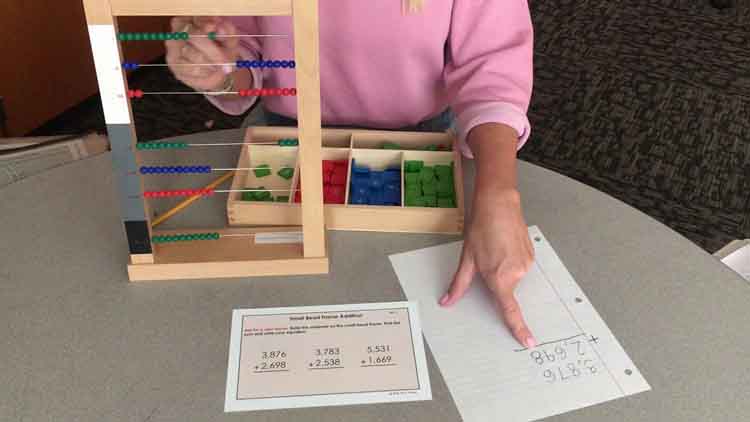
- Expensive materials like bead chains, geography puzzles, or timelines can be shared.
- Social Development
- Children learn collaboration, negotiation, and peer teaching in mixed-age groups.
- Parental Support
- Parents gain a community of like-minded families.
- Shared responsibilities reduce the burden on any single household.
- Flexibility
- Co-ops adapt schedules and curricula to family needs.
- Children spend significant time at home while still benefiting from group learning.
Despite their benefits, hybrid Montessori co-ops face unique challenges:
- Consistency of Montessori Philosophy
- Without trained guides, co-ops may drift toward traditional methods.
- Solution: Ongoing parent education and commitment to Montessori principles.
- Logistics and Organization
- Coordinating schedules, space, and responsibilities requires strong communication.
- Varied Commitment Levels
- Some families may not contribute equally, causing tension.
- Clear agreements and shared values are essential.
- Limited Resources
- Co-ops may lack access to all Montessori materials.
- Creativity, DIY solutions, and rotating resources can help.
- The Weekly Gathering Co-op
- Families meet one full day per week.
- Children engage in long work cycles, group projects, and outdoor play.
- At home, parents extend lessons with smaller-scale materials.
- The Community Learning Center
- A rented space serves as a mini Montessori classroom.
- Children attend 2–3 days weekly, guided by rotating parents or hired Montessori-trained guides.
- The Micro-School Model
- A small group of families hires one trained Montessori guide.
- Children meet regularly in a home or shared space.
- Parents still support but take a less direct instructional role.
- The Nature-Based Co-op
- Focuses heavily on outdoor practical life, gardening, and environmental projects.
- Academic Montessori materials are limited, but principles remain intact.
Hybrid Montessori co-ops uniquely support child development by blending independence at home with community engagement. Children learn:
- Self-Discipline: Choosing work and respecting boundaries.
- Collaboration: Teaching and learning from peers in mixed-age groups.
- Adaptability: Moving between home and group environments with ease.
- Global Awareness: Exposure to diverse perspectives from families and cultural projects.
This balance reflects Montessori’s vision of education not only as an academic process but as preparation for life.
- Shared Philosophy: Families must commit to Montessori principles.
- Clear Communication: Expectations, schedules, and responsibilities should be transparent.
- Flexibility: Co-ops must adapt as children grow and families change.
- Respect and Collaboration: Both children and adults model respect for materials, time, and each other.
- Sustainability: Rotating leadership and shared resources prevent burnout.
So, how do hybrid Montessori co-ops function? They operate as living communities where families collaborate to bring Montessori principles into shared practice. By pooling resources, supporting each other, and offering children opportunities for independence and collaboration, co-ops become the heart of the hybrid model.
They are not miniature schools or casual playgroups—they are intentional communities that embody Montessori’s vision of education as a partnership between child, parent, and society.
For families seeking a balance between the intimacy of homeschooling and the richness of community, hybrid Montessori co-ops provide the structure, freedom, and collaboration that children need to thrive.