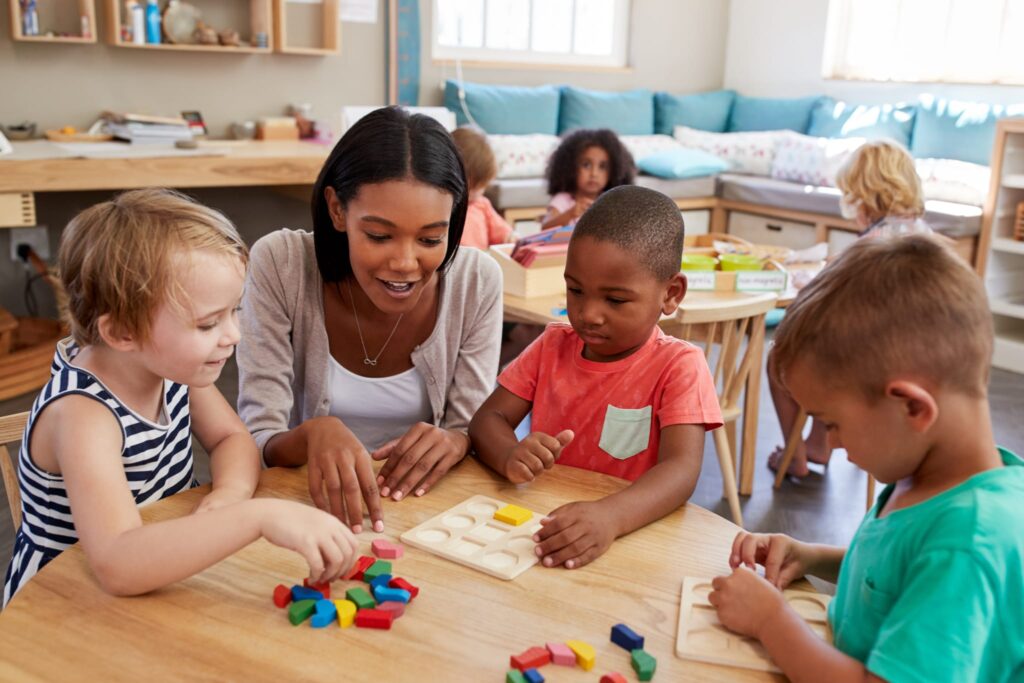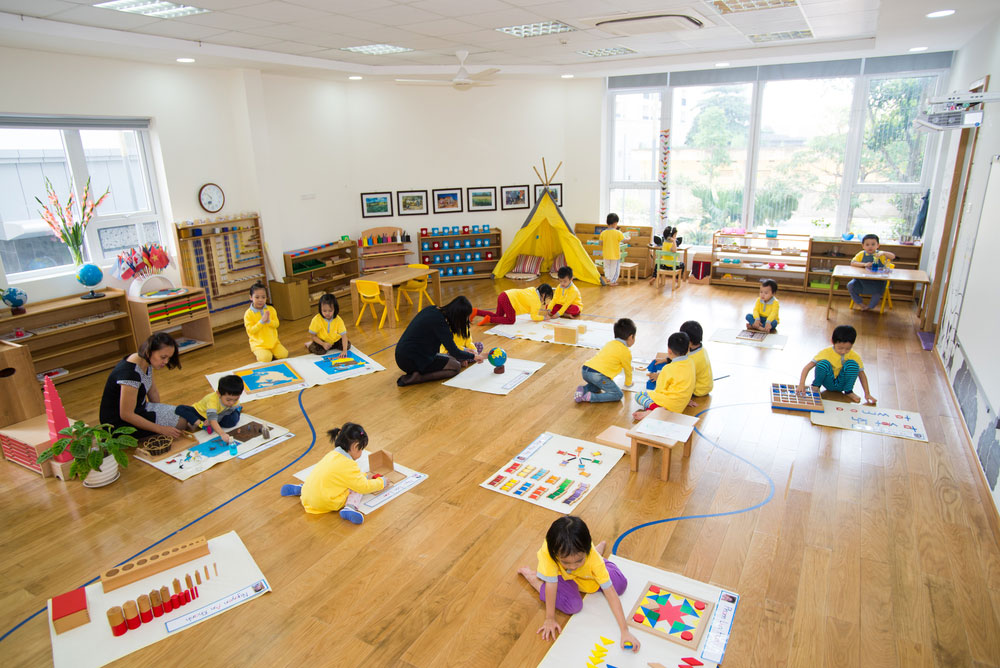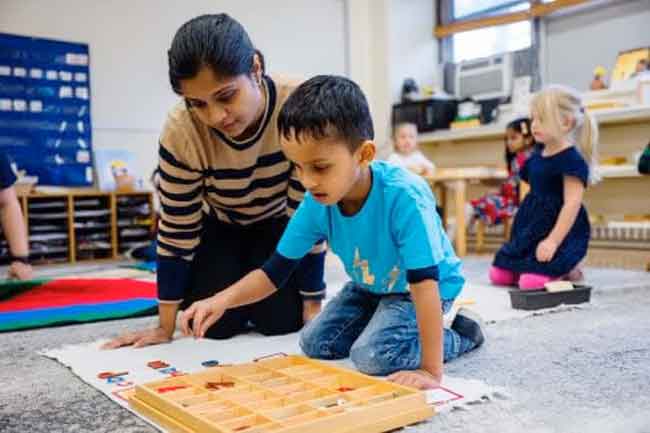
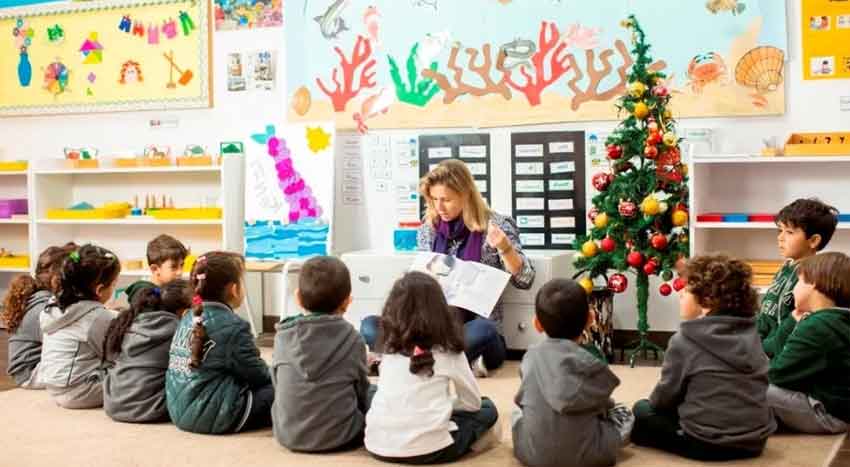
In Montessori education, the concept of the “prepared environment” is central to a child’s learning journey. This is not just a room with materials; it’s a carefully designed space that supports a child’s natural curiosity, independence, and sense of order. The environment is “prepared” by the adult, who thoughtfully arranges materials in a logical, accessible manner, ensuring that every element serves a specific purpose in the child’s development. This meticulous arrangement allows children to navigate the space freely, choosing their own work and fostering a deep sense of responsibility and ownership over their learning.
One of the key features of the prepared environment is its child-centered design. Everything, from the low shelves and child-sized furniture to the accessible light switches and a place for every material, is scaled to the child’s size and ability. This communicates to the child, “This is your space, and you are capable here.” The materials are arranged in a specific order, from left to right and top to bottom, mirroring the way we read and write. This subtle structure helps children internalize order, which is a key developmental need in the early years. By providing a predictable and organized space, the prepared environment reduces anxiety and allows the child’s energy to be directed toward concentration and purposeful work.
The prepared environment also facilitates the development of key life skills. Practical Life materials, for example, are a cornerstone of the Montessori curriculum and are found throughout the prepared environment. Activities like pouring water, buttoning frames, and sweeping the floor not only refine a child’s fine and gross motor skills but also instill a sense of pride and competence. By mastering these real-world tasks, children build a foundation of independence that extends beyond the classroom. The freedom to choose their own work within this structured environment also cultivates a strong sense of internal discipline and self-motivation, a stark contrast to the external rewards and punishments often found in traditional educational settings. Ultimately, the prepared environment is a dynamic tool that adapts to the child’s evolving needs, providing a supportive and engaging backdrop for their holistic development, both academically and personally.