Freedom Within Limits: The Montessori Paradox
One of the most misunderstood aspects of Montessori education is the balance between freedom and structure. Critics sometimes assume Montessori is a free-for-all where children do whatever they please, while others mistakenly think it’s overly structured because of its carefully designed materials and routines. The truth lies in what Dr. Maria Montessori called freedom within limits.
Children are given the freedom to choose their work, move about the environment, and explore according to their interests. At the same time, there are clear boundaries: respect for others, care for materials, and adherence to the prepared environment. This balance helps children develop independence, self-discipline, and intrinsic motivation.
For families practicing hybrid Montessori homeschooling, the question becomes: How do parents balance freedom and structure at home while also preparing children for community or co-op days? The answer requires intentional routines, respect for Montessori principles, and a willingness to adapt.
Freedom in the Hybrid Montessori Home
At home, freedom looks different than in a traditional Montessori classroom but follows the same principles. Children should have:
Freedom of Choice
Access to a variety of meaningful activities on low shelves: puzzles, books, art materials, and Montessori tools.
The right to choose which work they begin with during the work cycle.
Freedom of Movement
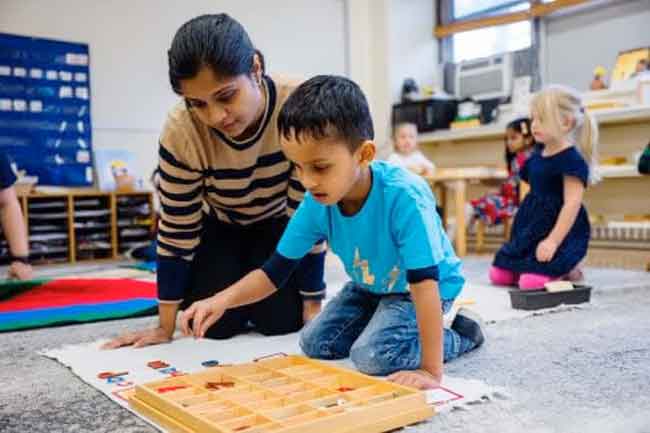
Children are not confined to desks. They may work on floor mats, tables, or outdoors.
Movement is respected as part of learning, not seen as a distraction.
Freedom to Repeat and Master
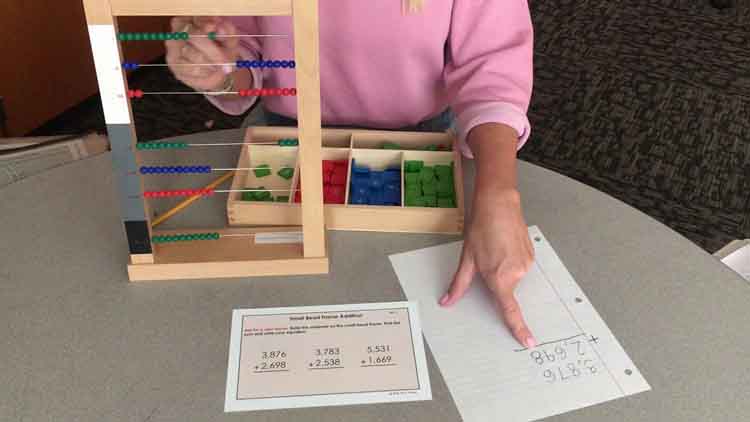
If a child wants to polish brass daily or repeat math bead chains for a week, they are allowed to. Repetition builds mastery and confidence.
Freedom of Pace
In homeschooling, children are not pressured to keep up with a class. A child may spend months mastering addition before moving to multiplication.
In hybrid Montessori, freedom at home is about trusting the child’s natural rhythm while offering an environment rich enough to support exploration.
Why Structure Matters Just as Much
Without structure, freedom becomes chaos. Montessori’s structure provides the container within which freedom flourishes. At home, structure is established through:
Prepared Environment
Materials are organized, complete, and accessible.
Each item has a place, and children learn to return it after use.
Daily Rhythms
Predictable routines like morning preparation, work cycles, outdoor play, and family meals.
These rhythms ground children and help them feel secure.
Clear Boundaries
Respect for others (no disturbing someone else’s work).
Respect for materials (handle carefully, return properly).
Respect for time (finish snack before rejoining the work cycle).
Parental Observation and Guidance
Parents step in when freedom drifts into disorder.
Instead of punishment, gentle redirection maintains harmony.
Structure in hybrid Montessori does not mean rigid control—it means consistent, respectful limits that allow freedom to thrive.
Balancing Freedom and Structure in Hybrid Models
Hybrid Montessori homeschooling adds complexity: children spend part of their time at home and part in community settings. Maintaining consistency across both environments is key. Here are strategies families can use:
Align Home and Co-op Expectations
If the co-op emphasizes long work cycles, replicate them at home.
Use similar language: “choose your work,” “return materials,” “observe others’ space.”
Use Rituals for Transitions
Transitioning between home days and co-op days can feel jarring. Rituals such as morning journaling or reviewing a day’s plan help children adjust.
Offer Real Freedom of Choice
Instead of endless options, present a limited set of meaningful choices. Too much freedom overwhelms; structured choice empowers.
Integrate Practical Life as Anchors
On co-op days, children might engage in group cooking or gardening. At home, parents can reinforce this by inviting children to prepare meals or tend plants. These tasks ground freedom in real responsibility.
Observe and Adjust
Freedom and structure are not fixed points—they shift depending on the child’s age, personality, and environment. Parents should continuously observe and recalibrate.
Common Pitfalls and How to Avoid Them
Pitfall 1: Over-Scheduling
Hybrid homeschooling families sometimes fill every moment with lessons, activities, and co-op commitments. This undermines Montessori freedom.
Solution: Protect long stretches of unstructured work time at home.
Pitfall 2: Confusing Freedom with Lack of Guidance
Some parents step back too much, leaving children adrift. Montessori freedom requires adult observation and subtle intervention.
Solution: Introduce new materials thoughtfully and guide children into purposeful work when needed.
Pitfall 3: Inconsistent Rules Between Home and Co-op
If co-ops have expectations (quiet during work cycle, respect for materials) but home is more relaxed, children may feel confused.
Solution: Maintain consistent expectations across environments.
Pitfall 4: Parental Control Disguised as Structure
Parents may try to direct every choice, undermining independence.
Solution: Ask guiding questions instead of giving orders: “What work do you feel ready for?”
Case Studies in Balancing Freedom and Structure
Case Study 1: The Independent Explorer
A 7-year-old boy thrives on freedom but often leaves materials scattered. His parents introduce structure by creating a clear rule: finish one work and return it before choosing another. Freedom remains, but within respectful boundaries.
Case Study 2: The Overwhelmed Learner
An 8-year-old girl becomes anxious when given too many choices. At home, her parents narrow work options to three on a shelf. This structure helps her feel secure while still empowering her with choice.
Case Study 3: The Transitioning Family
A family moves from traditional school into hybrid Montessori. The children initially resist independent work, asking for direct instruction. Parents balance freedom by introducing short lessons, then stepping back, gradually extending independent time.
The Parent’s Role in Maintaining Balance
In hybrid Montessori homeschooling, parents wear many hats:
Observer: Watching for signs of readiness, interest, or frustration.
Guide: Presenting materials or lessons when appropriate.
Environment Designer: Preparing spaces that invite independence.
Boundary Keeper: Ensuring respect for time, materials, and people.
The art of balance is knowing when to step in and when to step back. Too much freedom without structure leads to chaos; too much structure without freedom stifles curiosity. Parents must walk the middle path, adjusting as children grow.
Conclusion: A Dynamic Dance Between Freedom and Structure
So, how can parents balance freedom and structure in hybrid Montessori homeschooling? By understanding that freedom is not the absence of boundaries but the presence of meaningful choices within clear limits. Structure provides the framework; freedom fills it with life.
At home, this balance means prepared environments, consistent rhythms, and respectful guidance. In co-op settings, it means aligning expectations, maintaining consistency, and ensuring children can carry independence across environments.
Ultimately, hybrid Montessori homeschooling succeeds when parents trust their children’s natural drive to learn while providing the gentle structure that nurtures responsibility and harmony. It is not a static formula but a dynamic dance—one that evolves with every child, every family, and every day.